
By Duke Taber
You can probably recite the list. Love, joy, peace, longsuffering, kindness, goodness, faithfulness, gentleness, self-control. Most of us learned it in a children’s church song or memorized it for a verse challenge. We can say it. The harder question is whether the people who live with us would say it describes us.
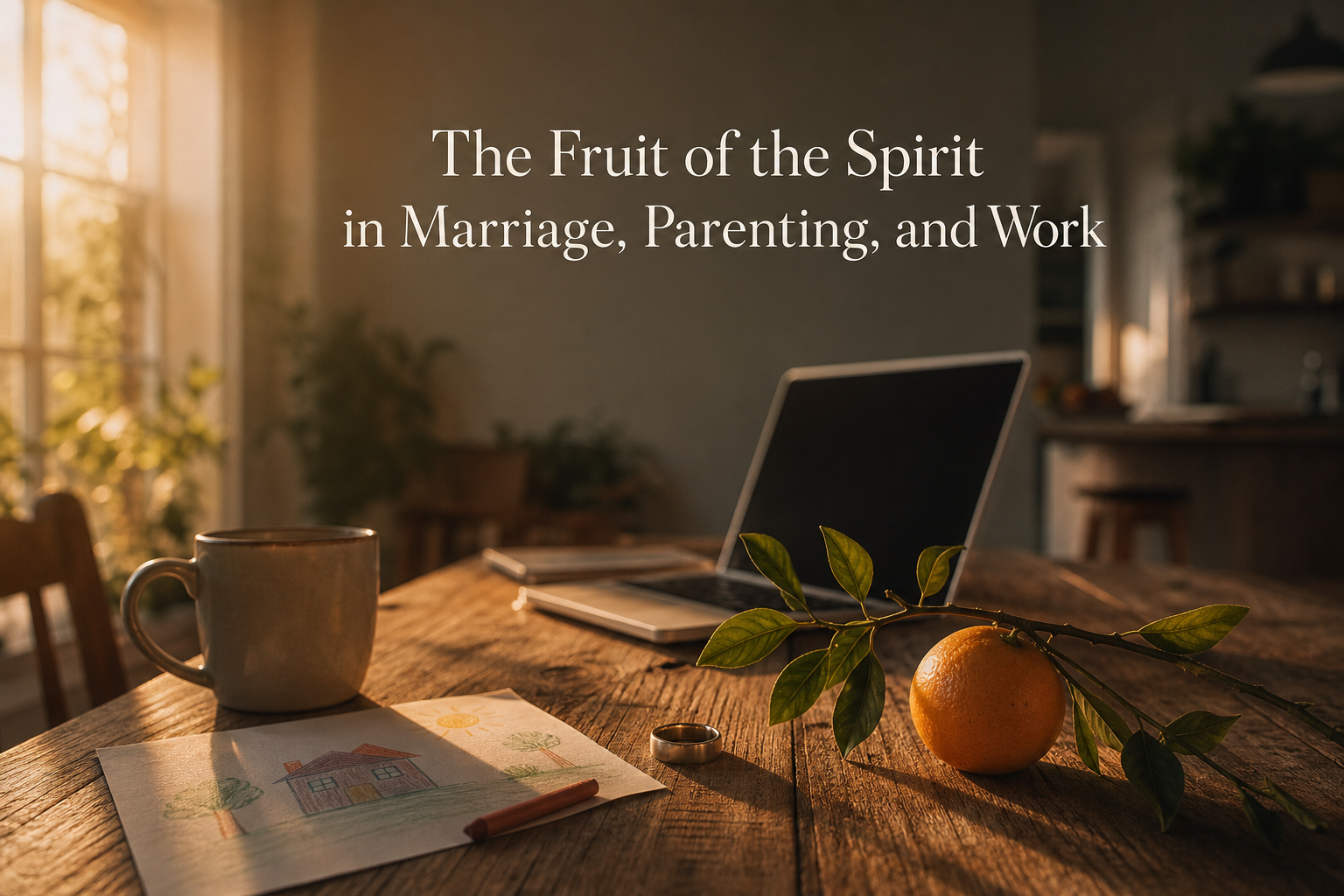
That is the gap I want to talk about. Not the gap in your knowledge. The gap between the kindness you offer a stranger at the grocery store and the sharp tone you use with your spouse forty minutes later. The patience you extend to a coworker’s mistake and the irritation that boils over when your child spills the same cup of milk for the third time. Almost all of us are better Christians in public than we are at home or under deadline. The fruit of the Spirit is not tested in the lobby after service. It is tested in the kitchen, the car, the cubicle, and the bedroom.
So this is not an article about defining nine virtues. It is about where they actually grow, which is always in the soil of relationships that cost us something.

Why It Says “Fruit” and Not “Works”
Start with the words themselves, because Paul chose them carefully.
“But the fruit of the Spirit is love, joy, peace, longsuffering, kindness, goodness, faithfulness, gentleness, self-control. Against such there is no law.” — Galatians 5:22-23 (NKJV)
Notice it says fruit, not works. Just a few verses earlier Paul listed the works of the flesh, and the contrast is deliberate. Works are things you manufacture by effort. Fruit is something that grows out of a living thing when it is rooted and fed. You do not strain to produce apples. An apple tree produces apples because of what it is connected to.
There is another detail that changes how we read the whole passage. The word translated “fruit” is the Greek karpos, and it is singular, not plural. Paul is not handing us a menu of nine separate virtues so we can pick the three that come naturally and skip the rest. He is describing one fruit with nine flavors. The love is woven into the patience. The kindness cannot be separated from the self-control. Where the Spirit is genuinely at work, all nine grow together, the way a single piece of fruit ripens all at once. If you are walking in the Spirit, you do not get to be loving and cruel, joyful and faithless, peaceful and out of control. That is why the overview of the fruit of the Spirit matters before we ever talk about application. The character is a package.
This is good news and hard news at the same time. The good news is that you are not the source. The bad news, if we are honest, is that fruit only ripens under conditions you do not fully control. Heat. Pressure. Time. The very things you would avoid if you could. Jesus said something about this that we tend to skip over.
“Every branch that bears fruit He prunes, that it may bear more fruit.” — John 15:2 (NKJV)
The pruning happens in the relationships that press on you the most. Which brings us to the three places where most of us spend our lives.
Marriage: Where the Mask Comes Off

Marriage is the most honest mirror you will ever look into. Your spouse sees you tired, hungry, disappointed, and unguarded. The fruit either grows there or it does not grow at all, and pretending otherwise is just performance.
Consider what the research keeps finding about what actually destroys marriages. Decades of study by the Gottman Institute identified four corrosive patterns, and contempt rose to the top as the single greatest predictor of divorce. Contempt is the eye roll, the sarcasm, the sense of superiority that says you are beneath me. It is, in spiritual terms, the precise opposite of the fruit of the Spirit. Where contempt says I am above you, kindness and gentleness kneel down. Where contempt erodes, the researchers found that the antidote was a deliberate culture of appreciation, gratitude, and small daily acts of warmth. Science, in its own language, is describing kindness, longsuffering, and goodness.
Paul described the same dynamic two thousand years earlier without any laboratory.
“And be kind to one another, tenderhearted, forgiving one another, even as God in Christ forgave you.” — Ephesians 4:32 (NKJV)
I have been married long enough to know that the temptation in a hard moment is never to manufacture more contempt. It is to justify it. He should know better. She always does this. The flesh builds a case. The Spirit interrupts the case with a question. What would gentleness do right now? Gentleness is not weakness. It is, as Scripture frames it, strength brought under control, and learning that has done more for my marriage than any communication technique I ever read. If you want to go deeper on that quality alone, the article on a God-centered marriage traces how it reshapes the whole relationship.
The fruit also shows up in conflict, and here is where most couples fail. Peace in marriage does not mean the absence of disagreement. It means the presence of self-control when disagreement comes. Self-control is what keeps you from saying the thing you can never unsay. It is what lets you lower your voice when everything in you wants to raise it. When two people who follow Jesus learn to fight with self-control and repair with kindness, they are not just using a strategy. They are bearing fruit. For the practical side of that, see biblical ways to handle conflict in marriage.
Parenting: The Slow Work of Patience

If marriage exposes you, parenting wears you down. And the wearing down is the point, because patience is the fruit that cannot grow any other way.
Parents today are running on empty, and the data confirms what your gut already knows. A national study from The Ohio State University College of Nursing found that fifty-seven percent of parents reported burnout, much of it driven by the pressure to be a perfect parent. The U.S. Surgeon General considered the problem serious enough to issue a formal advisory, reporting that forty-eight percent of parents say their stress is completely overwhelming on most days, compared to twenty-six percent of other adults. Read that again. Parents are nearly twice as likely as everyone else to feel crushed by their daily lives.
That exhaustion is exactly where the fruit of patience either appears or evaporates. The Bible has a word for patience that is more vivid than ours. It is longsuffering, and it means precisely what it sounds like. Long. Suffering. The willingness to suffer the same behavior, the same question, the same defiance, for a long time, without breaking.
“Therefore, as the elect of God, holy and beloved, put on tender mercies, kindness, humility, meekness, longsuffering.” — Colossians 3:12 (NKJV)
Here is what I have watched in three decades of pastoring families. The parents who lose their children are rarely the ones who failed to discipline. More often they are the ones whose homes were ruled by anger, where correction came wrapped in contempt rather than love. Children can absorb a great deal of imperfect parenting. What scars them is the sense that the people who were supposed to be safe were actually a threat. Paul saw this risk clearly.
“And you, fathers, do not provoke your children to wrath, but bring them up in the training and admonition of the Lord.” — Ephesians 6:4 (NKJV)
Notice that the same verse holds two truths together. Do not provoke. And do train. The fruit of the Spirit is not permissiveness. Goodness sets boundaries. Faithfulness shows up every day. But it does all of it without the wrath that wounds. That is a Spirit-produced balance, not a personality type, and it is why growing in patience is less about gritting your teeth and more about abiding in Christ when you have nothing left. When you feel the anger rising at the end of a long day, that is not your failure showing. That is the prune-point, the place where the Spirit is trying to grow something. Establishing Christ-centered family values gives that daily struggle a framework instead of leaving it to your mood.
There is also joy here, and we forget it. The same children who exhaust you are a heritage from the Lord. Joy in parenting is not the absence of hard days. It is the deep gladness underneath them, the kind that survives the tantrum because it is anchored in something the tantrum cannot touch.
Work: Faith That Survives Monday

Then there is work, where many believers quietly assume the fruit of the Spirit does not apply. Church is for Sunday. Work is just work. That separation is a lie, and your coworkers can smell it.
The workplace is, for most adults, the single greatest daily source of pressure. Recent Gallup data shows that roughly forty-nine percent of American and Canadian workers experience stress on a daily basis. Eagle Hill Consulting found that nearly half of U.S. workers reported burnout, with workload and staff shortages as the leading causes. The American Psychological Association’s 2024 Work in America survey added a crucial finding. Workers who felt psychologically safe were far less likely to report emotional exhaustion and far more likely to thrive. In other words, the emotional climate a person creates around them at work has measurable consequences.
Now think about what you carry into that climate. A Spirit-filled employee is not just a hard worker. He is a person whose kindness lowers the temperature of a tense meeting. She is the colleague whose faithfulness means her word can be trusted when others spin. The fruit of the Spirit at work looks like goodness in how you treat the people below you on the org chart, self-control in how you respond to an unfair email, and peace that does not depend on the quarterly numbers. Paul aimed this directly at the working life of the believer.
“And whatever you do, do it heartily, as to the Lord and not to men.” — Colossians 3:23 (NKJV)
That single verse dismantles the Sunday-to-Monday divide. The spreadsheet is worship. The shift is ministry. The difficult customer is the very person to whom your gentleness preaches a sermon that words never could. For more on closing that gap, the article on integrating faith at work is worth your time.
I would add one warning. Work is where ambition most easily counterfeits the fruit. We call our impatience drive. We call our harshness high standards. We call our anxiety conscientiousness. The flesh is endlessly creative at dressing itself in professional clothing. The test is simple. Does the way you pursue success leave kindness, patience, and self-control intact in the people around you, or does it leave a trail of wounded coworkers and a reputation for being good at the job and hard to work for? The fruit of the Spirit does not clock out at nine in the morning.
The Hard Question: What About When You Keep Failing?
Here is where I have to be honest with you, because a tidy article about three life domains would be dishonest if it stopped there.
You will read all of this, agree with all of it, and then snap at your spouse tonight. You will resolve to be patient and lose your temper with your kids before the week is out. You will determine to bring peace to your workplace and find yourself stewing over a slight by Wednesday. So what then? Does the repeated failure mean the Spirit is not in you?
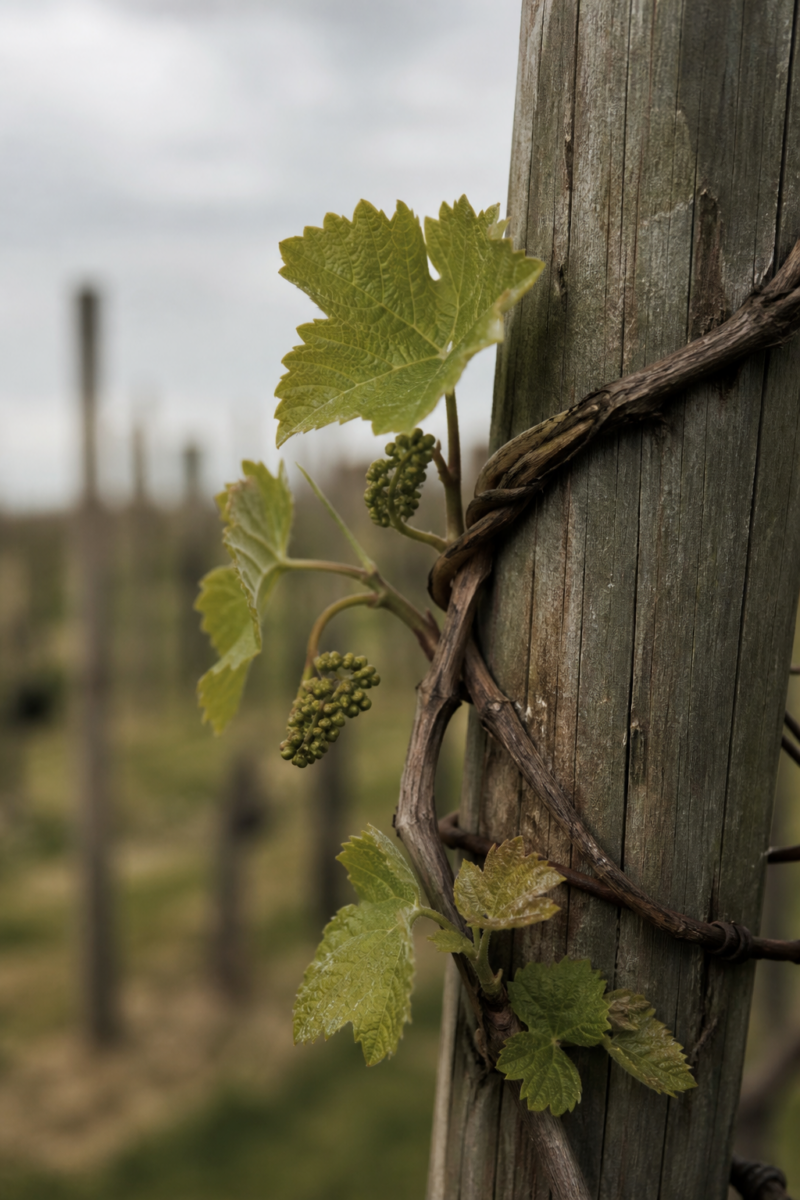
No. It means you are a branch, not the vine. Fruit grows slowly. It grows seasonally. It grows through pruning that feels like loss. The presence of struggle is not the absence of the Spirit. Often it is the evidence of His work, because the flesh does not fight battles it has already won. The very fact that your anger now grieves you is fruit beginning to form. A year ago it might not have bothered you at all.
“I am the vine, you are the branches. He who abides in Me, and I in Him, bears much fruit; for without Me you can do nothing.” — John 15:5 (NKJV)
Read the last four words slowly. Without Me you can do nothing. Not a little. Nothing. The entire strategy of the Christian life is not trying harder to be loving. It is abiding more deeply in the One who is love, and letting His life flow into your marriage, your parenting, and your work until it produces what your willpower never could. This is the difference between religion and relationship, between manufacturing works and bearing fruit. If self-control is your particular battleground, the biblical examples of self-control show that even the strongest believers grew it slowly, and walking in step with the Spirit is the daily practice that keeps the branch connected to the vine.
The goal was never a perfect performance in three categories. The goal is a life so rooted in Christ that the people closest to you, the ones with the most reason to know the truth about you, would describe you with the same nine words you memorized as a child. Not because you faked it well. Because the Spirit grew it real.
A Place to Begin

You do not have to fix all three arenas at once. You only have to abide, and then start where the pressure is greatest right now.
- Pick the one relationship where your fruit fails most often, whether it is your spouse, a particular child, or a coworker, and name it honestly before God this week.
- Ask the Spirit each morning for the specific fruit that relationship needs, whether patience, gentleness, or self-control, rather than asking for the day to be easier.
- Repair quickly when you fail, because a sincere apology in the same hour does more good than a perfect record ever would.
- Stay connected to the vine through daily time in the Word and prayer, since fruit cannot grow on a branch that has been cut off from its source.
If you want a structured way to grow all nine qualities on purpose, our 13-lesson Bible study on the Fruit of the Spirit was built for exactly this, whether you walk through it alone, with your spouse, or in a small group.
The fruit is already in you if the Spirit is. Your job is not to produce it. Your job is to abide, to stay rooted, and to let Him do in your kitchen and your car and your cubicle what He has promised to do. He is faithful. The fruit will come.
Grace and peace to you as you grow, Duke Taber
Resources
- Galatians 5:22 Commentary, Precept Austin
- The One Behavior That Predicts Divorce, The Gottman Institute
- Parents Under Pressure, U.S. Surgeon General’s Advisory on the Mental Health and Well-Being of Parents
- The Power of Positive Parenting, The Ohio State University College of Nursing
- Work in America 2024, American Psychological Association
- State of Worker Burnout 2024, Eagle Hill Consulting

Test Your Knowledge!
Answer all 10 questions, then submit to see your score.
Related Posts

How to Study the Fruit of the Spirit: 5 Approaches and Which One Fits You
Last updated: June 2026 By Duke Taber Most people who set out to study the fruit of the Spirit arrive with a quiet sense of failure…
 Jun 11, 2026
Why You Can't Manufacture the Fruit of the Spirit (and What to Do Instead)
Last updated: June 2026 By Duke Taber You read the list in Galatians and something in you sinks a little. Love. Joy. Peace. Patience. You know…
Jun 13, 2026
What a Complete Fruit of the Spirit Study Should Include
Last updated: June 2026 By Duke Taber If you have been a Christian for any length of time, you have probably already done a study on…
Jun 10, 2026
The 9 Fruit of the Spirit Explained
Last updated: June 2026 By Duke Taber Most of us first met the fruit of the Spirit on a Sunday school poster. Nine words arranged in…
Jun 11, 2026


 By
By


