

By Duke Taber
Most people who set out to study the fruit of the Spirit arrive with a quiet sense of failure already in hand. They read the list in Galatians and feel the gap. They are not as patient as they wish they were. Their joy runs thin by Wednesday. Kindness comes easy with strangers and hard with the people who live in their house. So they open a study hoping it will hand them a method for finally becoming better, and underneath that hope sits an older fear. They have tried this before, and it did not take.
If that describes you, I want to slow you down before you pick a method. The way you study the fruit of the Spirit will quietly shape what you expect from it. Choose the wrong frame and even a good study collapses into one more self-improvement project that leaves you exhausted and ashamed. Choose the right one and those same nine words open into something the Holy Spirit can genuinely use to change you from the inside.
This article walks through five honest approaches to studying the fruit of the Spirit. Not one of them is the single correct way. Each fits a different kind of learner, a different season of life, and a different goal. By the end you should know which one to start with this week.

First, Know What You Are Studying
Before you choose a method, you need to understand the thing itself. The grammar of one Greek word changes everything.
“But the fruit of the Spirit is love, joy, peace, longsuffering, kindness, goodness, faithfulness, gentleness, self-control. Against such there is no law.” — Galatians 5:22-23 (NKJV)
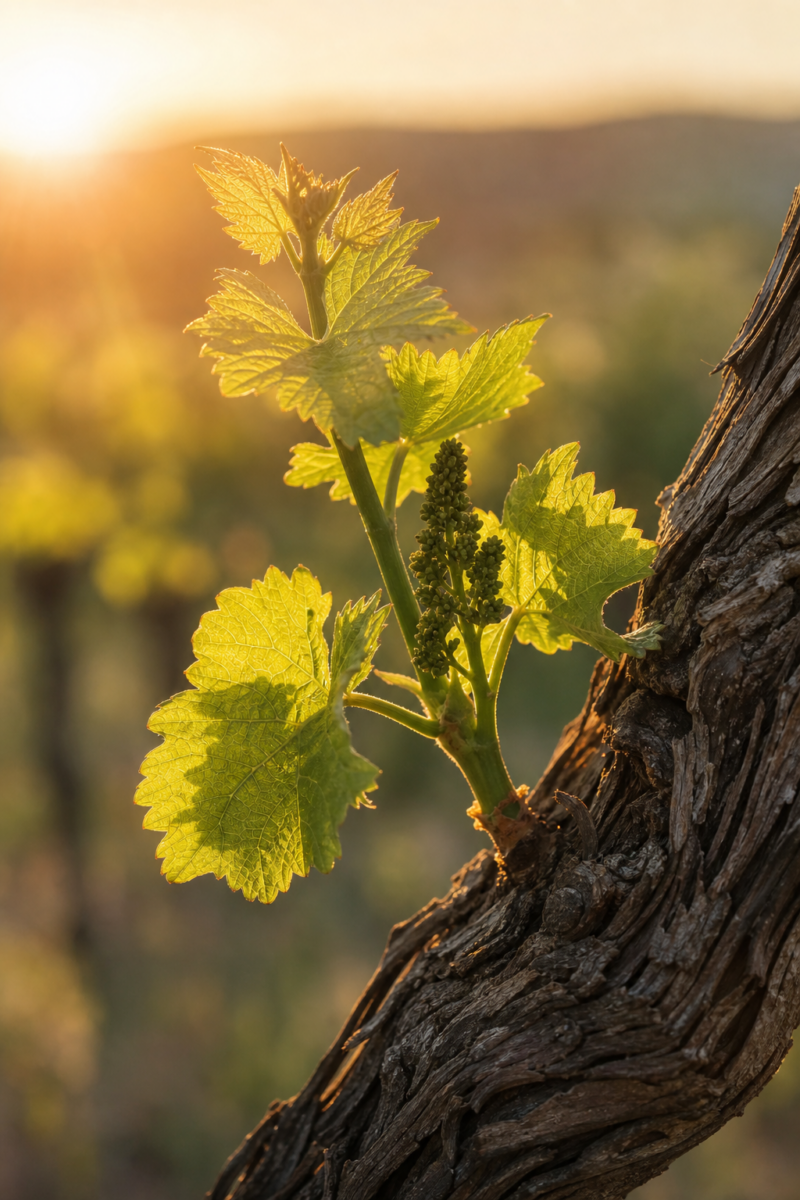
Paul wrote “fruit,” not “fruits.” In Greek the word is karpos, and here it stands in the singular. Teachers across many traditions point out that this is not an accident of style. They note that the nine qualities are not a menu where a believer selects favorites and skips the rest. They grow together as one cluster. Picture a single vine producing a single bunch of grapes rather than nine separate fruits hanging on nine separate branches.
That detail matters for how you study. If the fruit is one, then you are not collecting virtues like badges. You are watching a single life take shape.
There is a second truth tucked inside the word. Karpos means the natural product of a living thing. Commentators observe that spiritual fruit, in both Testaments, is the product of God rather than human striving. An apple tree does not grit its teeth to produce apples. It produces them because of what it is. The fruit is evidence of the life already at work in the roots. One ministry describes the fruit as what we do when we are moved by the Holy Spirit, the way leaves move when the wind blows through them.
Jesus said the same thing in plainer language.
“I am the vine, you are the branches. He who abides in Me, and I in him, bears much fruit; for without Me you can do nothing.” — John 15:5 (NKJV)
Hold those two truths together and your study finds its real aim. You are not trying to manufacture love and joy by willpower alone. You are learning to abide, and then learning to recognize and welcome what the Spirit grows. The teacher Dallas Willard described spiritual formation as the shaping of character from the inside out, the slow renewal of the heart that eventually shows up in how a person treats a waiter, a spouse, a stranger in traffic.
If you want the wider view before you start, our overview of the fruit of the Spirit lays the groundwork. With the aim in front of you, here are the five roads.
Five Ways to Study the Fruit of the Spirit

1. The Word Study: Going Back to the Greek
The word study approach takes the nine qualities one term at a time and digs into the original language behind each one. English flattens these words. We hear “love” and “joy” and assume we already know what they mean. The Greek refuses to let us stay shallow.
Take love. Paul did not write eros or even the warm affection of phileo. He wrote agape, the self-giving love that seeks another person’s good without waiting to be repaid. Joy is chara, a gladness rooted in God rather than in circumstances, which is why it can survive a hard week. Patience is makrothumia, literally a long temper, the capacity to be wronged and not detonate. Self-control is enkrateia, an inner grip on appetites that would otherwise run the show.
To work this method, pick one fruit, find every place that Greek word appears in the New Testament, and let Scripture define Scripture. A concordance or a free study tool will show you the full range. Then write a sentence in your own words capturing what the term actually carries. Our guide on how to do a word study in the Bible gives you the mechanics step by step.
This approach fits the precise, curious mind. If you love getting underneath a word and you distrust easy definitions, start here. It pairs well with our deep dive on the fruit of the Spirit called patience, which shows how one term opens into a whole way of living.
2. The Topical Deep Dive: One Fruit at a Time
The topical approach treats the nine as a series. You give each fruit a dedicated week, gather what the whole Bible says about it, and let the qualities build on one another across roughly nine to thirteen sessions. This is the most popular way groups study the passage, and for good reason.
The strength of the topical method is coverage. You are not skimming. You spend real time on goodness before you move to faithfulness, and by the end you have walked the entire cluster rather than camping on the one or two qualities that come naturally. Barna’s research consistently finds that regular, focused engagement with Scripture correlates with measurable relational and spiritual growth. A topical series turns that finding into a rhythm you can actually keep.
To run this approach, build a simple template you repeat each week. Define the fruit, gather the key passages, find one place it shows up in the life of Jesus, and name one situation in your week where the Spirit is inviting you to live it. If you have never structured a study this way, start with our primer on how to do a topical Bible study.
This road fits the systematic learner and especially the small group leader. If you want a clear path with a beginning and an end, and you appreciate knowing what next week holds, the topical deep dive will serve you well.
3. The Inductive Study of Galatians 5
The inductive approach does something the other methods do not. Instead of pulling the nine qualities out of their setting, it plants you firmly in the passage and refuses to let you leave until you have understood it on its own terms. You study Galatians 5 as a whole, in context, before you draw a single conclusion.
Inductive study moves through three steps that scholars and teachers have refined for generations: observation, interpretation, and application. First you ask what the text says. You notice that Paul sets the fruit of the Spirit against the works of the flesh, and that the works are plural and frantic while the fruit is singular and whole. Then you ask what it means. Why does Paul say “against such there is no law”? What is the connection to walking in the Spirit two verses earlier? Only then do you ask how it applies to your Tuesday.
This method guards you from a common trap. It keeps you from making the verse say what you already believe. The discipline of observing before concluding is the heart of honest Bible study, and our walkthrough of the inductive Bible study method shows you how to do it without a seminary degree.
This approach fits the reader who wants to anchor everything in the text rather than float on impressions. If you have grown suspicious of studies that use a verse as a springboard and never return to it, the inductive road is yours.
4. The Character Study: People Who Bore the Fruit
Some of us learn truth best when it walks around in a body. The character study approach looks for men and women in Scripture who embodied a particular fruit, then watches the quality in motion rather than in the abstract.
Joseph forgiving the brothers who sold him is a master class in goodness and self-control. Ruth’s quiet loyalty to Naomi shows faithfulness with skin on it. The patience of Job, the gentleness of Jesus with the woman caught in adultery, the joy of Paul singing in a Philippian jail at midnight. These are not illustrations tacked onto a definition. They are the definition lived out under pressure, which is the only place character is ever proven.
To work this method, choose a fruit, find a biblical figure who displayed it, and study the whole arc of their story. Watch how the quality cost them something. Notice that it often grew through hardship rather than around it. Our guide on how to do a Bible character study gives you a framework, and our collection of the fruit of the Spirit seen in real biblical lives gives you a place to begin.
This road fits the relational, story-shaped learner. If a sermon stays with you because of the example rather than the outline, study the fruit through the people who carried it.
5. The Devotional Journaling Approach
The final approach is the most personal and the slowest, which is exactly why some people need it. The devotional journaling method reads small portions, lingers, prays, and writes. It is less interested in mastering the passage and more interested in being mastered by it.
In this approach you might take a single fruit and sit with it for a week of mornings. You read the verse, you ask the Spirit to show you where that quality is missing in you, and you write down what surfaces. You record where you failed and where grace met you. Over time the journal becomes a record of formation, evidence on paper that the Spirit has been quietly at work in places you could not see day to day. Pairing Scripture with reflective writing has long helped believers move truth from the head to the heart, and our guide to journaling the fruit of the Spirit offers prompts to get you started.
I have watched this method do its deepest work in people who already knew the right answers and were tired of knowing them. A man in our church could define every fruit and exhibited almost none of them, and it was the daily, unhurried, honest journal that finally cracked something open. Knowledge had never been his problem. Stillness was.
This approach fits the contemplative and the weary. If your faith has become more information than communion, this is the road back.
Which One Fits You?

You do not need to choose perfectly. You need to choose honestly. Ask yourself a few plain questions.
How do you learn? If precision thrills you, begin with the word study. If you crave structure and a finish line, take the topical deep dive. If you trust nothing you have not seen in context, go inductive. If people and stories move you, study the characters. If your soul is dry and you need to feel God again, pick up the journal.
What is your season? A busy parent with fifteen minutes may thrive on the devotional method and drown in a full inductive study. A small group of hungry believers may want the shared rhythm of a topical series. Honesty about your bandwidth is not a lack of faith. It is the wisdom that keeps a study alive past week three.
And remember that these roads are not walls between fields. The strongest students borrow. Begin with a word study and journal what you find. Run a topical series and add a character to each week. The methods are servants, not masters.
The Approach Matters Less Than the Abiding
Here is the warning I would give my own congregation. Do not let the search for the perfect method become one more way to avoid the actual work of abiding.
Paul did not end his teaching with analysis. He ended it with a command about direction.
“If we live in the Spirit, let us also walk in the Spirit.” — Galatians 5:25 (NKJV)
Notice the order. We already live in the Spirit. The walking is the daily, ordinary, repeated turning toward Him. A study is one good way to do that turning, but the study is the branch reaching back toward the vine. It was never the source of the fruit. As believers learn to keep walking in step with the Spirit, the fruit appears the way it always has. Not by force, but by life.
So choose a road and start. The fruit you long for is not a project you complete. It is the natural harvest of a life rooted in Christ, growing while you sleep, ripening in seasons you cannot rush. Your job is to stay connected to the Vine and to study His Word with an open heart. His job is the growing. He has never once failed at it.
Pick the approach that fits you, and begin this week. Here are a few simple next steps:
- Choose one of the five approaches above that matches how you learn and the season you are in.
- Start with a single fruit rather than all nine, and give it real time.
- Keep a short record of what the Spirit shows you, even one sentence a day.
- If you want a guided, ready-made path, our 13-lesson Bible study on the fruit of the Spirit walks you and your group through the whole cluster.
May the Lord grow in you what you cannot grow in yourself.
Keep abiding, and keep studying. He is faithful to finish what He starts.
Resources
- Galatians 5:22 Commentary. Precept Austin offers a detailed verse-by-verse study of the fruit of the Spirit and the meaning of karpos.
- The Fruit of the Spirit in Galatians 5:22-23. FamilyBible.org is helpful on why the fruit is singular and unified.
- Spiritual Formation: What It Is and How It Is Done. Dallas Willard Ministries on character formed from the inside out.
- 3 Steps to Inductive Bible Study. Joyful Walk Ministries gives a clear introduction to observation, interpretation, and application.
- State of the Bible: Trends in Engagement. Barna Group research on how Scripture engagement relates to spiritual and relational growth.

Test Your Knowledge!
Answer all 10 questions, then submit to see your score.
Related Posts

What a Complete Fruit of the Spirit Study Should Include
Last updated: June 2026 By Duke Taber If you have been a Christian for any length of time, you have probably already done a study on…
 Jun 10, 2026
Fruit of the Spirit vs. Gifts of the Spirit: What's the Difference?
Last updated: June 2026 By Duke Taber I have stood in green rooms before services and watched two kinds of believers. One could prophesy with stunning…
Jun 10, 2026
What Makes a Bible Study on Love Life-Changing vs. Forgettable
Last updated: May 2026 Not every Bible study on love changes you — and there's a reason why. Discover what separates a life-changing study from a forgettable one, and how to open God's Word on love in a way that actually transforms how you live.
May 19, 2026
30 Days in the Fruit of the Spirit: A Sample Plan to Get You Started
Last updated: June 2026 By Duke Taber You have probably tried this before. You read Galatians 5, you feel the weight of how far short you…
Jun 10, 2026


 By
By


