
By Duke Taber
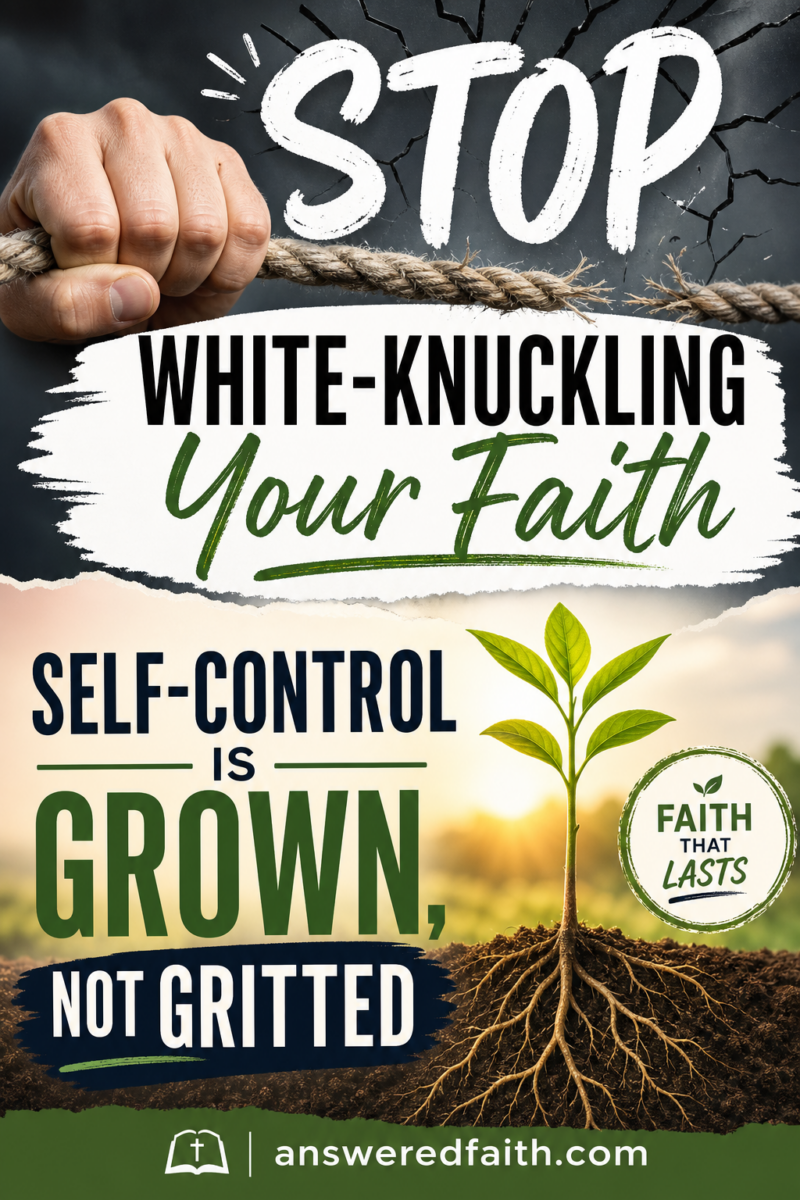
You have probably made the resolution more than once. This time you will hold your tongue. This time you will close the laptop, push back from the table, keep the promise you made to yourself at two in the morning when the regret was still fresh. For a few days, maybe a few weeks, you white-knuckle your way forward. Then something cracks. A hard day, a familiar trigger, a moment of bone-deep tiredness, and you are right back where you started. And the question rises again, quiet and accusing: why is the one fruit of the Spirit that sounds the most like effort the one that keeps beating me?
If that describes you, I want to say something at the very start that may surprise you. The problem is probably not that you lack willpower. The problem may be that you have been trusting willpower in the first place.
That is a strange thing for a pastor to say. We tend to treat self-control as the spiritual equivalent of clenching your jaw and bearing down. But that is not what Paul wrote, and after more than thirty years of walking with people through their hardest struggles, I have watched the willpower model fail far more often than it succeeds. There is a better way. It begins with reading one familiar verse a little more carefully.

The Verse We Read Too Fast
Most of us can quote the list. We learned it in Sunday school, maybe set it to a song.
“But the fruit of the Spirit is love, joy, peace, longsuffering, kindness, goodness, faithfulness, gentleness, self-control. Against such there is no law.” — Galatians 5:22-23 (NKJV)
Read it again and notice something easy to miss. Paul does not say “the fruits of the Spirit,” plural, as if these were nine separate items on a checklist. He says fruit, singular. Nine expressions of one harvest. One life, growing in nine directions at once. Self-control is not the odd one out, the one you grit your teeth to produce while the Spirit handles the gentler ones. It grows on the same vine, from the same root, by the same power.
That single grammatical detail changes everything. Because fruit is not manufactured. Fruit is grown.
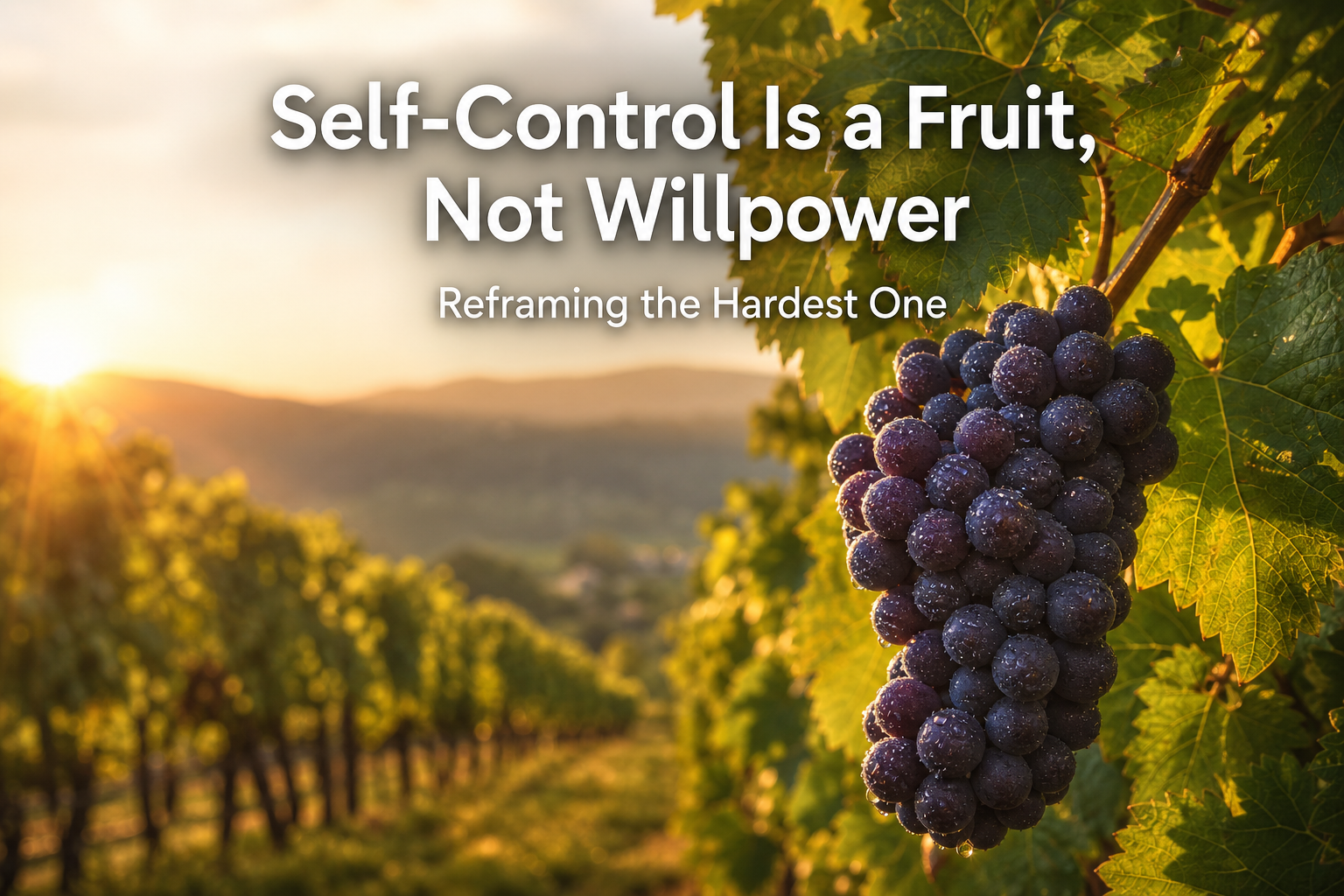
Think about what that word actually means in an agricultural world like the one Paul was writing into. No farmer has ever strained a muscle to push an apple out of a branch. No vinedresser stood over the vineyard demanding that grapes appear by force of will. The farmer prepares soil, plants, waters, prunes, waits, and protects. The life that produces the fruit comes from somewhere else. His job is to stay connected to that life and create the conditions where it can flourish. This is precisely the picture Jesus gave us in the overview of the fruit of the Spirit that runs through all of Scripture.
“I am the vine, you are the branches. He who abides in Me, and I in him, bears much fruit; for without Me you can do nothing.” — John 15:5 (NKJV)
Without Me you can do nothing. Not a little. Nothing. The branch that tries to produce grapes by its own striving is the branch that has forgotten it is a branch.
What Paul Actually Meant by Self-Control
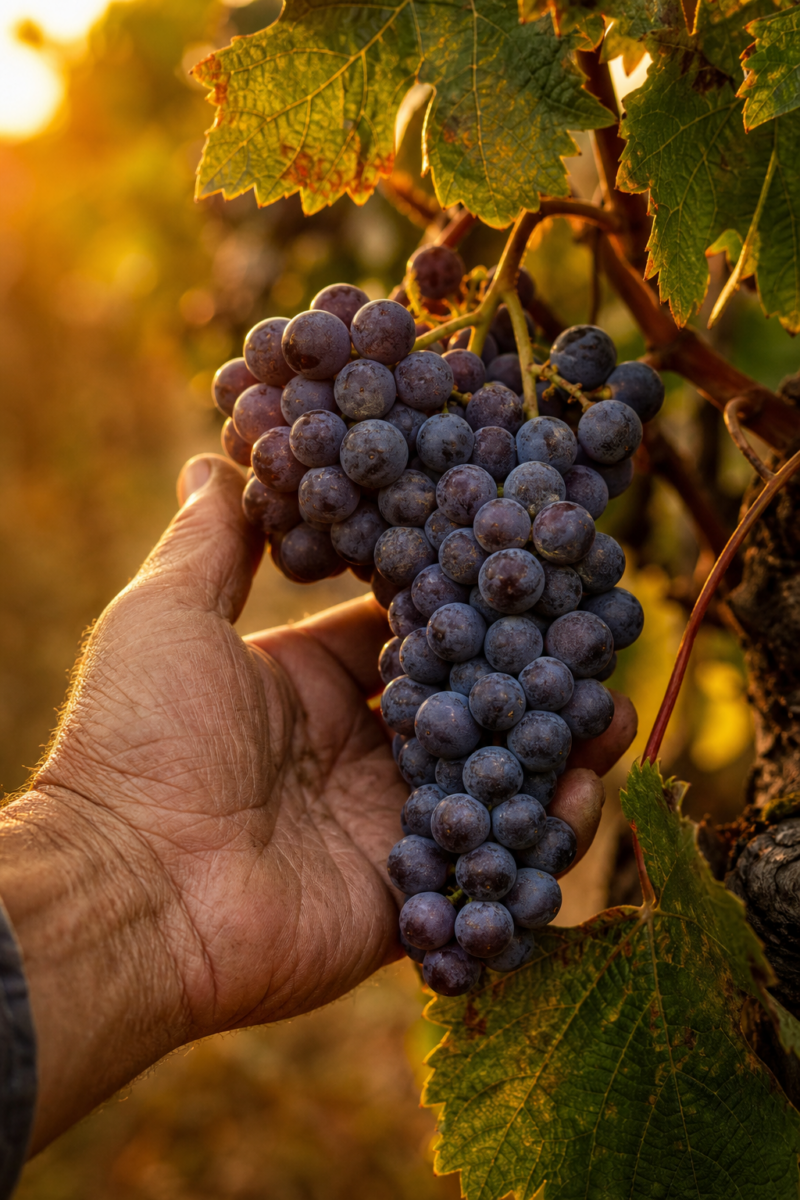
The Greek word Paul reached for here is enkrateia. It is worth slowing down on, because the English phrase “self-control” carries baggage the original does not. Enkrateia comes from two words: en, meaning “in,” and kratos, meaning “power” or “dominion.” It describes a person who has power within, mastery over the self, a will that is no longer dragged around by appetite and impulse. According to Strong’s Greek lexicon, the term carries the sense of temperance and continence, a holding of oneself in hand.
Here is the distinction that matters. Secular restraint is an external force holding something back, a hand clamped over a mouth that still wants to speak. Enkrateia is different. It is mastery that comes from the inside out, the soul governing the body rather than the body governing the soul. The word appears only a handful of times in the New Testament, and one of those places is telling. Peter writes that we are to add self-control to our faith, and a closer study of the term shows it sitting in a chain of virtues that build on one another.
“But also for this very reason, giving all diligence, add to your faith virtue, to virtue knowledge, to knowledge self-control, to self-control perseverance, to perseverance godliness.” — 2 Peter 1:5-6 (NKJV)
Notice that even here, where Peter clearly expects our diligence, self-control is something added to a faith that came first. It is fruit growing on a tree that God already planted. The interesting thing is that even the wider culture sensed something true about this word. Long before the New Testament, Greek philosophers used enkrateia to describe self-mastery, and for thinkers like Xenophon it was considered the foundation of every other virtue. Paul takes that familiar idea and relocates its source. It no longer comes from human discipline alone. It comes from the Spirit of God living in you.
Why Willpower Keeps Failing You
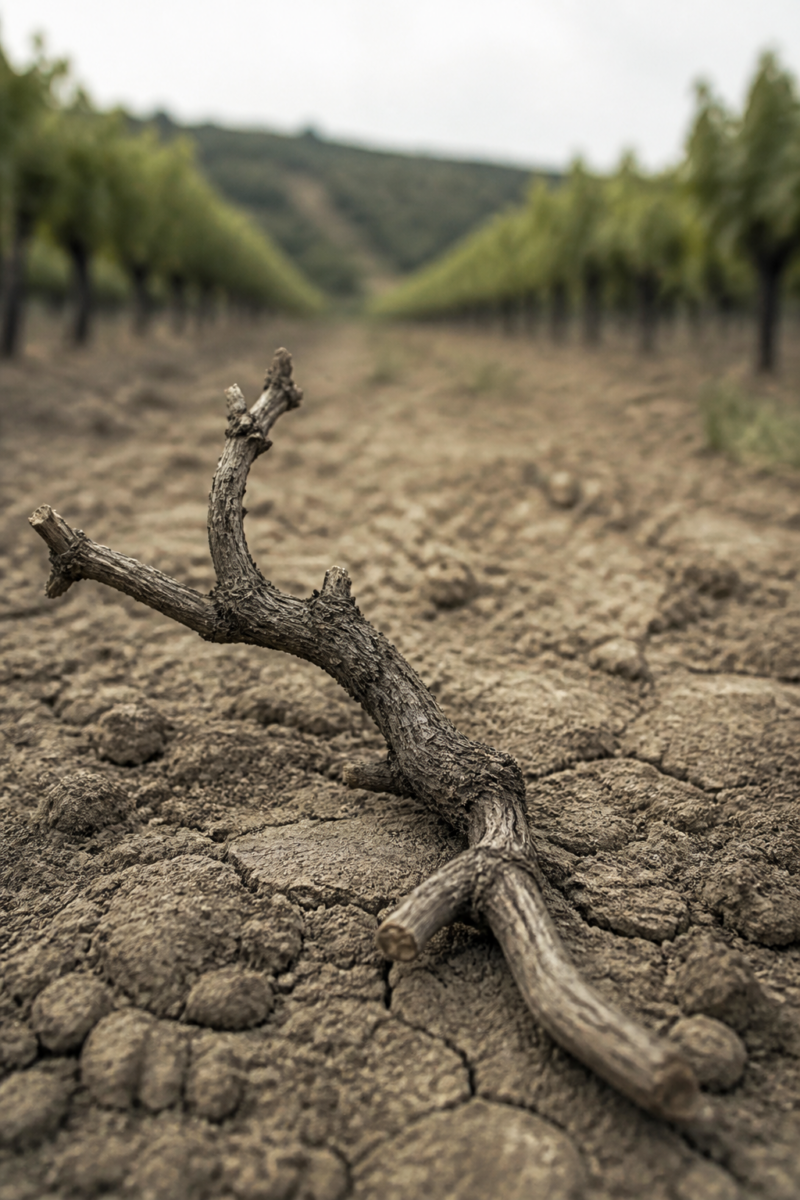
There is a reason the white-knuckle approach collapses so reliably, and Scripture diagnosed it long before psychology did. Paul described his own experience with painful honesty.
“For the good that I will to do, I do not do; but the evil I will not to do, that I practice.” — Romans 7:19 (NKJV)
Read that slowly. The will is present. Paul wants the good. But wanting is not the same as doing, and the gap between the two is where most of us live. The flesh cannot fix the flesh. Trying harder in your own strength simply runs the same broken engine faster.
What is fascinating is that secular research has been quietly arriving at a similar conclusion about willpower itself. For decades the dominant theory was something called “ego depletion,” the idea that willpower is a limited fuel tank that drains as you use it, which is why you snap at your family after a long day of self-control at work. But more recent and rigorous studies have struggled to replicate that finding. Writing in TIME, one researcher summarized the shift bluntly, noting that new studies suggest we have been thinking about willpower all wrong and that clinging to the limited-resource model can actually make you more likely to lose control. A widely discussed essay in Nautilus went further, calling willpower a dangerous old idea that needs to be scrapped.
Even the famous “marshmallow test,” long used to argue that childhood self-control predicts lifelong success, has been seriously challenged. When researchers at NYU ran a larger and more careful replication in 2018, they found the link between a child’s ability to delay gratification and later achievement was far weaker than the headlines had claimed, and largely explained by family background rather than raw willpower.
I am not suggesting we build our theology on social science. I am pointing out that even the people studying this apart from faith are finding that willpower-as-fuel does not hold up. Which is exactly what Paul told us. The answer was never going to be a stronger you. The answer is a different source.
The Paradox: Grown, Not Gritted, but Not Passive Either

Now, here is where some sincere believers veer into a ditch on the other side. If self-control is fruit, and fruit is grown by the Spirit, then maybe I just relax, let go, and let God do it all while I wait. That sounds spiritual. It is also not what Scripture teaches.
Go back to the farmer. He does not produce the life inside the seed. But he is far from passive. He plows, plants, waters, weeds, and prunes. He gets up early. He shows up in the heat. He simply understands that all his labor is cooperation with a life he did not create and cannot manufacture. The growth is God’s. The cultivation is his.
Paul models this same posture. After arguing forcefully against earning anything by self-effort, he turns around and uses the language of an athlete in training.
“And everyone who competes for the prize is temperate in all things. Now they do it to obtain a perishable crown, but we for an imperishable crown. Therefore I run thus: not with uncertainty. Thus I fight: not as one who beats the air. But I discipline my body and bring it into subjection.” — 1 Corinthians 9:25-27 (NKJV)
That is the voice of a man who trains. There is real effort here, real sweat, real discipline. The crucial difference is that Paul is not generating the life. He is bringing his body into subjection to a life the Spirit already supplies. This is the heart of what it means that we are growing without earning, a truth that frees us from the exhausting treadmill of trying to manufacture holiness on our own.
So the model is neither “try harder” nor “do nothing.” It is something far healthier. You cooperate with the Gardener. You walk in step with the Spirit rather than dragging or pushing Him. Paul put it plainly one verse after the fruit list.
“If we live in the Spirit, let us also walk in the Spirit.” — Galatians 5:25 (NKJV)
How to Cooperate With the Gardener

Let me offer some practical handholds here, with one warning attached. None of this is meant to become a new willpower checklist, a fresh way to grade yourself and fail. These are simply the conditions in which the Spirit grows fruit. Think of them the way a farmer thinks about soil and water.
Stay connected to the Vine. Fruit grows on branches that abide. Daily, unhurried time in the Word and in prayer is not a performance you owe God. It is how you stay attached to the life that produces the change. The believer who is being filled with the Spirit daily is the believer who finds self-control showing up in places where it was absent before.
Name the real battle. Lasting change rarely comes from attacking the surface behavior alone. The angry word, the second helping, the wandering eye, these are usually symptoms. Ask the Spirit to show you the root underneath. Self-control over the tongue often grows only as the heart underneath is healed, which is why understanding how the Holy Spirit empowers us to overcome sin matters more than any technique.
Welcome the pruning. Jesus said the Father prunes every branch that bears fruit so it will bear more. Pruning hurts. It often looks like loss before it looks like growth. The seasons of spiritual pruning that strip away comforts and habits are frequently the very seasons God uses to deepen self-control.
Be patient with the timeline. Here is where I find honest encouragement even in the science of habit. Researchers at University College London found that forming a new automatic behavior took an average of 66 days, but the range stretched anywhere from 18 to 254 days. The lead researcher has since clarified that how long it takes is highly variable, and that missing a single day does not undo your progress. If even ordinary habit formation is slow and forgiving, how much more patient is the God who grows His fruit in us across seasons rather than days. Self-control is more like the patience that God grows in us and cannot be rushed than like a switch you flip.
Lean on grace, not guilt. Interestingly, the same research on willpower found that people who believed their self-control was a fixed, drainable resource actually performed worse than those who did not. Shame is a terrible engine. It is no accident that the New Testament ties self-control directly to grace.
“For the grace of God that brings salvation has appeared to all men, teaching us that, denying ungodliness and worldly lusts, we should live soberly, righteously, and godly in the present age.” — Titus 2:11-12 (NKJV)
Read that again. Grace teaches us to say no. Not law. Not shame. Not gritted teeth. Grace.
A Word for the One Who Keeps Failing
If you have read this far, there is a real chance you are tired. You have tried and fallen and tried and fallen, and somewhere along the way you began to wonder if you are simply the exception, the one believer the Spirit cannot seem to change.
I want to gently take that lie out of your hands.
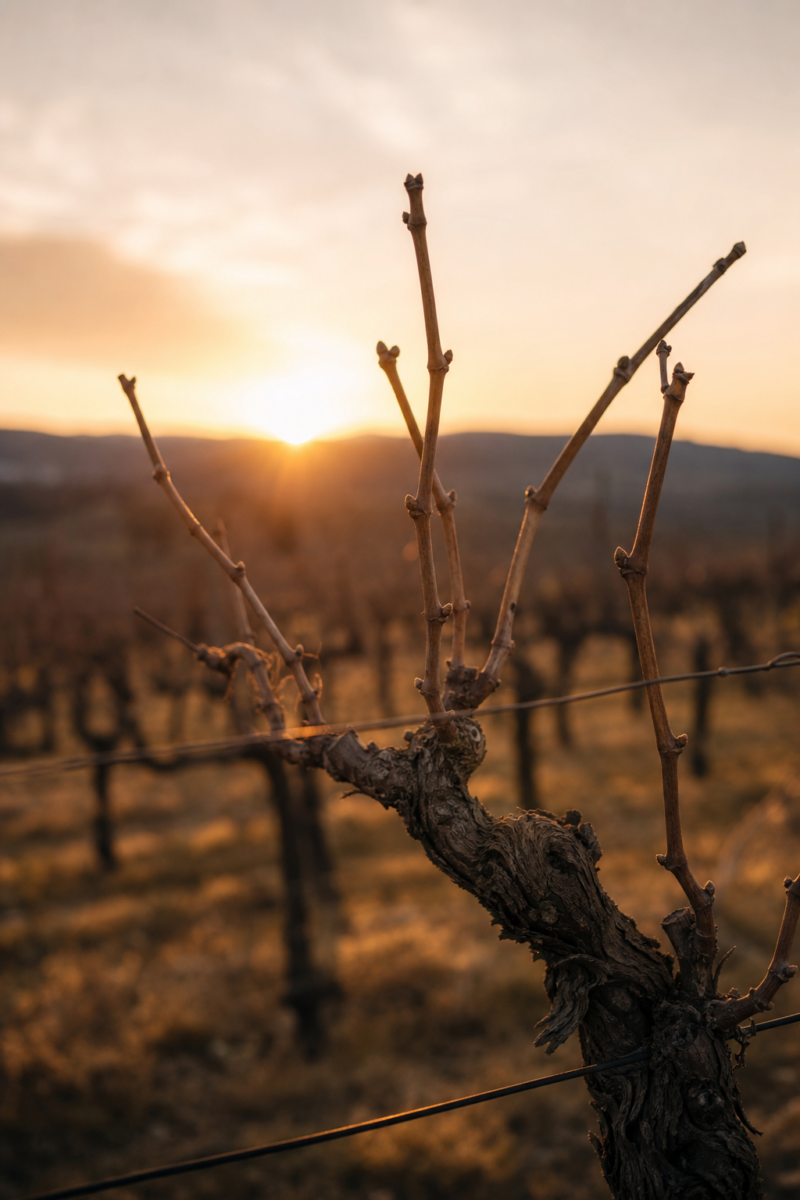
Fruit grows slowly, and it grows in seasons. There are winters where nothing visible is happening above the ground, while everything important is happening in the roots. A grapevine in January looks dead. It is not. It is gathering. The fact that you have not yet arrived does not mean the life is absent. It often means the life is going deep before it goes wide.
The branch is not responsible for the harvest. It is responsible for one thing: staying connected to the vine. So stop measuring yourself by the height of the fruit and start tending the connection. Show up tomorrow. Abide again. Let the Gardener do what only the Gardener can do. The same Spirit who raised Christ from the dead lives in you, and He is far more committed to your transformation than you are.
The hardest fruit was never meant to be the one you produce alone. It is the one you receive, cultivate, and watch grow.
A Next Step
If this reframing has loosened something in you, do not let it stay an idea. Take it into a season of focused study where the Spirit can work it down into your roots. You might:
- Read Galatians 5 slowly this week, asking the Spirit which area of self-control He wants to grow next, without rushing to fix it yourself
- Choose one small point of daily connection, a fixed time in the Word and prayer, and protect it for the next two months
- Work through our 13-lesson Fruit of the Spirit Bible study on your own, with your spouse, or in a small group, to let these truths take deeper root
Self-control is not the prize you win by trying harder. It is the fruit you bear by staying close to the One who is the Vine.
Grace and peace as you grow, Duke
Resources
- Strong’s Greek 1466: enkrateia — Bible Hub’s lexical entry on the New Testament word for self-control
- A Deeper Study of the Fruit of the Spirit: Self-Control — Bible Study Tools
- The Way You Think About Willpower Is All Wrong — TIME, on the unraveling of ego-depletion theory
- Revisiting the Marshmallow Test — NYU Steinhardt’s 2018 replication findings
- How Long Does It Really Take to Form a Habit? — Scientific American
- Does It Really Take 66 Days to Form a Habit? — University of Surrey interview with Dr. Phillippa Lally
Test Your Knowledge!
Answer all 10 questions, then submit to see your score.
Related Posts
Why You Can't Manufacture the Fruit of the Spirit (and What to Do Instead)
Last updated: June 2026 By Duke Taber You read the list in Galatians and something in you sinks a little. Love. Joy. Peace. Patience. You know…
 Jun 13, 2026
Is the Fruit of the Spirit a Command or a Result?
Last updated: June 2026 By Duke Taber You have probably tried to be more patient. Maybe you woke up one morning, gritted your teeth, and decided…
Jun 11, 2026
How to Build a Personal Worship Rhythm That Actually Sticks
Last updated: June 2026 By Duke Taber You started strong. The alarm went off early, the Bible was open, the coffee was warm. For a few…
Jun 1, 2026
How to Study the Fruit of the Spirit: 5 Approaches and Which One Fits You
Last updated: June 2026 By Duke Taber Most people who set out to study the fruit of the Spirit arrive with a quiet sense of failure…
Jun 11, 2026


 By
By


