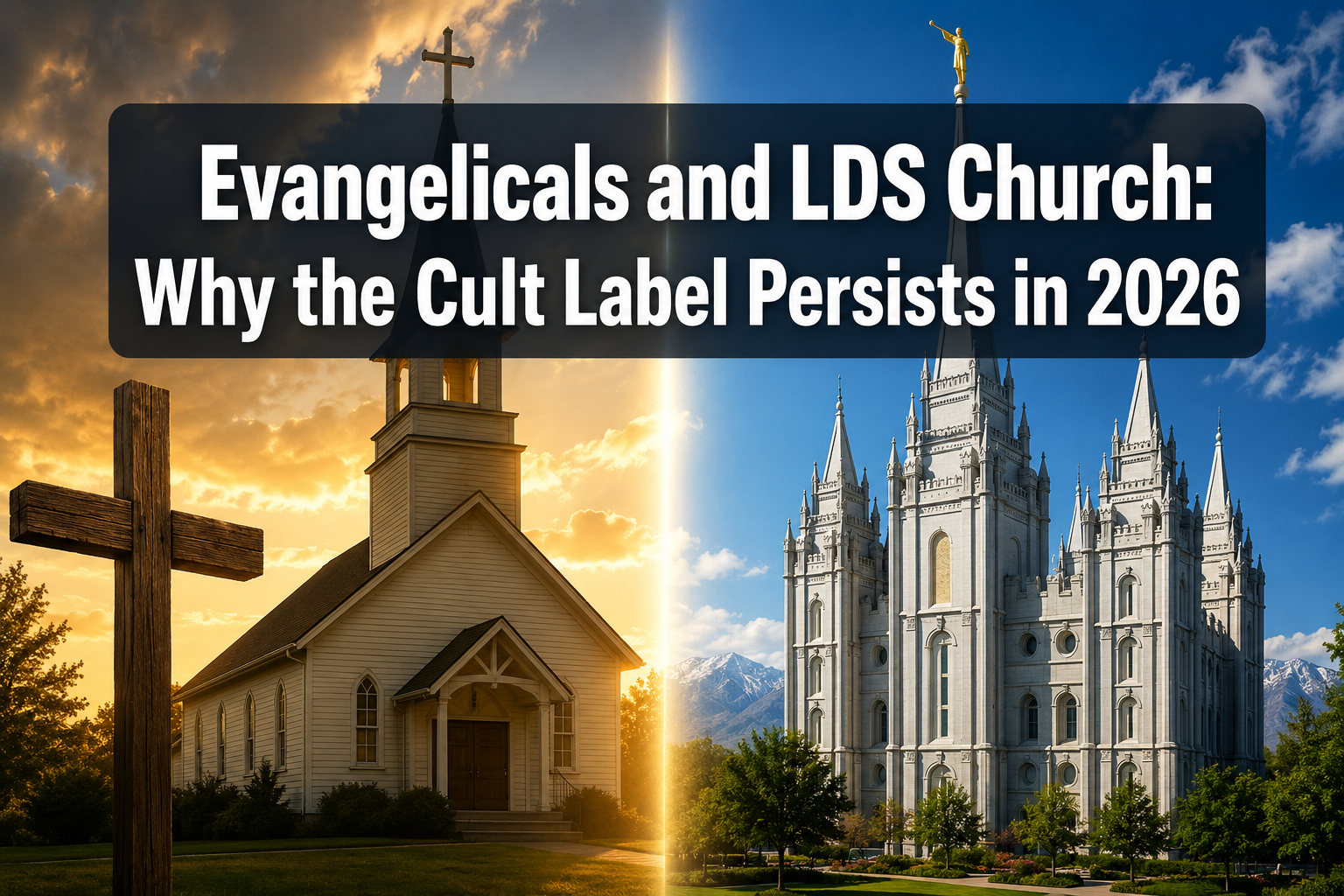

A June 2026 decision by the U.S. Department of Defense to remove the “Christian” label from its official religious classifications reignited a long-simmering debate. The DOD’s move, which came after criticism that Mormonism had been excluded from the Christian category, put a spotlight on a fracture that has never fully healed. [1] The tension between Evangelicals and LDS Church members is not new, but the question of why the “cult” label persists in June 2026 deserves a careful, honest look rooted in both history and Scripture.
This is not about stirring up conflict. It is about equipping believers to understand a real theological disagreement with clarity and grace.
Key Takeaways
- The “cult” label applied to the LDS Church by many Evangelicals stems primarily from specific doctrinal differences, not cultural bias alone.
- Key theological disputes include the nature of God, the role of additional scriptures, and the definition of salvation.
- The LDS Church has actively worked to be recognized as mainstream Christianity, but Evangelical counter-cult ministries maintain their position.
- Media conflation of mainstream LDS with fundamentalist splinter groups has muddied public understanding.
- Interfaith collaboration on shared social issues remains difficult as long as this foundational disagreement persists.
What Does “Cult” Actually Mean in Evangelical Theology?
The word “cult” carries enormous weight, and it means different things depending on who is using it. In popular culture, it conjures images of manipulation and danger. In Evangelical counter-cult ministry, the term carries a more specific, theological definition.
Evangelical counter-cult organizations define a cult as a group that claims to be Christian but deviates from historic, orthodox Christian doctrine on essential matters such as the nature of God, the person of Jesus Christ, and the means of salvation. [2] By this definition, the label is doctrinal, not necessarily social or behavioral.
This distinction matters. When an Evangelical pastor calls the LDS Church a “cult,” they are most often making a theological claim, not accusing members of being dangerous or deceptive. That nuance gets lost quickly in public conversation.
The Core Theological Differences Driving the Debate
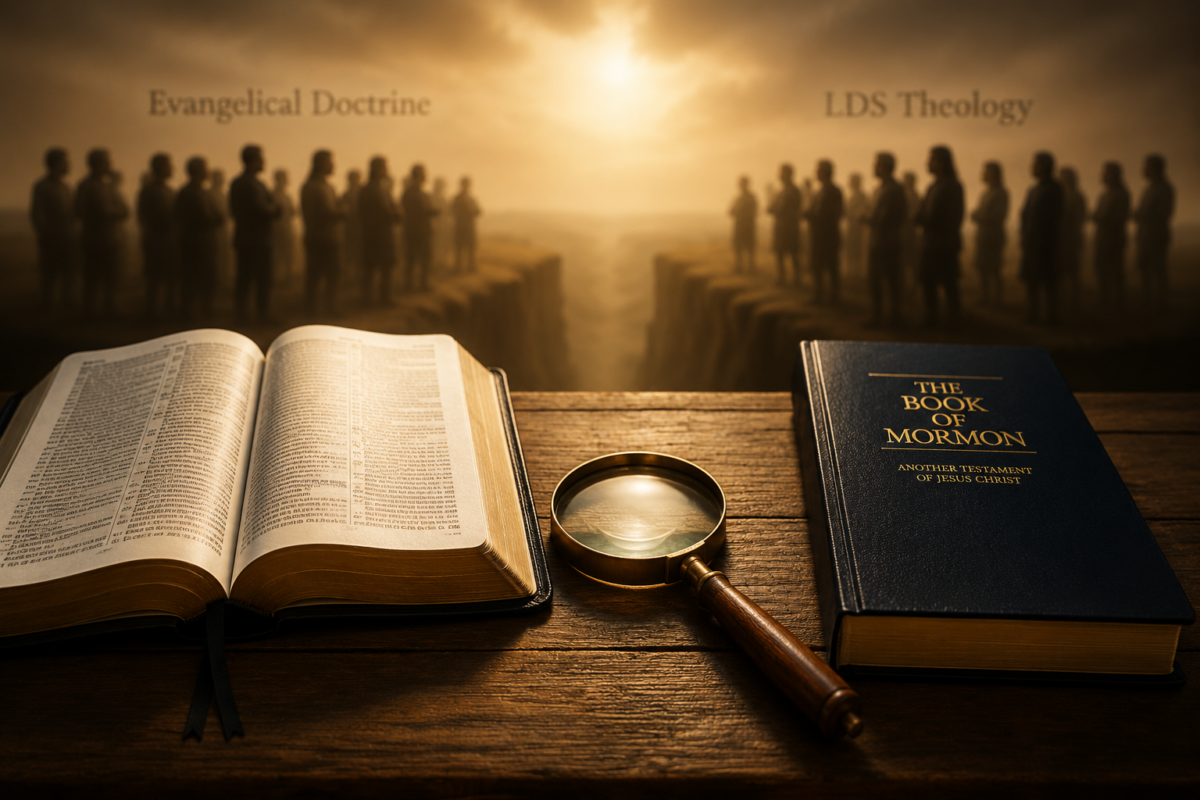
To understand why Evangelicals and LDS Church: Why the ‘Cult’ Label Persists in June 2026 remains a live conversation, you have to look at the actual doctrinal fault lines. These are not minor disagreements about worship style. They are foundational.
1. The Nature of God
Evangelical Christianity holds to the doctrine of the Trinity: one God eternally existing in three co-equal persons. The LDS Church teaches that God the Father, Jesus Christ, and the Holy Spirit are three separate and distinct beings. LDS theology also holds that God the Father has a physical body of flesh and bone. [5] For Evangelicals, this represents a departure from the God described in Scripture (Deuteronomy 6:4; John 10:30).
2. Additional Scripture
Evangelicals hold to the sufficiency and finality of the 66 books of the Bible (Revelation 22:18-19). The LDS Church accepts the Book of Mormon, Doctrine and Covenants, and the Pearl of Great Price as additional scripture alongside the Bible. [5] This is not a small difference. For Evangelical theology, it is a categorical boundary.
3. Salvation and Exaltation
While both traditions speak of salvation through Jesus Christ, LDS theology includes the concept of exaltation, the idea that faithful members can progress to become gods in the afterlife. This teaching, rooted in the LDS doctrine of eternal progression, stands in direct contrast to the Evangelical understanding of the Creator-creature distinction (Isaiah 43:10; Romans 1:25).
These are the specific points that Evangelical counter-cult ministries point to when applying the “cult” designation. [8] For a deeper look at what the Bible says about trusting God’s revealed Word, explore this Bible study on trusting God.
The LDS Church’s Response and Efforts to Bridge the Gap
The LDS Church has not been passive in this debate. Church leaders and spokespersons have consistently pushed back against the “cult” label, arguing that it is both inaccurate and harmful to millions of faithful members. In 2011, church spokesperson Mike Otterson wrote that the term marginalizes LDS members and fundamentally misrepresents their faith. [4]
The Church of Jesus Christ of Latter-day Saints has also worked to align itself visually and culturally with mainstream Christianity, emphasizing the centrality of Jesus Christ in its name and worship. LDS leaders have sought dialogue with other Christian groups and have been vocal about shared values on family, religious liberty, and moral issues.
Richard J. Mouw, then-president of Fuller Theological Seminary, argued in 2011 that the LDS Church had moved sufficiently into the religious mainstream to make the “cult” label inappropriate and unhelpful. [3] His position was controversial among Evangelicals but reflected a genuine desire for more careful language.
Why the Label Persists Despite These Efforts
So if the LDS Church is actively working to be seen as Christian, and if some respected Evangelical voices have called for softer language, why does the “cult” label still persist in June 2026?
Several factors keep it alive:
- Doctrinal lines are firm. For Evangelicals who define orthodoxy by the historic creeds and Scripture alone, the theological differences listed above are not negotiable. No amount of cultural alignment changes the underlying doctrine.
- Confusion with fundamentalist splinter groups. Organizations like the Fundamentalist Church of Jesus Christ of Latter-Day Saints (FLDS), which practice polygamy and other doctrines rejected by the mainstream LDS Church, are frequently conflated with it in media coverage. [6] This association reinforces the “cult” stereotype unfairly. [7]
- Counter-cult ministry infrastructure. Decades of books, curricula, and training have established the “cult” framework within Evangelical institutions. That infrastructure does not disappear overnight.
- The DOD classification controversy. The June 2026 DOD decision to remove the “Christian” label from its religious list after criticism about Mormonism’s exclusion has reignited these tensions rather than resolved them. [1] It has made the question more political, which rarely helps theological clarity.
For small group leaders navigating these conversations, the Top 10 Engaging Bible Study Topics for Small Groups resource can help frame difficult interfaith discussions in a biblically grounded way.
How Should Evangelical Believers Respond?
This is where the pastoral rubber meets the road. Understanding the theological disagreement is one thing. Knowing how to engage real LDS neighbors, coworkers, and family members with truth and love is another.
Here are four practical steps:
- Know what you believe and why. Ground yourself in the core doctrines of the faith before engaging in comparative theology. A Bible study about faith is a good place to start.
- Separate the label from the person. Theological disagreement does not justify contempt. Every LDS person is made in the image of God and deserves to be treated with dignity (Genesis 1:27).
- Use precise language. If you use the word “cult,” be prepared to define it carefully and theologically. Imprecise language creates more heat than light.
- Pray before you speak. Colossians 4:6 says, “Let your speech always be with grace, seasoned with salt, that you may know how you ought to answer each one” (NKJV). That verse applies here directly.
For those wanting to go deeper in their own theological preparation, the how to lead a Bible study guide offers practical tools for facilitating these kinds of conversations in a group setting.
The Bigger Issue No One Wants to Talk About
A Salt Lake Tribune piece published on June 14, 2026, raised a provocative point: the LDS Church may be missing the bigger issue entirely. The debate over the “cult” label, while real, can distract from the more substantive question of whether the theological differences between Evangelical Christianity and LDS theology are reconcilable at all.
The answer, based on the doctrinal evidence, is that they are not, at least not without one side fundamentally changing its core beliefs. That is not an insult. It is an honest assessment.
Evangelicals and LDS Church leaders can cooperate on shared civic and moral concerns. They can treat each other with respect. But genuine theological unity requires genuine theological agreement, and that agreement does not currently exist on the matters that define Christian orthodoxy.
For believers who want to anchor their own faith more deeply during confusing cultural moments, spending time with Bible verses about trusting God can be a grounding practice.
Conclusion
The question of Evangelicals and LDS Church: Why the ‘Cult’ Label Persists in June 2026 does not have a simple answer, but it does have a clear one. The label persists because the theological differences are real, deep, and have not changed. Cultural proximity, shared values, and good-faith dialogue are all worthwhile, but they do not resolve doctrinal disagreement.
For Evangelical believers, the call is to hold firmly to biblical truth while engaging every person, including LDS neighbors and friends, with the love of Christ. For small group leaders and pastors, this topic offers a genuine opportunity to teach discernment without fostering contempt.
Actionable next steps:
- Study the core Evangelical doctrines of God, Scripture, and salvation so you can articulate them clearly.
- Use resources like the 20 Bible Verses About Sin That Inspire Reflection to anchor discussions in Scripture.
- Approach conversations with LDS friends or family members with humility and grace, not a spirit of argument.
- Lead your small group through a comparative theology study using the how to start a Bible study with friends framework.
Truth spoken in love is still truth. And love that ignores truth is not really love at all (Ephesians 4:15).
References
[1] Mormon Defense Dod Religions Christian Evangelicals – https://www.axios.com/local/salt-lake-city/2026/06/08/mormon-defense-dod-religions-christian-evangelicals?utm_source=openai
[2] Defining Cult Defining Christian – https://religiondispatches.org/2011/10/13/defining-cult-defining-christian?utm_source=openai
[3] President Of Fuller Seminary Declares Mormonism Is Not A Cult – https://www.godreports.com/2011/12/president-of-fuller-seminary-declares-mormonism-is-not-a-cult/?utm_source=openai
[4] On Faith Blog Whats In A Word – https://newsroom.churchofjesuschrist.org/article/on-faith-blog-whats-in-a-word?utm_source=openai
[5] Mormonism Christian Cult – https://www.equip.org/articles/mormonism-christian-cult/?utm_source=openai
[6] Fundamentalist Church Of Jesus Christ Of Latter Day Saints – https://en.wikipedia.org/wiki/Fundamentalist_Church_of_Jesus_Christ_of_Latter-Day_Saints?utm_source=openai
[7] The Atlantic Apparently Evangelical Now Equals Cult – https://www.getreligion.org/getreligion/2014/06/the-atlantic-apparently-evangelical-now-equals-cult?utm_source=openai
[8] Cultic Characteristics Of Mormonism – https://mrm.org/cultic-characteristics-of-mormonism?utm_source=openai
Test Your Knowledge!
Answer all 10 questions, then submit to see your score.
Related Posts

Pentagon Revises Christian Religious Categories After Outcry (June 2026)
Last updated: June 2026 A recent decision by the Pentagon to revise its religious categorization system has ignited a firestorm of controversy, particularly concerning the classification…
 Jun 8, 2026
Texas Considers Expanding Christianity's Role in Public Schools (June 2026)
Last updated: June 2026 As debates over the separation of church and state continue nationwide, Texas is currently at the forefront of a significant legislative push…
Jun 8, 2026
Christian Burial vs. Cremation: What Matters to Believers in June 2026?
Last updated: June 2026 For centuries, burial has been the predominant practice for Christians, rooted in deep tradition and theological conviction. Yet as cremation now accounts…
Jun 15, 2026
Encouraging Trends in Global Christianity: June 2026 Update
Last updated: June 2026 While headlines often focus on challenges facing Christianity, new reports highlight encouraging trends in global Christian adherence and engagement. The global Christian…
Jun 10, 2026


 By
By


