
King Omri is one of the most significant yet underappreciated figures in the history of the northern kingdom of Israel. Though his reign is not as extensively documented as some of his successors, his impact on the political and religious landscape of Israel was profound. Omri established a dynasty that would shape the course of Israel’s history for decades, but his legacy is also marked by spiritual decline and idolatry. This article explores the life, reign, and legacy of King Omri, drawing from the New King James Version (NKJV) of the Bible and examining the lessons his story holds for us today.
Introduction to Omri
Omri’s story is found in 1 Kings 16:16-28, with additional references in the books of Micah and the archaeological records of the ancient Near East. He was the sixth king of the northern kingdom of Israel, ascending to the throne after a period of political instability following the death of Zimri. Omri’s reign marked the beginning of a new dynasty, but it was also a time of deepening apostasy in Israel.
The Historical Context
To understand Omri’s rise to power, it is essential to consider the historical context of the northern kingdom of Israel. After the united monarchy under Solomon split into two kingdoms—Israel in the north and Judah in the south—the northern kingdom experienced a series of short-lived dynasties and frequent coups. The kingdom was plagued by idolatry, political instability, and external threats from neighboring nations.
Omri’s predecessor, Zimri, had seized the throne through treachery but ruled for only seven days before his dramatic downfall. The kingdom was in chaos, with rival factions vying for power. It was in this context that Omri emerged as a leader.
Omri’s Rise to Power
Omri’s ascent to the throne is described in 1 Kings 16:16-18:
“Now the people who were encamped heard it said, ‘Zimri has conspired and also has killed the king.’ So all Israel made Omri, the commander of the army, king over Israel that day in the camp. Then Omri and all Israel with him went up from Gibbethon, and they besieged Tirzah. When Zimri saw that the city was taken, that he went into the citadel of the king’s house and burned the king’s house down upon himself with fire, and he died.” (1 Kings 16:16-18, NKJV)
Omri was the commander of the Israelite army, a position that gave him significant influence and authority. When Zimri’s coup led to widespread unrest, the people turned to Omri as their leader. Omri’s military background and leadership skills made him a natural choice to restore order.
However, Omri’s rise to power was not without conflict. After Zimri’s death, the kingdom was divided between Omri and another contender, Tibni. This division is described in 1 Kings 16:21-22:
“Then the people of Israel were divided into two parts: half of the people followed Tibni the son of Ginath, to make him king, and half followed Omri. But the people who followed Omri prevailed over the people who followed Tibni the son of Ginath. So Tibni died and Omri reigned.” (1 Kings 16:21-22, NKJV)
Omri’s victory over Tibni solidified his position as king, but it also highlighted the ongoing instability within the kingdom.
Omri’s Reign and Achievements

Omri’s reign lasted for twelve years, from approximately 885 to 874 BC. While the biblical account of his reign is relatively brief, it provides important insights into his accomplishments and failures.
1. The Founding of Samaria
One of Omri’s most significant achievements was the establishment of Samaria as the capital of Israel. This move is described in 1 Kings 16:24:
“And he bought the hill of Samaria from Shemer for two talents of silver; then he built on the hill, and called the name of the city which he built, Samaria, after the name of Shemer, owner of the hill.” (1 Kings 16:24, NKJV)
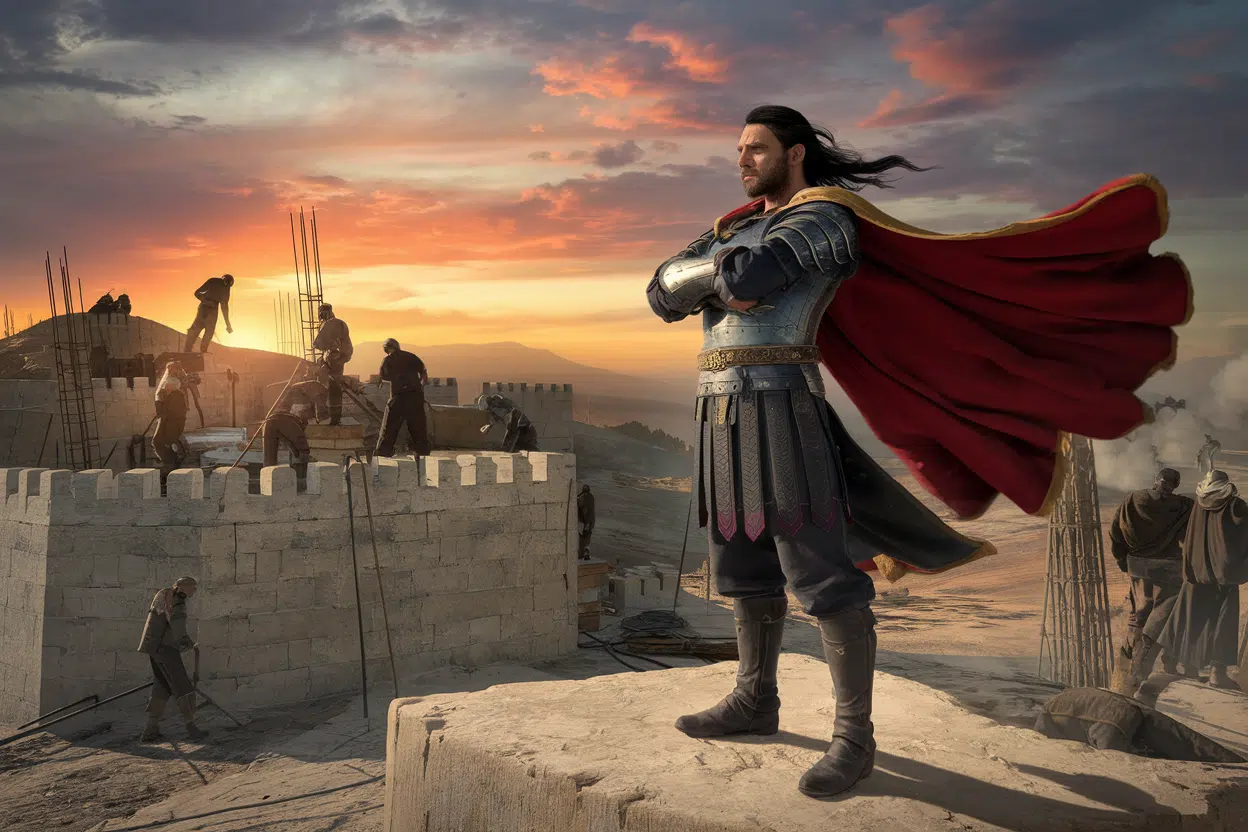
Samaria’s strategic location on a hill made it a formidable fortress and a symbol of Omri’s power. The city would remain the capital of Israel for over 150 years, serving as a center of political and economic activity. Archaeological evidence confirms the city’s prominence during this period, with impressive structures and fortifications dating to Omri’s reign.
2. Political Alliances
Omri was also known for his diplomatic skills. He forged alliances with neighboring kingdoms, including Phoenicia, through the marriage of his son Ahab to Jezebel, the daughter of the king of Sidon. This alliance brought economic benefits but also introduced Baal worship into Israel, leading to widespread idolatry.
3. Military Campaigns
While the Bible does not provide detailed accounts of Omri’s military campaigns, extrabiblical sources, such as the Mesha Stele (a Moabite inscription), suggest that Omri expanded Israel’s territory and exerted influence over neighboring regions. His military successes likely contributed to the stability and prosperity of his reign.
Omri’s Spiritual Failures
Despite his political and military achievements, Omri’s reign was marked by spiritual decline. The Bible is clear in its condemnation of his actions:
“But Omri did evil in the eyes of the Lord, and did worse than all who were before him. For he walked in all the ways of Jeroboam the son of Nebat and in his sin by which he had made Israel sin, provoking the Lord God of Israel to anger with their idols.” (1 Kings 16:25-26, NKJV)
Omri’s spiritual failures can be summarized as follows:
- Continuation of Jeroboam’s Idolatry: Omri followed in the footsteps of Jeroboam I, the first king of the northern kingdom, who had established idolatrous worship centers in Bethel and Dan. By perpetuating this sin, Omri led the people further away from the worship of the true God.
- Introduction of Baal Worship: Omri’s alliance with Phoenicia through the marriage of his son Ahab to Jezebel brought Baal worship into Israel. This foreign religion became a significant threat to the worship of Yahweh and led to widespread apostasy.
- Neglect of God’s Covenant: Omri’s reign was characterized by a disregard for God’s covenant with Israel. Instead of leading the people back to God, he entrenched them in idolatry and sin.
Omri’s Legacy
Omri’s legacy is complex. On the one hand, he was a capable leader who brought stability to Israel and established a dynasty that would endure for several generations. His son Ahab and his descendants would continue to rule Israel, making the Omride dynasty one of the most significant in the northern kingdom’s history.
On the other hand, Omri’s spiritual failures had far-reaching consequences. The idolatry and apostasy that characterized his reign set the stage for the prophetic confrontations of Elijah and Elisha, as well as the eventual downfall of the northern kingdom.
The prophet Micah later referenced Omri’s legacy in Micah 6:16:
“For the statutes of Omri are kept; all the works of Ahab’s house are done; and you walk in their counsels, that I may make you a desolation, and your inhabitants a hissing. Therefore you shall bear the reproach of My people.” (Micah 6:16, NKJV)
This verse underscores the enduring impact of Omri’s sins on the people of Israel.
Lessons from Omri’s Life
Omri’s story offers several important lessons for readers of the Bible:
- The Danger of Compromise: Omri’s alliance with Phoenicia brought short-term benefits but long-term spiritual consequences. His willingness to compromise with idolatrous nations serves as a warning against the dangers of prioritizing political and economic gain over faithfulness to God.
- The Importance of Spiritual Leadership: Omri’s reign highlights the importance of spiritual leadership. While he was a capable political and military leader, his failure to lead the people in worshiping the true God had devastating consequences. Leaders today must prioritize their spiritual responsibilities alongside their secular duties.
- The Consequences of Idolatry: Omri’s legacy of idolatry serves as a reminder of the destructive power of sin. The Bible consistently warns against idolatry, as seen in Exodus 20:3-5: “You shall have no other gods before Me. You shall not make for yourself a carved image… you shall not bow down to them nor serve them.” (Exodus 20:3-5, NKJV)
- The Sovereignty of God: Despite Omri’s successes, his reign was ultimately subject to God’s sovereignty. The Bible teaches that God raises up and brings down leaders according to His purposes. As Proverbs 21:1 states, “The king’s heart is in the hand of the Lord, like the rivers of water; He turns it wherever He wishes.” (Proverbs 21:1, NKJV)
Conclusion
King Omri’s reign was a pivotal period in the history of the northern kingdom of Israel. His political and military achievements brought stability and prosperity, but his spiritual failures led the people further into idolatry and sin. Omri’s legacy serves as a cautionary tale of the dangers of compromise, the importance of spiritual leadership, and the consequences of idolatry.
As we reflect on Omri’s life, we are reminded of the timeless truths found in Scripture and the need to prioritize faithfulness to God above all else. May we learn from Omri’s mistakes and strive to walk in obedience to God’s Word, trusting in His sovereignty and seeking His guidance in all that we do.
“But seek first the kingdom of God and His righteousness, and all these things shall be added to you.” (Matthew 6:33, NKJV)
How Does King Zimri’s Brief Reign Reflect the Challenges Faced by King Omri in Establishing a Dynasty?
King zimri’s brief reign and lessons highlight the instability that plagued the northern kingdom of Israel. His rapid ascent and subsequent downfall underscore the challenges King Omri faced in establishing a lasting dynasty. Zimri’s swift end served as a warning about the need for strategic alliances and strong governance.
Share On Pinterest!


Related Posts

Faith in the Old Testament vs. New Testament — Key Differences
Last updated: May 2026 Discover how old testament vs new testament faith evolved from covenant obedience to personal relationship with Christ. Learn the key differences today.
 May 13, 2026
Shrinking US Congregations Reimagining Church Buildings as Affordable Housing
Last updated: June 2026 As many churches across the United States face dwindling congregations and mounting maintenance costs, a growing trend is emerging: transforming sacred spaces…
Jun 12, 2026
When Worship Becomes Your Weapon: The Connection Between Praise and Spiritual Warfare in 2 Chronicles 20
Last updated: June 2026 By Duke Taber There are moments in life when the threat in front of you is simply too large to fight with…
Jun 2, 2026
Why Most People Study the Bible Wrong — And How a Structured Study Changes Everything
Last updated: May 2026 Most Christians read the Bible but never truly study it. Discover the common mistakes that keep believers spiritually stuck — and how a structured Bible study changes everything.
May 26, 2026


 By
By


