
By Duke Taber
You have heard the Word of God preached for years. You have read the same passages, sung the same songs, sat in the same pews. And yet somewhere along the way you began to wonder why the truth that lights a fire in one person seems to bounce off another. Why does the same seed produce such different harvests?
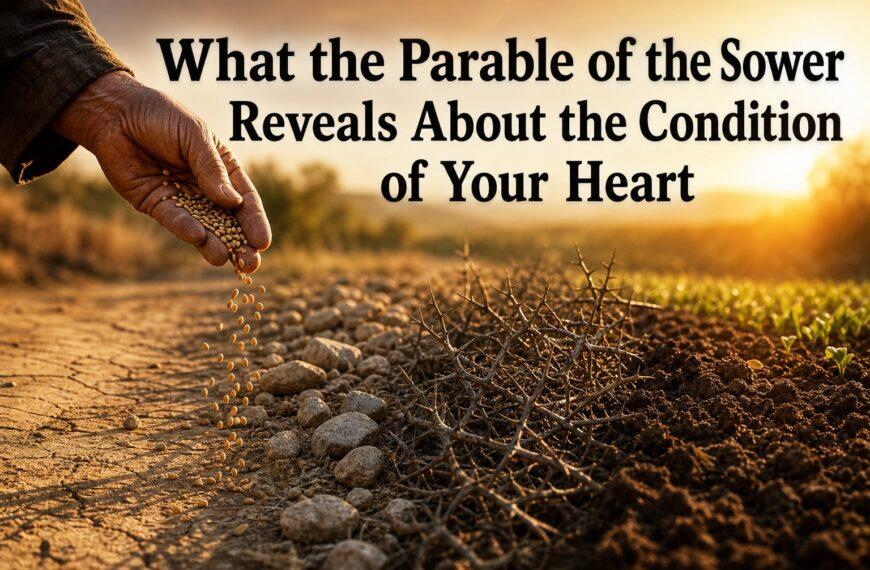
Jesus answered that question before anyone thought to ask it. He told a story about a farmer, a handful of seed, and four kinds of ground. On the surface it is a simple agricultural picture. Underneath, it is one of the most searching diagnostic tools He ever gave us. The Parable of the Sower is not really about dirt. It is about the human heart, and it asks each of us a question we would often rather avoid.
The question is not which soil represents other people. The question is which soil am I.

The One Parable Jesus Stopped to Explain
Most of Jesus’ parables were left open, like riddles meant to provoke. This one He explained directly. He told it to a crowd from a boat, then later, in private, He walked His disciples through the meaning line by line. That makes the Parable of the Sower one of the most direct diagnostic passages in all of His teaching.
“Behold, a sower went out to sow. And as he sowed, some seed fell by the wayside; and the birds came and devoured them. Some fell on stony places, where they did not have much earth; and they immediately sprang up because they had no depth of earth. But when the sun was up they were scorched, and because they had no root they withered away. And some fell among thorns, and the thorns sprang up and choked them. But others fell on good ground and yielded a crop: some a hundredfold, some sixty, some thirty.” — Matthew 13:3-8 (NKJV)
His audience knew this scene by heart. First-century Galilee was an agrarian society where nearly everyone had planted, weeded, and harvested with their own hands. The picture of a farmer broadcasting seed across a field by hand was as ordinary to them as a grocery run is to us. They understood that the same seed could thrive or die depending entirely on the ground that received it.
Then Jesus told them what the soils meant. The seed is the Word. The soils are hearts. And here is the part that should stop us cold. He gave this explanation to His own disciples, the men closest to Him, which means the warning was never aimed only at outsiders. It was aimed at people who already believed they were following Him. The parable invites self-examination, not finger-pointing. If you want a deeper walk through the text, this study on the Parable of the Sower traces it section by section.
So let us do the uncomfortable thing. Let us hold each soil up like a mirror.
The Hard Soil: A Heart Too Trampled to Receive
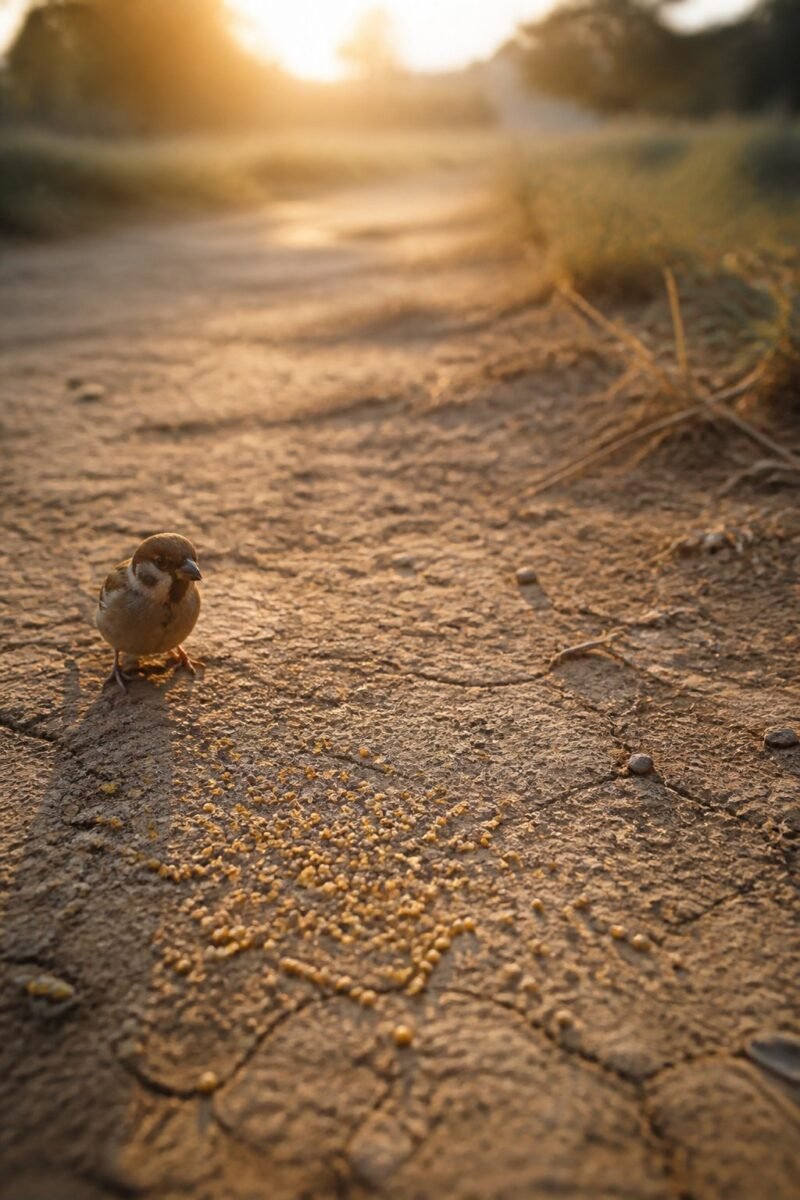
The first seed never gets a chance. It lands on the path, the packed-down strip of ground at the edge of the field where countless feet have pressed the earth into something closer to stone. The seed cannot penetrate. It sits exposed on the surface until the birds carry it off.
“When anyone hears the word of the kingdom, and does not understand it, then the wicked one comes and snatches away what was sown in his heart.” — Matthew 13:19 (NKJV)
A hard heart is rarely hard all at once. It hardens the way a footpath hardens, one small compromise at a time, until truth that once moved you barely registers. Disappointment can do it. So can familiarity. So can the slow callous that forms when we hear the Word and refuse to act on it, again and again, until our conscience stops protesting.
Scripture takes this danger seriously. The writer of Hebrews quotes the Psalms with real urgency.
“Today, if you will hear His voice, do not harden your hearts.” — Hebrews 3:15 (NKJV)
Notice the word today. A hard heart can be softened, but not by waiting. The good news of the parable is that ground can be broken up. The prophet Jeremiah used exactly that image when he called God’s people back.
“Break up your fallow ground, and do not sow among thorns.” — Jeremiah 4:3 (NKJV)
Fallow ground is land that has gone hard from neglect. The remedy is not condemnation. The remedy is the plow. If you sense that the Word no longer pierces you the way it once did, that is not a verdict. It is an invitation to let God turn the soil over again. Understanding the condition of the heart is the first step toward letting Him do it.
The Rocky Soil: A Heart Without Depth
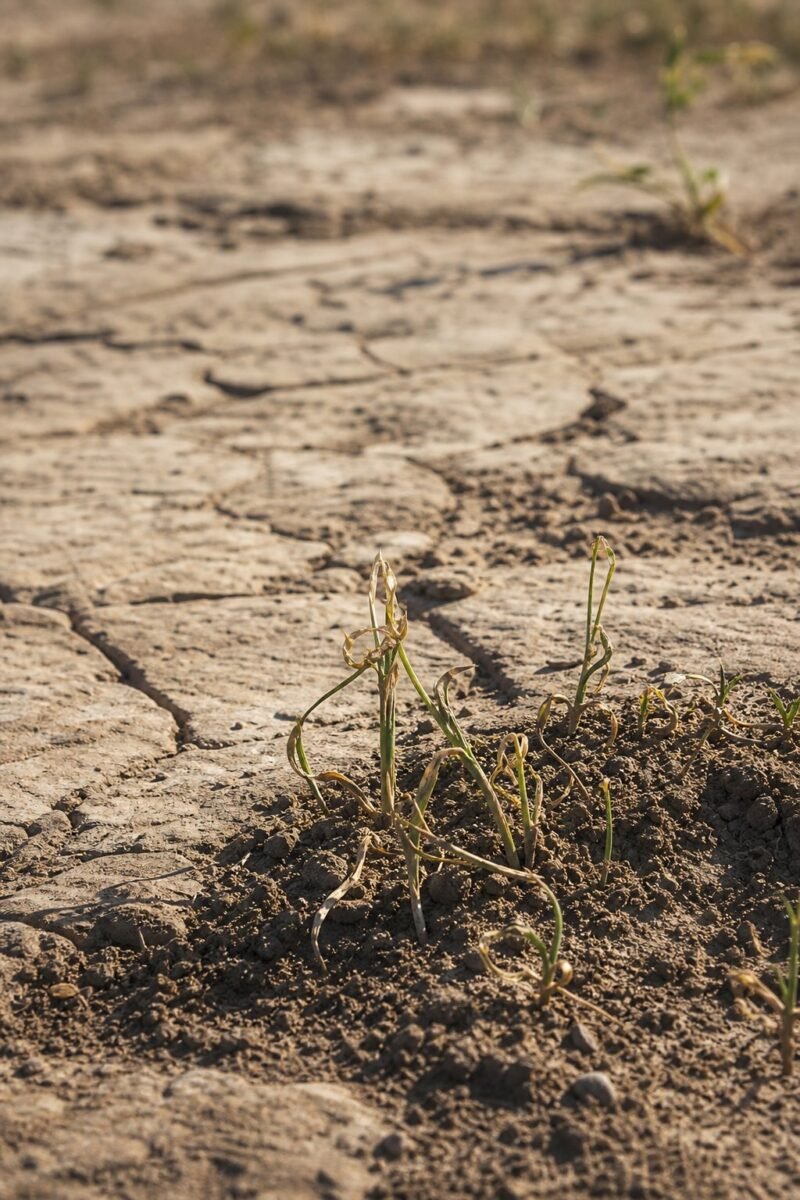
The second seed lands on what looks promising. There is soil here, but only a thin layer of it stretched over a shelf of bedrock. Rocky ground in Palestine warmed quickly, so the seed sprang up fast and green. The problem was hidden below the surface. The roots hit stone and had nowhere to go.
“But he who received the seed on stony places, this is he who hears the word and immediately receives it with joy; yet he has no root in himself, but endures only for a while. For when tribulation or persecution arises because of the word, immediately he stumbles.” — Matthew 13:20-21 (NKJV)
This is the heart that responds to the gospel with genuine emotion and no foundation. The joy is real. The conversion looks vibrant. But faith that lives only in the feelings has no anchor for the day the feelings fade. When trouble comes, and it always comes, there is nothing underground to hold the plant in place.
I have pastored people through this pattern for over thirty years, and it grieves me every time. A new believer catches fire, fills a row, weeps at the altar, and then quietly disappears the first time their faith costs them something. The seed was good. The reception was warm. The roots never formed.
Depth is not automatic. It comes from time spent below the surface, in the unglamorous work of prayer, repentance, and steady obedience when no one is watching. A heart grows roots the same way a tree does, slowly, in the dark, long before anyone sees the fruit. This is why casual Bible reading is not enough to sustain a life. Excitement gets the seed to sprout. Only roots get it through the drought.
The Thorny Soil: A Heart Too Crowded to Grow

The third soil is the one I believe most American believers need to examine first, because it is the soil that looks most like ordinary, busy, respectable Christian life.
The seed here takes root. The plant grows. But it is not alone in the ground. Thorns grow up alongside it, and the thorns win. In first-century farming, a field could be plowed and the visible weeds cut back or even burned off the surface, yet the roots of the thorns remained underground, ready to spring back stronger and strangle the wheat before it could produce grain.
“Now he who received seed among the thorns is he who hears the word, and the cares of this world and the deceitfulness of riches choke the word, and he becomes unfruitful.” — Matthew 13:22 (NKJV)
Read that verse again and feel how modern it is. The cares of this world. The deceitfulness of riches. Jesus named the two thorns that still choke faith more effectively than any open persecution. Worry and wealth. Anxiety and appetite. They do not attack your faith. They simply crowd it out.
Consider the cares first. We live in an age engineered to fragment your attention into a thousand pieces. A national survey commissioned by The Ohio State University Wexner Medical Center found that the average attention span has shrunk to roughly eight seconds, and that stress and anxiety were the top factor Americans blamed for it, ahead of even digital devices. Anxiety itself has become the most common mental health condition in the country, with the Anxiety and Depression Association of America reporting that anxiety disorders affect tens of millions of adults, and roughly one in three people will face one in their lifetime.
A mind that cannot stay still for eight seconds cannot easily abide in anything. When you finally sit down to pray, the worries you carried in sit down with you. They do not announce themselves as enemies of your faith. They feel like responsibilities. That is exactly how a thorn works. The believer who is drowning in concern is in good company throughout Scripture, and studying the examples of anxiety in the Bible shows how God meets His people in it rather than condemning them for it.
Then there is distraction, the quieter cousin of anxiety. Research from the American Psychological Association on the cost of task switching found that constantly shifting our attention can consume as much as forty percent of our productive time. We are not so much busy as we are scattered. We give God the leftover fragments of a mind that has been pulled in a dozen directions all day. The Word goes in, but it never gets a clear field. The thorns of the constant scroll grow up and choke it before it can mature. Scripture is full of biblical examples of distraction, and not one of them ends well for the distracted.
The deceitfulness of riches works differently. Wealth does not choke faith by making you reject God. It chokes faith by making you feel that you do not urgently need Him. The danger is right there in the word Jesus chose. Deceitful. Money lies to you. It promises a security and a satisfaction it can never deliver, and while you chase the promise, your spiritual life quietly starves. John named the same three thorns in his letter.
“Do not love the world or the things in the world. If anyone loves the world, the love of the Father is not in him. For all that is in the world, the lust of the flesh, the lust of the eyes, and the pride of life, is not of the Father but is of the world.” — 1 John 2:15-16 (NKJV)
The thorny heart is not rebellious. It is simply overgrown. And the hardest part of this soil is that the believer in it often does not feel the loss until harvest time, when they look at their life and find no fruit where there should have been a crop.
The Good Soil: A Heart That Bears Fruit
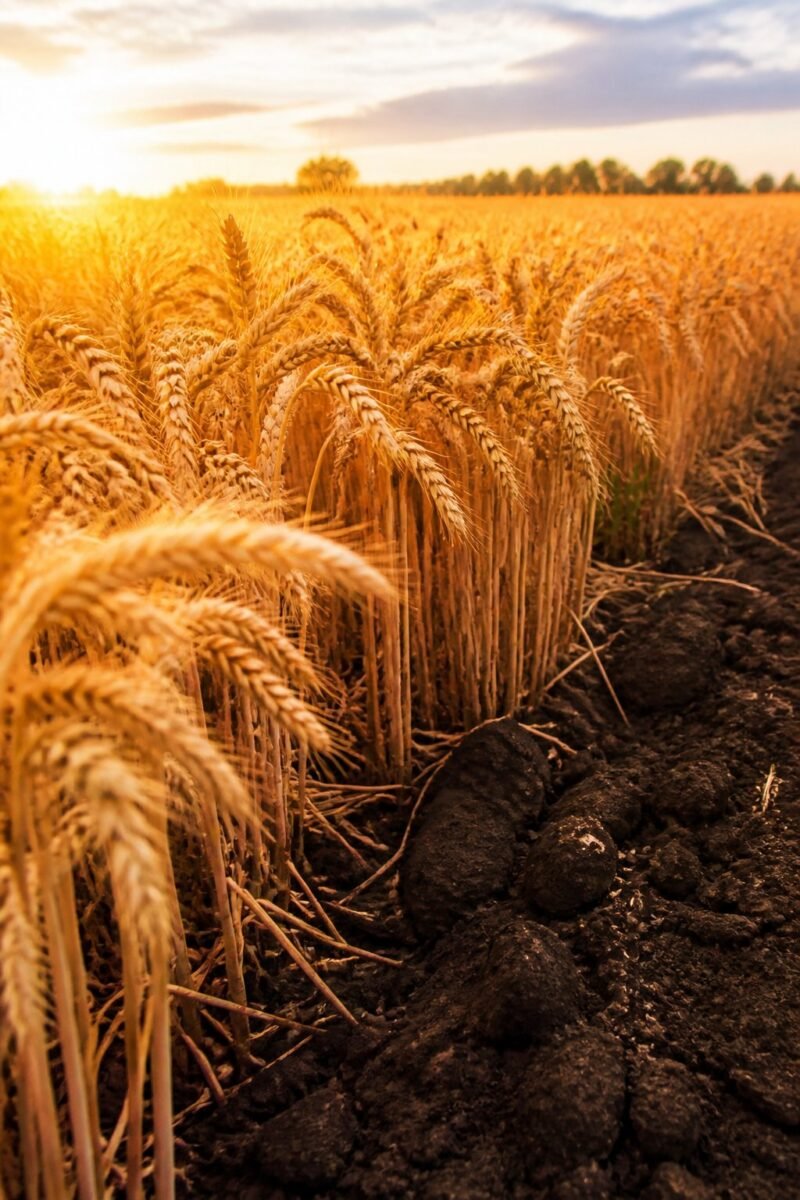
Three soils fail. One succeeds. And the difference is not intelligence, talent, or even the intensity of the initial response. The difference is what the heart does with the Word over time.
“But he who received seed on the good ground is he who hears the word and understands it, who indeed bears fruit and produces: some a hundredfold, some sixty, some thirty.” — Matthew 13:23 (NKJV)
Luke records the same soil with two extra words that are worth their weight in gold.
“But the ones that fell on the good ground are those who, having heard the word with a noble and good heart, keep it and bear fruit with patience.” — Luke 8:15 (NKJV)
Hear it. Keep it. Bear fruit with patience. That is the whole anatomy of a fruitful believer. The good soil is not a personality type. It is a heart that receives the Word, holds onto it instead of letting it leak away, and gives it time to mature without demanding instant results.
And the yield is staggering. In ancient farming a tenfold return was considered a good harvest. Thirtyfold was exceptional. A hundredfold was the kind of crop people told stories about for years. Jesus is describing a return that exceeds every reasonable expectation of what a seed in soil can do. That is what God’s Word produces in a heart prepared to receive it. The fruit is not abstract either. It looks like the fruit of the Spirit in everyday life, the visible, measurable change in how you love, forgive, and live. If you want to see the pattern modeled in real lives, Scripture offers many examples of bearing fruit that started with a single seed in good ground.
The Truth That Changes Everything: Your Soil Can Be Changed
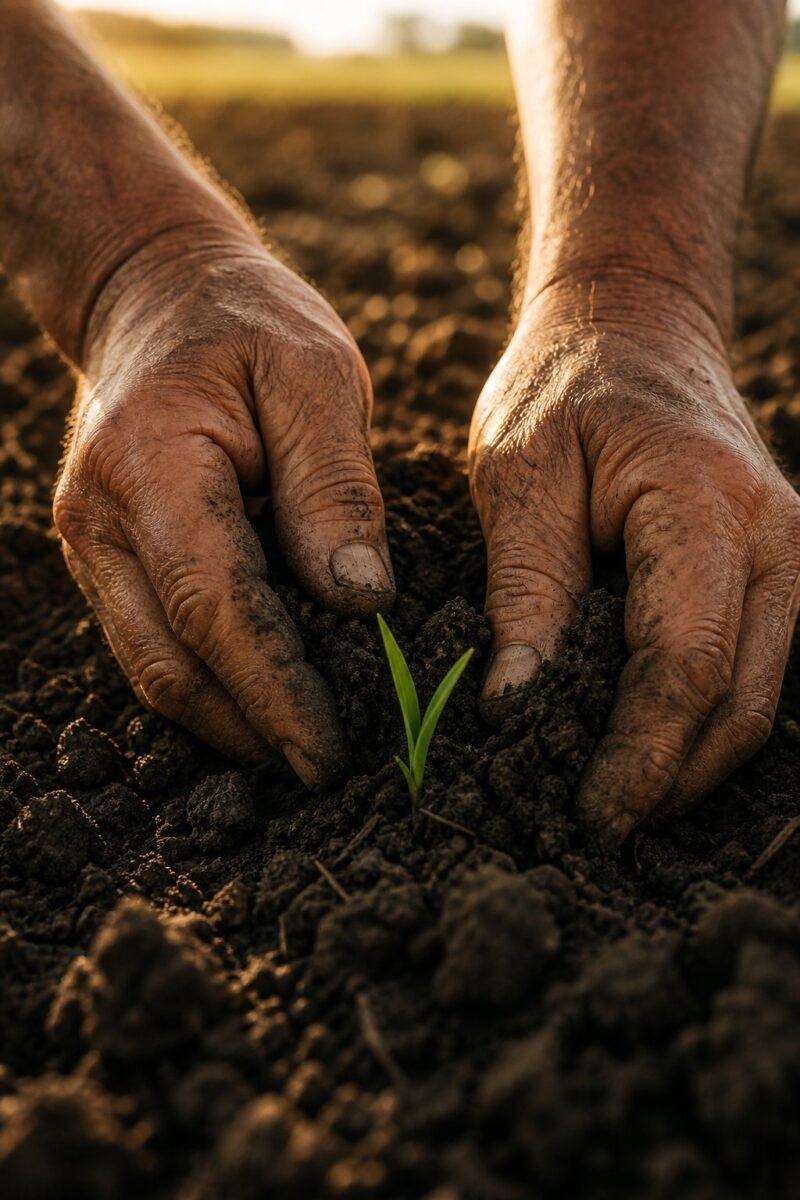
Here is where the parable turns from diagnosis to hope, and it is the part too many readers miss.
In a literal field, dirt cannot change itself. Path stays path. Rock stays rock. But you are not a field. You are a living soul, and the soil of your heart can be cultivated, broken up, deepened, and weeded. The same God who sends the seed also tends the ground. This is the promise He made through Ezekiel.
“I will give you a new heart and put a new spirit within you; I will take the heart of stone out of your flesh and give you a heart of flesh.” — Ezekiel 36:26 (NKJV)
A heart of stone becoming a heart of flesh is the very thing dirt can never do for itself. It is what grace does. No matter which soil described you when you started reading this, none of it is a life sentence. The hard path can be plowed. The shallow heart can be deepened. The crowded heart can be cleared. That is the entire reason Jesus warned us. He does not diagnose what He has no intention of healing. The story of God’s people is, again and again, a story of spiritual growth where unlikely soil became a fruitful field.
Cultivating the Soil of Your Heart

So what does cultivation actually look like? Solomon gave us the principle in a single verse.
“Keep your heart with all diligence, for out of it spring the issues of life.” — Proverbs 4:23 (NKJV)
The word keep means to guard, to tend, to watch over. A fruitful heart is not an accident. It is a garden someone is paying attention to. For the hard heart, that means returning to repentance and asking God to break up the ground that has gone fallow. For the shallow heart, it means trading excitement for depth and sinking roots through consistent prayer and obedience. For the crowded heart, it means the hard, ongoing work of pulling thorns, simplifying, and refusing to let anxiety and acquisition strangle what God planted.
None of this happens by drifting. It happens by tending. And the One who scattered the seed is more committed to your harvest than you are. Pursuing a pure heart is not about achieving perfection. It is about keeping the ground open to the God who keeps sowing.
The Parable of the Sower ends not with a closed door but with an open invitation. The Sower is still sowing. The seed is still good. The only question He leaves with you is the one He has been asking all along. What kind of ground will you be?
If today you recognize hard, shallow, or crowded ground in your own heart, do not let that recognition become shame. Let it become a prayer. Ask the Lord to do the one thing only He can do, and turn your soil into a place where His Word can finally take root and bear a harvest worth a hundredfold.
A few ways to tend your soil this week:
- Name your thorns honestly before God in prayer, asking Him to show you what is crowding out His Word
- Trade fifteen minutes of scrolling for fifteen minutes of stillness in Scripture and let the seed settle
- Choose one truth you already know and obey it, because obedience is how shallow soil grows roots
- Ask God to break up any ground that has gone hard, and trust Him to do the plowing
Which soil are you today? More importantly, which soil are you willing to let God make you? Take that question to Him, and watch what the Sower can grow.
Resources
- The Parable of the Sower Explained — a verse-by-verse walk through the four soils as a diagnostic of the heart
- Verse By Verse Ministry International: The Parable of the Sower — teaching on the agrarian context and meaning of the soils
- Anxiety and Depression Association of America: Facts and Statistics — current data on the anxiety that so often grows into thorns
- American Psychological Association: Multitasking and Switching Costs — research on how divided attention quietly steals our focus
- The Ohio State University Wexner Medical Center: Attention Span Survey — findings on stress, anxiety, and the shrinking attention span


Pastor Duke has been preaching and teaching the Bible since 1988. He has shared his knowledge online since 2011.






 By
By