
The Fall of Adam and Eve in the Garden of Eden marks a pivotal moment in human history. It’s effects ripple through generations, creating a separation between mankind and their Creator that wasn’t part of God’s original design.
When sin entered the world, everything changed. Disease, suffering, and death became humanity’s unwelcome companions. The perfect harmony of creation was disrupted, introducing thorns where there was once only abundance.
Yet even in this brokenness, a promise was given. The consequences of the Fall weren’t final but rather set the stage for redemption. This divine restoration plan reveals God’s unfailing love even though mankind’s rebellion, offering hope amidst the lasting impacts of that fateful decision in Eden.
Understanding “The Fall” in Biblical Context
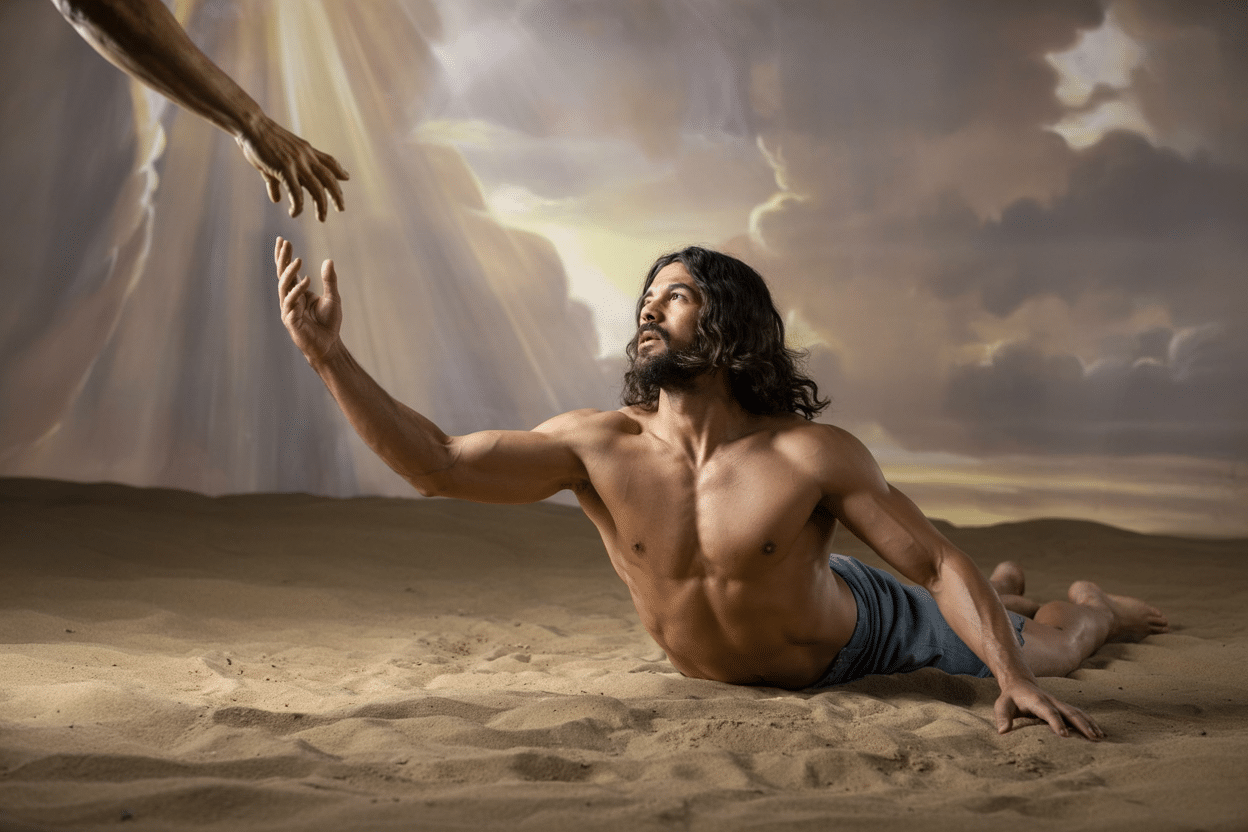
The Fall refers to humanity’s first act of disobedience against God in the Garden of Eden. Adam and Eve, created in perfect fellowship with their Creator, chose to eat from the forbidden tree of the knowledge of good and evil (Genesis 3:1-7).
God had clearly instructed Adam:
“Of every tree of the garden you may freely eat; but of the tree of the knowledge of good and evil you shall not eat, for in the day that you eat of it you shall surely die.” (Genesis 2:16-17)
This command wasn’t meant to restrict their freedom but to protect them. Satan, disguised as a serpent, deceived Eve by questioning God’s goodness and authority.
The serpent’s strategy was threefold:
- Question God’s word (“Has God indeed said…?”)
- Deny God’s warning (“You will not surely die”)
- Distort God’s character (“God knows that your eyes will be opened”)
Eve believed the lie that God was withholding something good from them. Adam, though present during the deception, chose to join in the rebellion rather than remain faithful.
Their eyes were opened, but not as the serpent promised. They experienced shame, fear, and guilt for the first time. Their immediate response revealed the damage: they hid from God and blamed others for their actions.
The consequences were immediate and far-reaching. Physical death entered creation. Spiritual death—separation from God—occurred instantly. The perfect harmony between God, humans, and nature was fractured.
This pivotal moment represents more than just the first sin. It marks the entrance of sin nature into humanity’s DNA. Every person born after Adam inherits this fallen nature.
“Hence, just as through one man sin entered the world, and death through sin, and so death spread to all men, because all sinned.” (Romans 5:12)
The Fall wasn’t just about eating forbidden fruit—it was about humans rejecting God’s authority and attempting to become their own gods. This rebellion fundamentally altered human existence and created the need for redemption.
Spiritual Consequences of the Fall
The Fall of Adam and Eve triggered profound spiritual consequences that continue to affect humanity today. These spiritual impacts created a fundamental shift in the relationship between humans and their Creator, altering god connection established in Eden.
Separation from God
Separation from God represents the most devastating spiritual consequence of the Fall. In the Garden of Eden, Adam and Eve enjoyed perfect communion with God, walking with Him in the cool of the day (Genesis 3:8). This intimate fellowship was shattered when sin entered the picture.
After their disobedience, Adam and Eve hid from God’s presence. Their immediate reaction revealed the new spiritual reality: shame and fear replaced confidence and intimacy.
“And they heard the sound of the Lord God walking in the garden in the cool of the day, and Adam and his wife hid themselves from the presence of the Lord God among the trees of the garden.” (Genesis 3:8)
This separation wasn’t just physical but spiritual. The perfect harmony between Creator and creation fractured. Humans lost their ability to approach God freely.
God’s holiness cannot coexist with sin. The spiritual divide created by the Fall required immediate action – God provided coverings for Adam and Eve, foreshadowing the covering of sin that would later come through Christ.
Mankind’s expulsion from Eden symbolized this spiritual separation. The flaming sword guarding Eden’s entrance (Genesis 3:24) represented the impossible barrier humans couldn’t cross on their own.
Introduction of Sin and Death
Sin entered humanity’s experience through a single act of disobedience. Romans 5:12 explains this devastating shift:
“Hence, just as through one man sin entered the world, and death through sin, and so death spread to all men, because all sinned.” (Romans 5:12)
This introduction of sin brought immediate spiritual death – the severance of humanity’s life-giving connection to God. Physical death eventually followed as a consequence.
Sin’s entry corrupted human nature at its core. Mankind’s tendency toward rebellion became intrinsic rather than external. The human heart turned from naturally seeking God to naturally opposing Him.
The spiritual death manifested in several ways:
- Loss of spiritual discernment
- Darkened understanding
- Bondage to sin’s power
- Vulnerability to demonic influence
- Inability to please God through human effort
This spiritual death passed to every generation after Adam. No human escapes this inheritance. Every person enters the world spiritually separated from God.
Sin’s power created a spiritual prison humanity couldn’t escape. The introduction of spiritual death necessitated a spiritual solution – one that would come through the “last Adam,” Jesus Christ (1 Corinthians 15:45).
Physical Consequences of the Fall

The Fall dramatically altered the physical world, introducing profound changes to human bodies and the natural environment. These tangible consequences continue to affect all creation, serving as constant reminders of humanity’s broken relationship with God.
Pain and Suffering
Physical pain entered human experience directly through God’s pronouncement after Adam and Eve’s disobedience. To Eve, God declared,
“I will greatly multiply your sorrow and your conception; in pain you shall bring forth children” (Genesis 3:16, NKJV).
This curse fundamentally changed the experience of childbirth, transforming what might have been painless into an intense physical ordeal. Women’s bodies now experience the dual reality of creation and suffering.
For Adam, the curse manifested differently through toilsome labor:
“Cursed is the ground for your sake; in toil you shall eat of it all the days of your life. Both thorns and thistles it shall bring forth for you” (Genesis 3:17-18, NKJV).
Nature itself became resistant to human efforts. The ease of tending Eden’s garden transformed into backbreaking work against hostile elements.
Disease also emerged as a physical consequence. Bodies that functioned perfectly now experienced:
- Vulnerability to pathogens
- Chronic physical ailments
- Susceptibility to injury
- Diminished immune function
- Genetic disorders passed through generations
Pain serves as both punishment and protection in our fallen world, warning of danger while reminding humanity of its fallen state.
Mortality and Aging
Death became humanity’s inescapable physical reality following the Fall. God had warned,
“In the day that you eat of it you shall surely die” (Genesis 2:17, NKJV).
While spiritual death occurred immediately, physical death entered human experience as a process. The human body, originally designed for eternal life, began to deteriorate.
Aging impacts the body in numerous ways:
- Cellular degeneration
- Weakening muscles and bones
- Diminished sensory perception
- Reduced cognitive function
- Increased vulnerability to disease
The aging process varies between individuals but affects everyone. No human technology or medical advancement has overcome this fundamental consequence.
The Bible repeatedly connects mortality to sin:
“Hence, just as through one man sin entered the world, and death through sin, and so death spread to all men, because all sinned” (Romans 5:12, NKJV).
Physical death represents the ultimate separation of body and spirit. The body returns to dust—literally fulfilling God’s words to Adam:
“For dust you are, and to dust you shall return” (Genesis 3:19, NKJV).
This mortality creates an undeniable awareness of human limitations and dependency on God’s redemptive plan.
Relational Consequences
The Fall dramatically altered relationships at every level. Adam and Eve’s disobedience created a ripple effect that damaged not only their connection with God but also with each other and the created world. These broken relationships continue to impact humanity today, manifesting in various forms of conflict, alienation, and environmental challenges.
Broken Human Relationships
The first human relationship shattered immediately after sin entered the world. Genesis reveals how Adam quickly blamed Eve for his own disobedience:
“The woman whom You gave to be with me, she gave me of the tree, and I ate” (Genesis 3:12, NKJV).
This blame-shifting response marked the beginning of relational dysfunction among humans. Shame entered their consciousness, causing them to cover themselves physically and emotionally from each other.
Selfishness replaced selflessness in human interactions. The harmony that once characterized male-female relationships transformed into power struggles and misunderstanding. Genesis 3:16 states:
“Your desire shall be for your husband, and he shall rule over you” (NKJV).
Jealousy, anger, and violence soon followed. Cain’s murder of Abel demonstrated how quickly relational breakdown escalated to its most extreme form. Family bonds weakened as competition replaced cooperation. Trust eroded between individuals and communities.
This relational brokenness continues today through:
- Domestic conflicts and divorce
- Racial divisions and prejudice
- Exploitation of the vulnerable
- National conflicts and wars
- Social isolation even though connectivity
Environmental Impact and Mankind’s Dominion
The Fall didn’t just damage human relationships—it undermined humanity’s relationship with creation itself. Mankind was originally given stewardship over Earth, tasked with caring for and cultivating it. Genesis 1:28 instructs humans to:
“Be fruitful and multiply; fill the earth and subdue it; have dominion over the fish of the sea, over the birds of the air, and over every living thing that moves on the earth” (NKJV).
After the Fall, this dominion relationship became distorted. Instead of stewarding creation with care, humans began exploiting it selfishly. The ground itself rebelled against human cultivation:
“Cursed is the ground for your sake; in toil you shall eat of it all the days of your life. Both thorns and thistles it shall bring forth for you” (Genesis 3:17-18, NKJV).
Creation now responds with resistance to human efforts. Natural disasters intensified as the harmonious relationship between humans and nature fractured. Animals developed fear toward humans rather than peaceful coexistence.
The environmental impact continues today through:
- Excessive resource consumption
- Pollution of air, water, and soil
- Habitat destruction and species extinction
- Climate instability
- Natural disasters
This distorted dominion reflects humanity’s broken relationship with the Creator, demonstrating how the Fall’s consequences extend beyond personal relationships into our entire ecosystem.
Cultural and Societal Implications
The Fall’s impact extends beyond individual consequences to reshape entire societies and cultural systems. These profound shifts continue to influence how communities function, how power operates, and how humans relate to one another in collective settings.
Work and Toil
Work transformed dramatically after the Fall. In Eden, Adam tended the garden with joy and fulfillment, but post-Fall labor became burdensome and difficult.
“Cursed is the ground for your sake; in toil you shall eat of it all the days of your life. Both thorns and thistles it shall bring forth for you, and you shall eat the herb of the field. In the sweat of your face you shall eat bread till you return to the ground…” (Genesis 3:17-19, NKJV)
This divine pronouncement established several lasting cultural realities:
- Scarcity economics replaced abundance, creating competition for resources
- Hierarchical systems emerged to organize and control labor
- Social class distinctions developed based on types of work performed
Work itself became a struggle against resistance rather than a creative partnership with creation. Human innovation now often focuses on overcoming obstacles rather than enhancing communion with God and nature.
The Fall created a disconnect between workers and their labor, leading to exploitation, burnout, and dissatisfaction. Many cultures came to view work as punishment rather than purpose, distorting humanity’s understanding of vocation and calling.
Gender Relations After the Fall
The Fall profoundly altered gender dynamics. Eden featured complementary partnership; post-Fall society developed imbalanced power structures.
“Your desire shall be for your husband, and he shall rule over you.” (Genesis 3:16, NKJV)
This statement wasn’t God’s prescription but rather a description of the broken relationship pattern that would emerge. The harmonious partnership God designed became distorted in several key ways:
| Pre-Fall Relationship | Post-Fall Distortion |
|---|---|
| Equal dignity | Power imbalance |
| Mutual submission | Domination patterns |
| Complementary strengths | Competitive tension |
| Unified purpose | Conflicting agendas |
Patriarchal systems emerged across virtually all ancient cultures, creating institutionalized gender hierarchy. Women experienced marginalization, limited rights, and restricted social roles that contradicted God’s original design for human relationship.
The distortion of gender relations led to exploitation, abuse, and the suppression of feminine contribution in many societies. These patterns persist today even though redemptive progress, revealing how deeply the Fall affected fundamental human relationships.
Theological Perspectives on Redemption
Theological perspectives on redemption offer hope amid the devastation caused by the Fall. These views illuminate God’s plan to restore humanity to Himself through divine intervention, addressing the multifaceted consequences of sin.
The Promise of Restoration
The promise of restoration emerged immediately after the Fall, revealing God’s redemptive heart. In Genesis 3:15, God declared to the serpent, “And I will put enmity between you and the woman, and between your seed and her Seed; He shall bruise your head, and you shall bruise His heel.” This prophetic statement, known as the protoevangelium, introduced the first glimpse of God’s redemptive plan.
Throughout Scripture, restoration themes reappear with increasing clarity. The prophets expanded this promise, describing a future where broken relationships would be healed. Isaiah proclaimed, “For the Lord will comfort Zion, He will comfort all her waste places; He will make her wilderness like Eden, and her desert like the garden of the Lord” (Isaiah 51:3).
This restoration isn’t limited to spiritual reconciliation but encompasses physical healing, relational wholeness, and environmental renewal. The prophet Ezekiel described a new heart and spirit God would give His people (Ezekiel 36:26-27). Joel prophesied the outpouring of God’s Spirit on all flesh (Joel 2:28-29).
God’s restoration plan reverses every consequence of the Fall:
- Spiritual death → eternal life
- Physical suffering → glorified bodies
- Relational conflict → perfect community
- Environmental corruption → renewed creation
Christ as the Second Adam
Jesus enters human history as the “Second Adam,” reversing the catastrophic effects initiated by the first Adam. The apostle Paul draws this parallel explicitly in 1 Corinthians 15:45, “The first man Adam became a living being. The last Adam became a life-giving spirit.”
Where Adam failed through disobedience, Christ succeeded through perfect obedience. Romans 5:19 affirms, “For as by one man’s disobedience many were made sinners, so also by one Man’s obedience many will be made righteous.” Christ’s righteousness counteracts Adam’s sin, offering justification to all who believe.
Adam’s sin brought death and separation; Christ’s sacrifice brings life and reconciliation. Through His incarnation, Jesus identified with fallen humanity, facing every temptation yet remaining sinless (Hebrews 4:15). His death addressed the penalty of sin, while His resurrection conquered death itself.
The redemptive work of Christ as the Second Adam includes:
| Adam’s Action | Consequence | Christ’s Response | Result |
|---|---|---|---|
| Disobedience | Sin entered humanity | Perfect obedience | Righteousness available |
| Hiding from God | Spiritual separation | Restored access to God | Direct communion |
| Curse on creation | Death and decay | New creation | Eternal life |
| Shame and guilt | Fear and condemnation | Forgiveness | Freedom and peace |
Through Christ, humanity receives not just restoration to Eden’s original state but elevation to even greater glory. In Christ, believers become new creations (2 Corinthians 5:17), participating in god nature (2 Peter 1:4) and receiving the indwelling Holy Spirit as the guarantee of complete future restoration.
Conclusion
The Fall fundamentally altered humanity’s existence across every dimension. This pivotal act of disobedience fractured our relationship with God creating spiritual death that echoes through generations.
Physical suffering mortality and environmental degradation stand as tangible reminders of paradise lost. The relational harmony God designed has given way to conflict exploitation and broken systems.
Yet God’s redemptive plan shines brightest against this dark backdrop. Through Christ the Second Adam hope emerges for complete restoration. The consequences of the Fall reveal both the devastating power of sin and the greater power of God’s love that promises to make all things new.
Share On Pinterest!


Pastor Duke has been preaching and teaching the Bible since 1988. He has shared his knowledge online since 2011.

 By
By