

The Holy Spirit serves as the vibrant, unseen force animating the Church since its inception at Pentecost. Beyond mere doctrine, the Spirit actively empowers believers for ministry, distributes spiritual gifts, and guides the community of faith toward fulfilling its divine purpose.
In today’s congregations, the Spirit’s presence transforms ordinary gatherings into extraordinary encounters with God. From the gentle whisper of conviction to the powerful manifestation of spiritual gifts, the Holy Spirit remains essential to authentic Christian community and effective ministry.
Understanding the Spirit’s role helps believers recognize how God continues to work supernaturally in and through His people. This divine partnership between the Spirit and the Church creates the foundation for revival, renewal, and the advancement of God’s kingdom on earth.

Understanding the Holy Spirit in Christian Theology
The Holy Spirit stands as the third person of the Trinity, equal in power and essence with God the Father and Jesus Christ. According to Christian doctrine, the Spirit isn’t merely an impersonal force but a divine person with intellect, emotions, and will.
Scripture portrays the Holy Spirit as both omnipresent and eternal. In Psalm 139:7-8, David writes,
“Where can I go from Your Spirit? Or where can I flee from Your presence? If I ascend into heaven, You are there; If I make my bed in hell, behold, You are there.”
The Spirit played a crucial role in creation, hovering over the waters in Genesis 1:2. Throughout the Old Testament, the Spirit empowered specific individuals for divine purposes.
In the New Testament, the Holy Spirit’s activity intensifies. Jesus promised the disciples a Helper who would remain with them forever in John 14:16-17, fulfilling this promise at Pentecost.
The Spirit’s primary functions include:
- Convicting of sin, righteousness, and judgment
- Regenerating believers through spiritual rebirth
- Indwelling Christians as God’s temple
- Sanctifying believers through ongoing transformation
- Empowering for witness and service
Traditional Christian denominations differ in their emphasis on the Spirit’s work:
| Denomination | Primary Emphasis on the Spirit |
|---|---|
| Orthodox | Divine mystery and liturgical presence |
| Catholic | Sacramental ministry and tradition |
| Mainline Protestant | Inner guidance and scriptural illumination |
| Pentecostal/Charismatic | Supernatural gifts and empowerment |
The baptism of the Holy Spirit represents a distinct experience many believers seek. Acts 1:8 records Jesus’s promise:
“But you shall receive power when the Holy Spirit has come upon you; and you shall be witnesses to Me in Jerusalem, and in all Judea and Samaria, and to the end of the earth.”
This theological understanding forms the foundation for experiencing the Spirit’s dynamic work in the church community today.
The Biblical Foundation of the Holy Spirit’s Role

Developing A Supernatural Worldview Bible Study
A topical Bible study course on the supernatural Christian life; perfect for Mid-Week services, home groups, Sunday School, or personal growth!
The Scripture provides rich insights into the Holy Spirit’s role throughout redemptive history. God’s Word establishes a comprehensive framework for understanding how the Spirit operates in the church today.
Old Testament Glimpses of the Spirit
The Old Testament introduces the Holy Spirit as an active agent in creation and God’s ongoing work. In Genesis 1:2, the Spirit “was hovering over the face of the waters,” participating in the creation process alongside the Father.
The Spirit empowered specific individuals for leadership and service. Moses experienced this divine enabling and later wished for wider distribution of the Spirit’s power:
“Oh, that all the LORD’s people were prophets and that the LORD would put His Spirit upon them!” (Numbers 11:29)
The Spirit equipped craftsmen like Bezalel with supernatural skill:
“I have filled him with the Spirit of God, in wisdom, in understanding, in knowledge, and in all manner of workmanship” (Exodus 31:3)
Kings and prophets received the Spirit for leadership and prophecy:
- Saul: “The Spirit of the LORD came upon him” (1 Samuel 10:10)
- David: “The Spirit of the LORD came upon David from that day forward” (1 Samuel 16:13)
- Isaiah: “The Spirit of the Lord GOD is upon Me” (Isaiah 61:1)
Joel prophesied a future universal outpouring, pointing toward the New Testament era:
“I will pour out My Spirit on all flesh” (Joel 2:28)
New Testament Revelations and Teachings
Jesus’s ministry marked a transition in the Spirit’s work. Christ’s baptism demonstrated the Spirit’s presence in His ministry when the Spirit descended “like a dove” (Matthew 3:16).
Jesus promised His disciples the Holy Spirit as their Helper:
“But the Helper, the Holy Spirit, whom the Father will send in My name, He will teach you all things” (John 14:26)
The book of Acts records the fulfillment of this promise at Pentecost:
“And they were all filled with the Holy Spirit and began to speak with other tongues, as the Spirit gave them utterance.” (Acts 2:4)
Paul’s letters elaborate on the Spirit’s essential functions in church life:
| Function | Scripture Reference | Description |
|---|---|---|
| Gifting | 1 Corinthians 12:4-11 | Distributes spiritual gifts |
| Unity | Ephesians 4:3 | Creates unity among believers |
| Guidance | Romans 8:14 | Leads God’s children |
| Transformation | 2 Corinthians 3:18 | Changes believers into Christ’s image |
| Empowerment | Acts 1:8 | Gives power for witness |
The apostles taught that every believer receives the Spirit upon salvation (Romans 8:9) while also encouraging believers to be “filled with the Spirit” (Ephesians 5:18) as an ongoing experience.
The Holy Spirit’s Role in Church Formation

The Holy Spirit serves as God’s architect and sustainer of Christ’s church. Scripture reveals how the Spirit birthed, shaped, and continues to guide the development of the church as God’s primary vehicle for kingdom advancement on earth.
Pentecost and the Birth of the Church
Pentecost marks the definitive moment when the Holy Spirit dramatically birthed the church. In Acts 2, the promised outpouring transformed a huddle of fearful disciples into bold witnesses of Jesus Christ.
“When the Day of Pentecost had fully come, they were all with one accord in one place. And suddenly there came a sound from heaven, as of a rushing mighty wind, and it filled the whole house where they were sitting.” (Acts 2:1-2)
The Spirit’s descent manifested through visible tongues of fire and supernatural language abilities. This divine empowerment fulfilled Jesus’s promise in Acts 1:8 that they’d receive power to be His witnesses.
Three thousand souls joined the church that day through Peter’s Spirit-empowered preaching. This inaugural outpouring established essential church characteristics:
- Devotion to apostolic teaching
- Regular fellowship among believers
- Breaking of bread together
- Consistent prayer
- Supernatural signs and wonders
- Radical generosity and sharing
The Spirit created not just a gathering but a supernatural community. Acts 2:42-47 describes this Spirit-formed fellowship as daily growing in number through powerful divine activity.
The Spirit’s Guidance in Early Church Development
The Holy Spirit actively guided the early church’s expansion beyond Jerusalem. Acts chronicles how the Spirit directed key decisions and missionary endeavors.
The Spirit prompted Philip to evangelize Samaria (Acts 8:29) and later directed him to the Ethiopian eunuch. Through these divine appointments, the gospel crossed ethnic and geographic boundaries.
When controversy threatened unity, the Spirit provided wisdom. At the Jerusalem Council (Acts 15), the apostles’ decision came through Spirit-led discernment:
“For it seemed good to the Holy Spirit, and to us, to lay upon you no greater burden than these necessary things.” (Acts 15:28)
The Spirit orchestrated strategic missionary movements:
| Spirit’s Direction | Result | Reference |
|---|---|---|
| Called Barnabas and Saul | First missionary journey | Acts 13:2-4 |
| Prevented entry to Asia | Redirected to Macedonia | Acts 16:6-10 |
| Warned Paul of coming persecution | Strengthened his resolve | Acts 20:22-23 |
Early church leadership depended on Spirit-appointment. Paul reminded the Ephesian elders: “The Holy Spirit has made you overseers” (Acts 20:28).
The Spirit developed the church’s identity through inspired Scripture writings. These apostolic documents, divinely breathed by the Spirit, established doctrinal foundations and practical guidance.
Manifestations of the Holy Spirit in Church Life
The Holy Spirit manifests His presence and power in numerous tangible ways within the church body. These manifestations serve as evidence of God’s active presence among His people and contribute to the edification, unity, and effectiveness of the church in fulfilling its mission.
Spiritual Gifts and Their Purpose
Spiritual gifts represent supernatural abilities the Holy Spirit distributes to believers for ministry effectiveness. 1 Corinthians 12:4-7 establishes their divine source and purpose:
“There are diversities of gifts, but the same Spirit. There are differences of ministries, but the same Lord. And there are diversities of activities, but it is the same God who works all in all. But the manifestation of the Spirit is given to each one for the profit of all.”
Each believer receives at least one spiritual gift, creating a divinely designed interdependence within the church body. These gifts include:
- Wisdom and knowledge – supernatural insight and understanding
- Faith – extraordinary trust in God’s promises
- Healing and miracles – demonstrations of God’s power
- Prophecy – inspired utterances that edify, exhort, and comfort
- Discernment – ability to distinguish between spirits
- Tongues and interpretation – prayer language and its meaning
These gifts build up the church when exercised in love rather than for personal recognition. Paul emphasizes in 1 Corinthians 14:12, “Since you are zealous for spiritual gifts, let it be for the edification of the church that you seek to excel.”
The Fruit of the Spirit in Community
The fruit of the Spirit transforms relationships within the church community, creating an atmosphere that reflects Christ’s character. Galatians 5:22-23 identifies these character qualities:
“But the fruit of the Spirit is love, joy, peace, longsuffering, kindness, goodness, faithfulness, gentleness, self-control. Against such there is no law.”
This spiritual fruit manifests through changed behaviors and attitudes in fellowship settings. Love forms the foundation, enabling genuine care for others even though differences or difficulties. Joy creates a celebratory atmosphere even during trials, while peace resolves conflicts and promotes harmony.
The communal expression of these qualities creates distinctive marks of a Spirit-filled church:
- Authentic reconciliation replaces grudges and division
- Generous sharing of resources flows naturally
- Servant leadership emerges instead of power struggles
- Patient endurance during difficulties strengthens community bonds
The Holy Spirit’s Work in Worship and Prayer
The Holy Spirit transforms ordinary worship and prayer into powerful encounters with God’s presence. Through the Spirit’s activity, believers experience both individual and corporate spiritual dimensions that deepen their connection with God and each other.
Spirit-Led Worship Experiences
Spirit-led worship transcends mere singing to become a divine encounter where heaven touches earth. In authentic worship, the Holy Spirit creates an atmosphere where God’s presence becomes tangible and transformative.
Worship led by the Spirit exhibits spontaneity, freedom, and sensitivity to divine direction rather than rigid adherence to programs. John 4:23-24 highlights this reality:
“But the hour is coming, and now is, when the true worshipers will worship the Father in spirit and truth; for the Father is seeking such to worship Him. God is Spirit, and those who worship Him must worship in spirit and truth.”
The Holy Spirit manifests during worship through:
- Divine revelations that provide insights into God’s character and will
- Spiritual gifts that emerge naturally, including prophecy, tongues, and interpretation
- Emotional healing as worshippers encounter God’s love and acceptance
- Prophetic expressions through songs, prayers, and declarations
- Unity of hearts that transcends denominational or cultural differences
Spirit-filled worship creates space for testimonies, divine healing, and powerful encounters that build faith. These gatherings often feature extended times of praise, spontaneous songs, and holy reverence where God’s glory becomes evident to all present.
Intercessory Prayer and the Spirit’s Guidance
The Holy Spirit empowers effective intercessory prayer by revealing specific needs and divine strategies. Romans 8:26-27 explains this partnership:
“Likewise the Spirit also helps in our weaknesses. For we do not know what we should pray for as we ought, but the Spirit Himself makes intercession for us with groanings which cannot be uttered.”
Intercessors guided by the Holy Spirit receive supernatural insight beyond human understanding. These prayer warriors often experience divine burden for specific situations, nations, or individuals they have no natural connection to.
The Spirit’s guidance in prayer manifests through:
- Prayer languages (tongues) that bypass human limitations
- Prophetic impressions revealing root issues behind surface problems
- Divine timing for when and how to intercede for maximum impact
- Supernatural endurance during extended prayer sessions
- Strategic warfare prayers that target spiritual strongholds
Corporate prayer meetings charged with the Spirit’s presence often result in breakthroughs that transform circumstances and lives. These gatherings create space for heaven’s authority to be established on earth through unified, Spirit-led intercession.
Prayer led by the Holy Spirit produces tangible results including miraculous healings, restored relationships, and community transformation. The intercessor becomes a vessel through which God’s kingdom advances against spiritual opposition.
The Spirit’s Role in Church Mission and Evangelism
The Holy Spirit drives the church’s global mission and evangelism efforts. Through divine empowerment and guidance, the Spirit enables believers to share the gospel effectively across cultural boundaries and geographical distances.
Empowerment for Witness
The Holy Spirit transforms ordinary believers into powerful witnesses for Christ. This transformation fulfills Jesus’s promise in Acts 1:8:
“But you shall receive power when the Holy Spirit has come upon you; and you shall be witnesses to Me in Jerusalem, and in all Judea and Samaria, and to the end of the earth.”
This empowerment manifests in several ways:
- Supernatural boldness – Peter, once fearful, preached fearlessly after Pentecost
- Divine utterance – Believers speak with clarity and conviction beyond their natural abilities
- Signs and wonders – Miraculous manifestations authenticate the gospel message
- Perseverance – Spirit-filled witnesses endure opposition and persecution
Early church growth resulted directly from this Spirit-empowerment. Three thousand souls converted after Peter’s Spirit-anointed sermon at Pentecost. Throughout church history, revivals and awakenings consistently correlate with heightened Holy Spirit activity.
Effective evangelism depends on this supernatural dimension. Human persuasion, clever marketing, and strategic planning can’t replace the convicting and converting power of the Holy Spirit.
Cross-Cultural Ministry and the Spirit’s Direction
The Holy Spirit breaks down cultural barriers that would otherwise hinder gospel advancement. This cross-cultural dynamic appears repeatedly in Acts, where the Spirit orchestrates divine appointments and guides missionaries.
Philip’s encounter with the Ethiopian eunuch demonstrates this perfectly. Acts 8:29 records:
“Then the Spirit said to Philip, ‘Go near and overtake this chariot.'”
This Spirit-led interaction resulted in Ethiopia’s first convert.
The Spirit guides cross-cultural ministry through:
| Form of Direction | Biblical Example | Modern Application |
|---|---|---|
| Dreams/visions | Peter’s rooftop vision (Acts 10) | Missionaries receiving specific direction |
| Prophetic words | Antioch church commissioning (Acts 13:2) | Confirmation of ministry callings |
| Divine appointments | Philip and the eunuch (Acts 8) | “Chance” encounters with prepared hearts |
| Inner prompting | Paul’s Macedonian call (Acts 16) | Supernatural burden for specific people groups |
Spirit-sensitive churches experience surprising ministry opportunities. Language barriers, cultural differences, and historical animosities dissolve when the Spirit directs missions work.
Modern church planters and missionaries report supernatural guidance when entering new territories. The Spirit often prepares receptive communities in advance, creating “person of peace” connections that open entire villages or regions to the gospel.
The Holy Spirit’s Work in Individual Believers
The Holy Spirit works intimately within each Christ-follower, transforming them from the inside out. This personal relationship with the Spirit forms the foundation for the broader work in the church community.
Conviction, Regeneration, and Sanctification
The Holy Spirit initiates the Christian journey through conviction of sin. Jesus explained this essential function clearly:
“And when He has come, He will convict the world of sin, and of righteousness, and of judgment.” (John 16:8, NKJV)
This conviction leads directly to regeneration—the supernatural new birth experience. The Spirit breathes new life into spiritually dead souls, creating entirely new creatures in Christ.
“Jesus answered, ‘Most assuredly, I say to you, unless one is born of water and the Spirit, he cannot enter the kingdom of God.'” (John 3:5, NKJV)
After regeneration, the Spirit embarks on a lifelong sanctification process. This progressive transformation conforms believers to Christ’s image through:
- Daily renewal of thoughts and attitudes
- Increasing sensitivity to sin
- Growing hunger for righteousness
- Deepening capacity to love others
The Spirit enables believers to “put to death the deeds of the body” (Romans 8:13, NKJV) and produces godly character that human effort alone cannot achieve.
Spiritual Formation and Growth
Spiritual formation happens as believers learn to recognize and respond to the Spirit’s internal promptings. The Spirit teaches, guides, and reminds Christians of Christ’s teachings:
“But the Helper, the Holy Spirit, whom the Father will send in My name, He will teach you all things, and bring to your remembrance all things that I said to you.” (John 14:26, NKJV)
The growth process involves several Spirit-led disciplines:
| Discipline | Spirit’s Role | Outcome |
|---|---|---|
| Prayer | Intercedes with “groanings” (Rom 8:26) | Deeper communion with God |
| Scripture | Illuminates biblical truth | Transformed thinking |
| Worship | Creates genuine heart responses | Increased awareness of God’s presence |
| Community | Fosters authentic connections | Maturity through relationships |
This growth manifests as increasing spiritual discernment. Believers learn to distinguish between their own thoughts, the enemy’s deception, and the Spirit’s authentic leading.
The Spirit also empowers believers to overcome temptation and spiritual attacks. This supernatural strengthening equips Christians to stand firm against forces that would hinder their spiritual progress.
Contemporary Understandings and Movements
Modern Christians continue to explore and embrace the Holy Spirit’s dynamic work in fresh ways. These contemporary perspectives have shaped both individual spiritual practices and corporate expressions of faith across denominations and traditions.
Charismatic and Pentecostal Perspectives
Charismatic and Pentecostal movements have significantly influenced the global church’s understanding of the Holy Spirit. Their emphasis on experiential faith began with the Azusa Street Revival in 1906 and has since expanded into one of Christianity’s fastest-growing segments.
These movements focus on the baptism of the Holy Spirit as a distinct experience from salvation. This baptism typically manifests through speaking in tongues and other spiritual gifts.
Pentecostals highlight 1 Corinthians 12-14 as biblical foundation for spiritual manifestations. They view the gifts of the Spirit as normative for today’s church rather than limited to the apostolic era.
“But the manifestation of the Spirit is given to each one for the profit of all.” (1 Corinthians 12:7, NKJV)
Many Pentecostal churches structure their services to allow for spontaneous spiritual expressions. These include prophecy, healing prayers, and Spirit-led worship.
The movement’s impact extends beyond denominational boundaries through the charismatic renewal that touched mainline Protestant and Catholic churches in the mid-20th century.
Renewed Focus on Spirit-Led Ministry
Contemporary churches increasingly adopt approaches to ministry that prioritize the Holy Spirit’s guidance. This shift transcends traditional denominational lines as leaders recognize the essential role of divine empowerment.
Spirit-led ministry models emphasize:
- Listening prayer before strategic decisions
- Equipping believers to operate in spiritual gifts
- Creating space for divine encounters in corporate gatherings
- Training in prophetic ministry and healing prayer
- Developing spiritual discernment among leadership teams
Churches implementing these approaches report increased congregational engagement and ministry effectiveness. Many have structured discipleship pathways that intentionally develop sensitivity to the Spirit’s leading.
“These things we also speak, not in words which man’s wisdom teaches but which the Holy Spirit teaches, comparing spiritual things with spiritual.” (1 Corinthians 2:13, NKJV)
Even traditionally non-charismatic congregations have adopted practices like soaking prayer, prophetic encouragement, and healing ministries. This convergence reflects a growing recognition that authentic ministry flows from the Spirit’s empowerment rather than human effort alone.
Digital platforms now help Spirit-led ministry through online prayer rooms, prophetic training resources, and virtual healing services that extend beyond physical gatherings.
How Does the Holy Spirit Transform Church Communities Through Breaking Sin’s Chains?
In every church community, the Holy Spirit works tirelessly to break the chains of sin that bind individuals. Through divine guidance and support, believers begin to heal and grow in faith. As they experience this spiritual renewal, they learn to discover transformative freedom through the holy spirit, fostering unity and love among members.
Conclusion
The Holy Spirit remains the vital life force of the Church today just as it was at Pentecost. Through its divine presence believers experience transformation both individually and corporately.
As churches embrace Spirit-led ministry across denominational lines a remarkable convergence is occurring. This renewed focus on the Spirit’s empowerment enables authentic community worship prayer and evangelistic effectiveness.
The future of the Church depends on this continued partnership with the Holy Spirit. When believers recognize and yield to the Spirit’s guidance they participate in God’s ongoing work of renewal and kingdom advancement. The Church that honors the Holy Spirit’s role will thrive with supernatural vitality and purpose.
Share On Pinterest!

Test Your Knowledge!
Answer all 10 questions, then submit to see your score.
Related Posts

Fruit of the Spirit vs. Gifts of the Spirit: What's the Difference?
Last updated: June 2026 By Duke Taber I have stood in green rooms before services and watched two kinds of believers. One could prophesy with stunning…
 Jun 10, 2026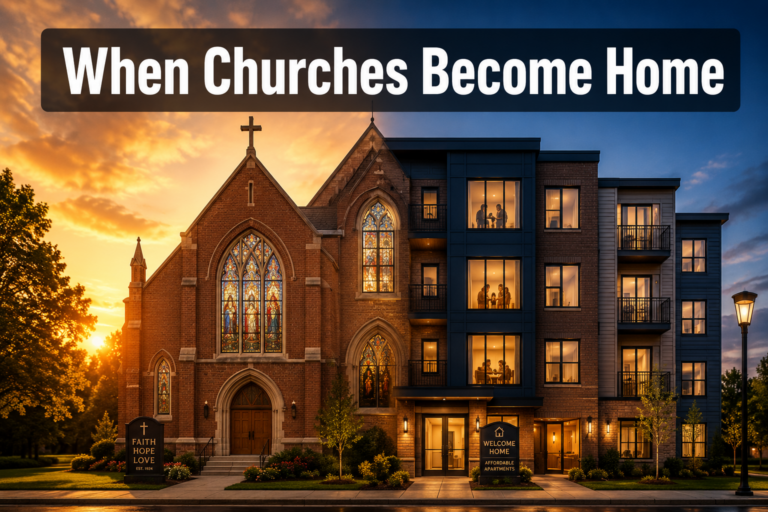
Shrinking US Congregations Reimagining Church Buildings as Affordable Housing
Last updated: June 2026 As many churches across the United States face dwindling congregations and mounting maintenance costs, a growing trend is emerging: transforming sacred spaces…
Jun 12, 2026
Encouraging Trends in Global Christianity: June 2026 Update
Last updated: June 2026 While headlines often focus on challenges facing Christianity, new reports highlight encouraging trends in global Christian adherence and engagement. The global Christian…
Jun 10, 2026
Cleveland Browns Players Publicly Baptized at Cleveland for Christ Event in Powerful Display of Faith
Last updated: June 2026 On June 7, 2026, something happened at the Berea Municipal Pool near Cleveland that had nothing to do with football stats or…
Jun 9, 2026


 By
By


