
By Duke Taber
You already know the war. You felt it this morning, maybe before your feet hit the floor. There is the part of you that wants to pray and the part that wants to scroll. There is the version of you that loves your spouse and the version that snaps at them over nothing. In more than thirty years of pastoring, I have met very few believers who struggle to believe they are saved. What they struggle with is something quieter and more wearing. They cannot understand why, after all this time, the old man keeps showing up for work.
Paul understood that tension better than anyone who has ever written about it. He did not give us Galatians 5 to scold tired Christians. He gave it to us to explain the conflict honestly, and then to point at the one thing that has ever actually won it. Before he names a single sin or a single virtue, he tells us what is really happening inside us.
“I say then: Walk in the Spirit, and you shall not fulfill the lust of the flesh. For the flesh lusts against the Spirit, and the Spirit against the flesh; and these are contrary to one another, so that you do not do the things that you wish.” — Galatians 5:16-17 (NKJV)
Notice what Paul does not promise. He never says the war will end this side of glory. He says there is a way to walk that refuses to feed the enemy already inside the gate. That is the whole hope of this chapter, and it is far better news than “try harder.”

Two Lists on One Battlefield
In the verses that follow, Paul lays two ways of living side by side. He names them plainly, almost the way a doctor reads symptoms off a chart, sparing us nothing and softening nothing.
“Now the works of the flesh are evident, which are: adultery, fornication, uncleanness, lewdness, idolatry, sorcery, hatred, contentions, jealousies, outbursts of wrath, selfish ambitions, dissensions, heresies, envy, murders, drunkenness, revelries, and the like; of which I tell you beforehand, just as I also told you in time past, that those who practice such things will not inherit the kingdom of God. But the fruit of the Spirit is love, joy, peace, longsuffering, kindness, goodness, faithfulness, gentleness, self-control. Against such there is no law.” — Galatians 5:19-23 (NKJV)
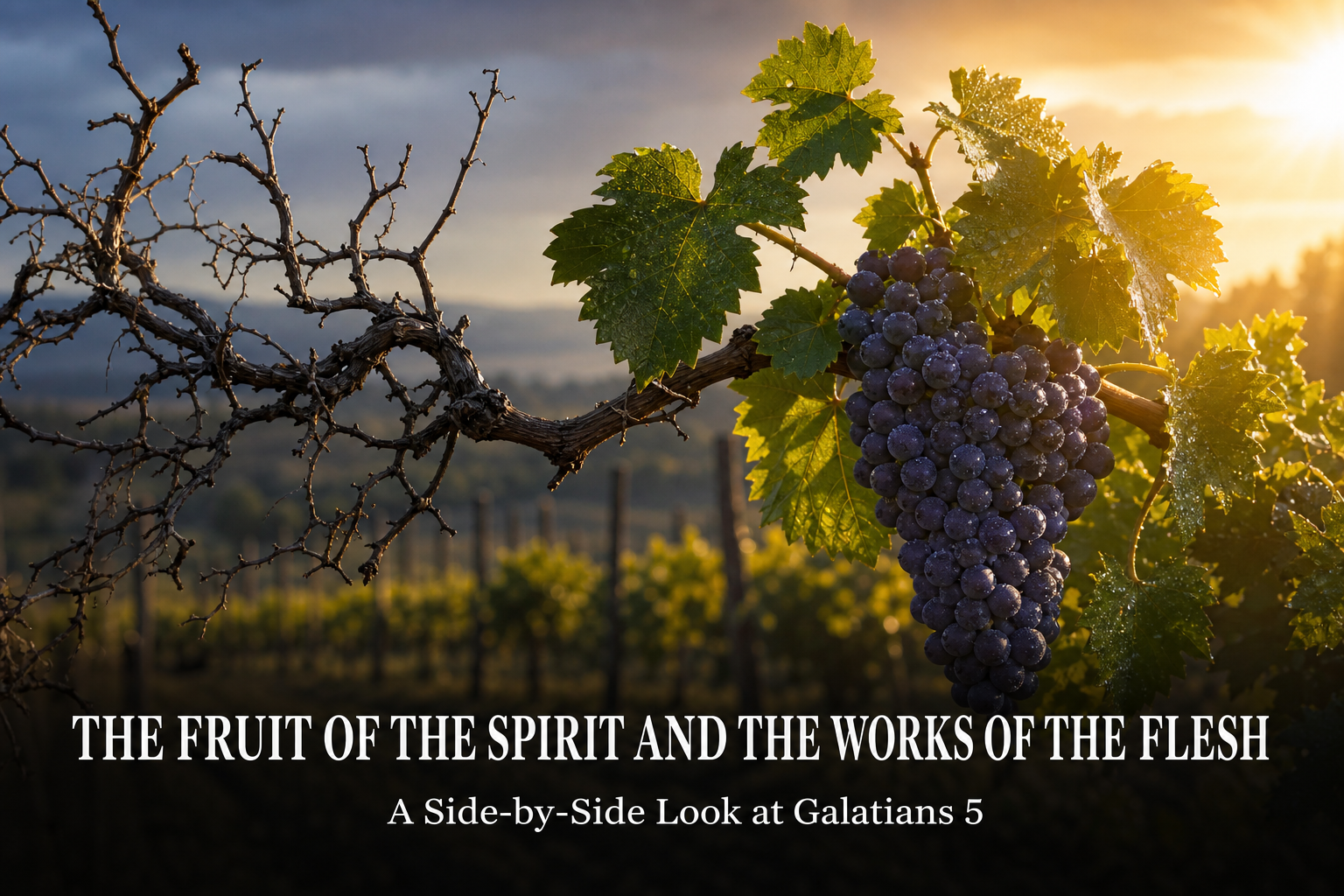
Two lists. Two trees. Two entirely different ways of being a human being. If you have spent any real time in church, the second list is probably familiar to the point of being decorative. We cross-stitch it onto pillows. We hang it on nursery walls. But Paul did not hand the Galatians a pillow. He handed them a mirror, and he fully expected them to look into it and flinch. For a fuller sense of why he wrote this fierce, loving letter in the first place, our overview of the book of Galatians sets the scene.
Why One Is Called “Works” and the Other Is Called “Fruit”

Here is where our English can flatten something the Greek makes sharp. The word translated “works” is erga, and it is plural. The word translated “fruit” is karpos, and it is singular. Paul chose those two words on purpose, and that single choice carries the weight of everything else in the passage.
Works are something you manufacture. They are produced by effort, assembled by the will, cranked out by a person determined to have his own way. The flesh works, while the Spirit produces fruit, and the contrast is entirely deliberate on Paul’s part. Think of the flesh as a factory. It is busy and loud, it runs all night, and it can turn out a long catalog of products without any help from God whatsoever. That is the unsettling thing about sin. It takes no faith and no grace to produce it.
Fruit is a different category altogether. Fruit is grown, never manufactured. You cannot bully an apple tree into bearing apples. You can only put it in good soil, give it water and sun, and wait for the life inside it to do what the life inside it does. One older reference dictionary describes the fruit of the Spirit as the result of the Holy Spirit’s presence and work in the lives of maturing believers, not a product the believer squeezes out by willpower. That distinction quietly reframes the entire Christian life. You were never meant to be the factory. You are the branch.
There is a second reason the singular matters, and it is easy to miss. Because karpos is one word and not many, the nine qualities are not a buffet. You do not get to load up on patience and skip self-control, or take a helping of kindness and leave gentleness on the shelf. Many teachers describe the fruit as one unified cluster, like the segments of a single orange, that grows together as a person yields to the Spirit. Where He is genuinely at work, you will find some real measure of all of it, not a few favorites.
A Closer Look at the Works of the Flesh

It is tempting to skim the dark list and quietly assume it describes other people. The dealer. The adulterer. The name in the headline. But read it again, slowly, because Paul did something here that should make every respectable churchgoer squirm in the pew.
Commentators often sort these works into four rough categories. The first are sensual sins, the sins of the body: adultery, fornication, uncleanness, lewdness. The second are religious sins, idolatry and sorcery, the corruption of worship itself. The third are relational sins, and this is the longest group by far: hatred, contentions, jealousies, outbursts of wrath, selfish ambitions, dissensions, heresies, envy. The fourth are sins of excess: drunkenness and revelries.
Now count them. The relational sins outnumber every other category combined. Paul spends more breath on jealousy, rivalry, division, and a quick temper than he spends on sexual sin. That ought to stop us cold. Many of us have built entire reputations on avoiding the first category while practicing the third every single Sunday in the church parking lot. The flesh, it turns out, is far more comfortable in a board meeting than we like to admit. It wears a tie. It quotes Scripture. It calls its bitterness “discernment” and its gossip “a prayer request.”
There is one more layer worth seeing. The word behind “lewdness” described, to the Greek ear, a soul that resents all restraint, a spirit that recognizes no limits and does whatever its appetite suggests. That is the flesh in a single phrase. It is not merely doing bad things. It is the deep refusal to be governed by anyone but self. Every item on that list is a symptom. The disease is a heart that will not bow.
The Fruit Is Singular for a Reason

When you turn from that grim catalog to the fruit, the whole atmosphere changes. The air gets cleaner. And it is no accident that Paul leads with love. In both Galatians and 1 Corinthians, love is the supreme expression of a Spirit-shaped life, and almost everything that follows reads like love wearing different clothes. Joy is love responding to the goodness of God. Peace is the atmosphere love creates around itself. Longsuffering is simply love refusing to quit under pressure.
Many readers have noticed that the nine qualities settle naturally into three groups of three. The first three, love and joy and peace, describe a heart at rest with God. The middle three, longsuffering and kindness and goodness, describe how that settled heart then treats other people. The final three, faithfulness and gentleness and self-control, describe the inner government of a person’s own soul. Put together, they cover the entire field of a human life. Your walk with God. Your dealings with everyone around you. And the private, hidden country of your own character, where no one else can see what you are becoming.
This is why the fruit cannot be faked for long. You can manufacture the look of kindness for an afternoon. You cannot manufacture a settled, unforced gentleness that holds up when you are tired, insulted, and unseen. That only grows. If you want to sit longer with any one of these qualities, we have written full studies on each, including how to cultivate love as the first fruit of the Spirit and why self-control matters and how to grow it. For the wider view that holds them together, our overview of the fruit of the Spirit is a good place to stand.
The Real Question: Who Are You Walking With?

Here is the line that holds the entire chapter together, and most of us read straight past it on our way to the famous list.
“I say then: Walk in the Spirit, and you shall not fulfill the lust of the flesh.” — Galatians 5:16 (NKJV)
Read it carefully. Paul does not say, “Stop sinning, and then you will please God.” He says walk in the Spirit, and the not-sinning takes care of itself. The promise is folded right into the command. Those who yield to the Spirit day by day are given the promise that they will not carry out the cravings of the flesh. The strategy God hands us is not subtraction. It is companionship.
I learned this the slow and humbling way. For years I treated my own sanctification like a diet, white-knuckling my way past every temptation and feeling like a fraud each time I lost. What two decades of grim effort never accomplished began to shift when I stopped asking, “How do I stop doing that,” and started asking, “How do I stay close to Him.” You cannot starve the flesh into surrender. You can only outwalk it in better company.
That is precisely why Paul frames this as walking rather than winning. A walk is something you do step by step, in a settled direction, with someone beside you. The Spirit is not a force you switch on when temptation arrives. He is a Person you follow into the next room and the next decision. Our piece on walking in step with the Spirit unpacks what that daily, ordinary following looks like when no one is watching.
But What About the Struggle That Will Not Quit?

I would be doing you no favors if I pretended the war is easy, or that it is already finished. Paul did not pretend. He said the flesh and the Spirit are contrary to one another, actively opposed, each one straining against the other so that you do not do the very things you mean to do. That is not the language of a battle already won. It is the language of one still being fought, today, in you.
So hear this plainly. When you sin on Tuesday after a victorious Sunday, you are not proof that the gospel failed in your life. You are proof that Paul was telling the truth. The presence of the struggle is not the absence of the Spirit. Often it is the clearest evidence He is there at all, because the flesh does not bother to war over territory it already owns. A dead man feels no conflict. The fact that it hurts to sin means something in you is gloriously, stubbornly alive.
But Paul does not leave us standing in the trench feeling brave about our wounds. A few verses later he says something startling.
“And those who are Christ’s have crucified the flesh with its passions and desires.” — Galatians 5:24 (NKJV)
The flesh is not a roommate you keep negotiating with. It is a condemned criminal already nailed to a cross, its sentence settled, its execution underway. What remains for you is the daily refusal to climb up and untie it. Paul says the same thing to the Romans, that by the Spirit you put to death the deeds of the body, and you will live (Romans 8:13). The killing is real. But notice who holds the hammer. It is by the Spirit, not by your gritted teeth and your best Monday-morning resolutions.
How the Spirit Actually Grows Fruit in You
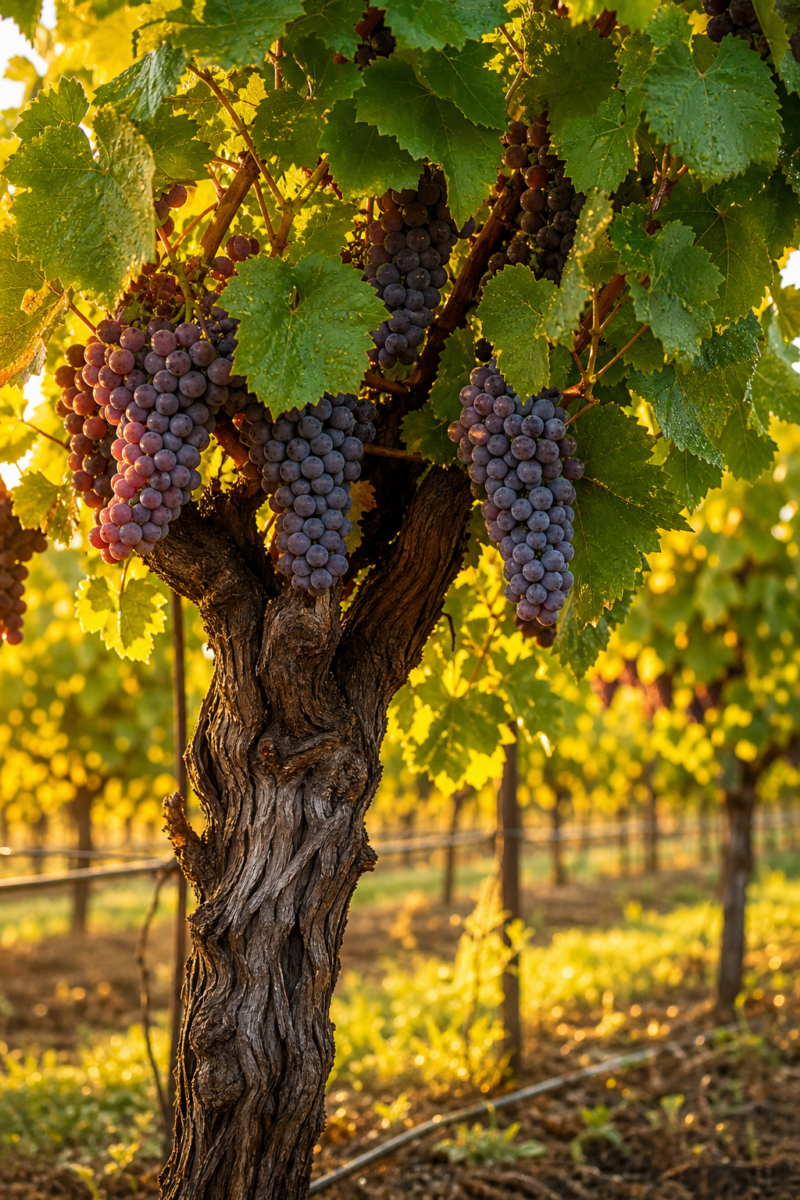
If fruit is grown and never manufactured, then your job was never to produce it. Your job is to abide. Jesus said it about as simply as it can be said.
“I am the vine, you are the branches. He who abides in Me, and I in him, bears much fruit; for without Me you can do nothing.” — John 15:5 (NKJV)
A branch does not grunt and strain to push out grapes. It stays joined to the vine, and the life of the vine does the rest in its own time. So the practical question is never really, “How do I make myself more patient by Friday.” It is, “How do I stay connected to the One who is patience itself.” That connection gets built through the most ordinary, repeatable means. Time in the Word that is read to meet God and not to check a box. Honest prayer that does not perform for an audience. Worship. Confession that names the thing out loud. The company of other believers who love you enough to tell you the truth about yourself.
It is also built through time, and there is no shortcut around that part. Fruit ripens in seasons, not in afternoons. You will not wake up one morning fully formed, and the temptation to despair because you are not there yet is itself a work of the flesh dressed up to look like humility. So keep walking. The same Spirit who began this work in you is faithful to finish it, even on the days you cannot feel Him moving. If you want help cooperating with Him in the daily fight, our studies on how the Holy Spirit empowers us to overcome sin and on being filled with the Spirit daily are good next steps.
This matters for far more than your comfort. The fruit of the Spirit is nothing less than the character of Christ being formed in you, and that formation is the whole point of the Christian life, not a bonus feature for advanced believers. Our article on the purpose of the fruit of the Spirit traces why God cares so deeply about growing it in ordinary people like us.
“If we live in the Spirit, let us also walk in the Spirit.” — Galatians 5:25 (NKJV)
You already live in Him. That is settled. Now walk.
A Word Before You Go
If you came to this article tired, carrying a list of failures longer than you would admit to anyone, then hear me. The works of the flesh are evident, yes. But so is the patience of God toward His children. He is not standing over you with a clipboard, tallying your stumbles. He is the vine, holding the branch, growing fruit you could never manufacture on your own no matter how hard you tried. So stop straining to be the factory. Start staying close to the Gardener, and watch what He grows.
If you are ready to move from reading about this to actually living inside it, here are a few simple next steps:
- Read Galatians 5 slowly this week, circling every single time Paul mentions the Spirit
- Name one work of the flesh you tend to excuse, and bring it honestly to God instead of managing it alone
- Choose one fruit you long to see grow, and ask the Spirit plainly to grow it in you
- Walk through the whole passage with others using our 13-lesson Fruit of the Spirit Bible study, built to carry small groups and individuals deep into Galatians 5 over a full quarter
The list that condemns you is real. But the fruit that frees you is more real still, and by grace it is already growing in everyone who walks day by day with the Spirit of God.
Keep walking with Him, friend. He is faithful to finish what He started in you. Pastor Duke
Resources
- Galatians 5 Commentary, Enduring Word (David Guzik)
- Fruit of the Spirit, Baker’s Evangelical Dictionary (Bible Study Tools)
- What Galatians 5:16 Means, BibleRef
- Galatians 5:19-20 Word Study, Precept Austin
- Works of the Flesh vs. Fruit of the Spirit Word Study, Life, Hope & Truth

Test Your Knowledge!
Answer all 10 questions, then submit to see your score.
Related Posts

What a Complete Fruit of the Spirit Study Should Include
Last updated: June 2026 By Duke Taber If you have been a Christian for any length of time, you have probably already done a study on…
 Jun 10, 2026
Why You Can't Manufacture the Fruit of the Spirit (and What to Do Instead)
Last updated: June 2026 By Duke Taber You read the list in Galatians and something in you sinks a little. Love. Joy. Peace. Patience. You know…
Jun 13, 2026
Fruit of the Spirit vs. Gifts of the Spirit: What's the Difference?
Last updated: June 2026 By Duke Taber I have stood in green rooms before services and watched two kinds of believers. One could prophesy with stunning…
Jun 10, 2026
Is the Fruit of the Spirit a Command or a Result?
Last updated: June 2026 By Duke Taber You have probably tried to be more patient. Maybe you woke up one morning, gritted your teeth, and decided…
Jun 11, 2026


 By
By


