
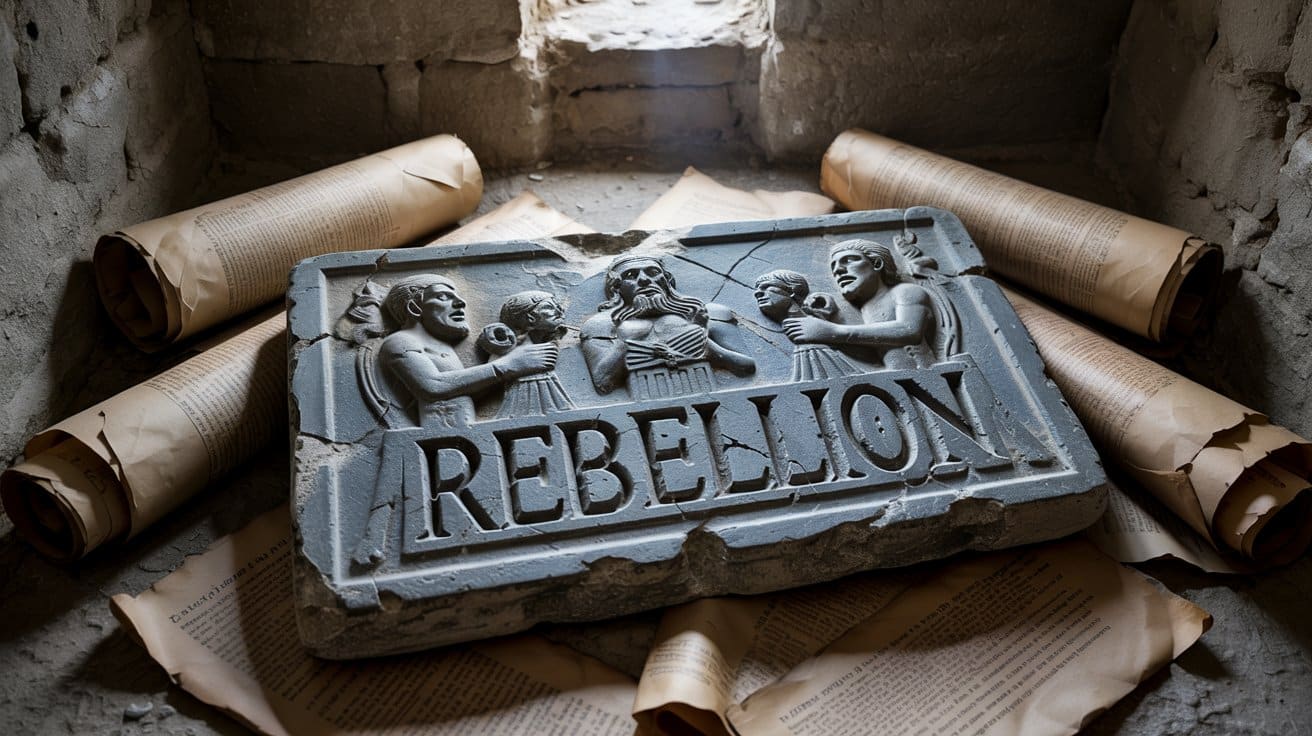
Throughout Scripture we’ve seen mankind’s stubborn streak surface time and again in defiance of the Almighty. From Eden’s garden to Babylon’s towers the human heart has consistently chose its own way over God’s perfect plan.
These biblical accounts of rebellion isn’t just ancient history – they’re mirrors reflecting our own struggles with submission and obedience. We’ll explore several powerful examples where individuals and entire nations raised their fists against heaven only to discover the devastating consequences of their choices.
What’s remarkable about these stories aren’t merely the acts of rebellion themselves but God’s response to each one. His justice mingles with mercy and His wrath tempers with redemption’s promise revealing a Father’s heart that yearns for His wayward children’s return.
Adam and Eve’s Disobedience in the Garden of Eden
The first rebellion against God happened right there in paradise. We find humanity’s original sin recorded in Genesis 3, where Adam and Eve chose their own way over God’s perfect plan.
Eating from the Tree of Knowledge
God gave Adam and Eve one simple command in the Garden of Eden. He told them, “Of every tree of the garden you may freely eat; but of the tree of the knowledge of good and evil you shall not eat” (Genesis 2:16-17, NKJV).
But Satan slithered into the garden as a serpent and questioned God’s word. He convinced Eve that eating the forbidden fruit would make them “like God, knowing good and evil” (Genesis 3:5, NKJV). Eve saw the tree was good for food, pleasant to the eyes, and desirable for wisdom. She took its fruit and ate it, then gave some to Adam who was with her.
Their rebellion wasn’t just about eating fruit. It was about:
- Doubting God’s goodness
- Desiring to be equal with God
- Choosing independence over obedience
- Trusting Satan’s lies over God’s truth
The moment they ate, their eyes were opened. They realized they were naked and felt shame for the first time.
Hiding from God’s Presence
After their disobedience, Adam and Eve heard God walking in the garden in the cool of the day. Instead of running to Him like they usually did, they hid among the trees.
Think about that for a moment. The Creator of the universe came looking for fellowship, and His children were hiding behind bushes! God called out, “Where are you?” (Genesis 3:9, NKJV). He knew exactly where they were, but He wanted them to come clean.
Adam finally answered from his hiding spot. He admitted he was afraid because he was naked. Their rebellion had created three immediate consequences:
- Fear replaced peace
- Shame replaced innocence
- Distance replaced intimacy
We see this same pattern throughout Scripture. Sin always drives people away from God’s presence, just like it drove Adam and Eve into hiding.
Blaming Others for Their Sin
When God confronted them about their disobedience, neither Adam nor Eve took responsibility. Adam pointed his finger at two targets when he said, “The woman whom You gave to be with me, she gave me of the tree, and I ate” (Genesis 3:12, NKJV).
Notice how Adam blamed both Eve AND God in one sentence! He basically said, “It’s her fault, and by the way God, You’re the one who gave her to me.”
Eve wasn’t any better. She passed the buck to the serpent, saying, “The serpent deceived me, and I ate” (Genesis 3:13, NKJV). The blame game started right there in Eden:
- Adam blamed Eve and God
- Eve blamed the serpent
- Nobody took personal responsibility
We’re still playing this game today, aren’t we? We blame our circumstances, our upbringing, other people – anything but ourselves. But God holds each person accountable for their own choices, just as He did with Adam and Eve.
The Tower of Babel: Humanity’s Prideful Defiance
The Tower of Babel stands as one of Scripture’s most striking examples of collective rebellion against God. We find humanity united in their defiance, attempting to make a name for themselves rather than glorifying their Creator.
Building a Monument to Human Achievement
Genesis 11:4 reveals humanity’s prideful heart: “And they said, ‘Come, let us build ourselves a city, and a tower whose top is in the heavens; let us make a name for ourselves.'” We see their motivation wasn’t just construction—it was self-glorification.
Their rebellion manifested through three specific actions:
- Building a city to establish permanence without God’s blessing
- Constructing a tower to reach heaven through human effort
- Making a name for themselves instead of honoring God’s name
The tower represented humanity’s attempt to achieve divine status through their own ingenuity. They sought security in brick and mortar rather than in God’s promises.
We notice they used manufactured materials—bricks instead of stones and tar instead of mortar. This choice symbolized their reliance on human innovation over God’s natural provision.
Their unified language became a tool for organized rebellion. When people combine their talents against God’s will, the potential for evil multiplies exponentially.
Rejecting God’s Command to Spread Across the Earth
God had explicitly commanded Noah’s descendants in Genesis 9:1: “Be fruitful and multiply, and fill the earth.” Yet at Babel, humanity deliberately chose the opposite path.
Their fear of being “scattered abroad over the face of the whole earth” (Genesis 11:4) directly contradicted God’s instruction. We see them clustering together in defiance rather than spreading out in obedience.
Consider the specific ways they rejected God’s command:
- Refusing to disperse and populate the earth
- Centralizing power in one location
- Creating a single cultural identity opposed to God’s diversity plan
- Establishing human government without divine authority
The people’s unity wasn’t based on love for God but on shared rebellion. They preferred the safety of numbers to the adventure of faith.
God’s response demonstrated both judgment and mercy. He confused their language and scattered them—accomplishing His original purpose while preventing greater evil.
We learn that God’s commands aren’t suggestions. When we resist His plans for expansion and growth, we’re essentially building our own towers of rebellion.
Satan’s Original Rebellion in Heaven
Before humanity’s fall in Eden, the first and most catastrophic rebellion against God occurred in heaven itself. We find in Scripture the account of Lucifer’s prideful uprising that transformed him from God’s most beautiful angel into Satan, the adversary of all that’s holy.
Lucifer’s Pride and Fall
Pride destroyed the morning star before he ever tempted humanity. Isaiah 14:12-15 reveals Lucifer’s five deadly “I will” statements that exposed his rebellious heart: “How you are fallen from heaven, O Lucifer, son of the morning!”
We see his pride manifested through:
- Desiring to ascend above God’s throne
- Wanting worship that belonged to God alone
- Seeking equality with the Most High
- Coveting God’s sovereign authority
- Refusing to serve in his appointed position
Ezekiel 28:17 tells us directly: “Your heart was lifted up because of your beauty; You corrupted your wisdom for the sake of your splendor.” Beauty became his downfall. Wisdom turned to foolishness.
His transformation from light-bearer to darkness happened instantly. One moment he stood in God’s presence as the covering cherub. The next moment he became Satan, the accuser and enemy of God’s people.
We can’t miss this crucial lesson – pride always precedes destruction, even for the mightiest of angels.
Leading Angels in Revolt Against God
Satan didn’t rebel alone in his cosmic insurrection. Revelation 12:4 indicates he convinced one-third of heaven’s angels to join his doomed rebellion: “His tail drew a third of the stars of heaven and threw them to the earth.”
These angels made three fatal choices:
- Believed Satan’s lies over God’s truth
- Traded eternal glory for temporary power
- Chose rebellion over righteousness
We’re talking about countless angels who knew God personally yet chose defiance. They witnessed His glory firsthand. They experienced His perfect love and holiness. Still they rebelled.
Their punishment came swiftly and permanently. Jude 1:6 describes their fate: “And the angels who did not keep their proper domain, but left their own abode, He has reserved in everlasting chains under darkness for the judgment of the great day.”
No second chances existed for these rebellious spirits. No redemption plan would come. Their choice sealed their eternal destiny.
Today these fallen angels serve as demons, continuing their war against God through attacking His people. They remind us that knowing about God isn’t enough – we must submit to His authority completely.
Israel’s Golden Calf Idolatry at Mount Sinai
Just forty days after witnessing God’s power at Mount Sinai, Israel committed one of Scripture’s most shocking acts of rebellion. While Moses received the Ten Commandments on the mountain, the people below crafted an idol and declared it their deliverer from Egypt.
Breaking the First Commandment
The Israelites’ golden calf rebellion violated God’s freshest command: “You shall have no other gods before Me” (Exodus 20:3). They’d heard God’s voice thunder these words just weeks earlier, yet impatience drove them to Aaron demanding, “Come, make us gods that shall go before us” (Exodus 32:1).
Aaron collected their gold earrings and fashioned a calf idol, proclaiming, “This is your god, O Israel, that brought you out of the land of Egypt!” (Exodus 32:4). The people’s swift descent into idolatry revealed three critical spiritual failures:
- Impatience with God’s timing – Moses delayed coming down, so they created their own solution
- Distorted worship practices – They mixed pagan rituals with attempts to worship Yahweh
- Credit given to creation instead of Creator – They attributed their deliverance to a man-made object
Their celebration turned into debauchery as they “rose early on the next day, offered burnt offerings, and brought peace offerings; and the people sat down to eat and drink, and rose up to play” (Exodus 32:6). This wasn’t just idol worship – it became sexual immorality and complete abandonment of holy living.
Moses’ Intercession for the People
God’s anger burned hot against Israel, telling Moses, “Let Me alone, that My wrath may burn hot against them and I may consume them” (Exodus 32:10). The Lord offered to start over with Moses, making him into a great nation instead.
Moses immediately stood in the gap for his rebellious people. His intercession demonstrated three powerful prayer strategies we can apply today:
- Appealing to God’s reputation – “Why should the Egyptians speak, and say, ‘He brought them out to harm them’?” (Exodus 32:12)
- Reminding God of His promises – Moses recalled God’s covenant with Abraham, Isaac, and Israel
- Refusing personal glory for corporate blessing – Moses rejected God’s offer to make him a great nation
The Scripture records an astonishing result: “So the Lord relented from the harm which He said He would do to His people” (Exodus 32:14). Moses’ bold intercession changed God’s stated intention.
Yet consequences still followed. When Moses saw the calf and dancing, he shattered the tablets, burned the idol, ground it to powder, and made the people drink it. Three thousand men died that day for their rebellion, teaching us that forgiveness don’t always remove earthly consequences.
Korah’s Rebellion Against Moses’ Leadership
Korah’s uprising against Moses stands as one of Scripture’s most dramatic examples of rebellion against God’s chosen leadership. This Levite’s defiance didn’t just challenge human authority—it struck at the heart of God’s divine order for His people.
Challenging God’s Appointed Authority
Korah wasn’t content with his privileged position as a Levite serving in God’s tabernacle. He gathered 250 leaders of Israel—men of renown, respected community figures—to confront Moses and Aaron directly.
“You take too much upon yourselves, for all the congregation is holy, every one of them, and the Lord is among them. Why then do you exalt yourselves above the assembly of the Lord?” (Numbers 16:3, NKJV)
His accusations reveal three dangerous attitudes we still see today:
- Minimizing God’s specific calling on leaders
- Claiming equal spiritual authority without divine appointment
- Using religious language to mask personal ambition
Korah’s complaint sounds spiritual—after all, wasn’t all Israel called to be holy? But he twisted God’s truth to serve his own agenda. He wanted the priesthood for himself, rejecting the role God had given him.
Moses’ response exposed the real issue: “Are you seeking the priesthood also?” (Numbers 16:10, NKJV). This wasn’t about equality or fairness. It was about coveting another’s calling and rejecting God’s sovereign choices.
The Earth Swallowing the Rebels
God’s judgment came swift and unprecedented. Moses announced that if these men died a natural death, then the Lord hadn’t sent him. But if the earth opened its mouth and swallowed them alive, everyone would know they’d rejected the Lord Himself.
The ground split apart beneath Korah, Dathan, and Abiram. They fell alive into the pit along with their households and possessions. The earth closed over them, and they perished from among the congregation.
Fire also came out from the Lord and consumed the 250 men offering incense. These weren’t just random followers—they were leaders who should’ve known better.
The next day brought even more tragedy. The congregation grumbled against Moses and Aaron, saying, “You have killed the people of the Lord” (Numbers 16:41, NKJV). A plague struck the camp, killing 14,700 people before Aaron’s intercession stopped it.
Three lessons emerge from this rebellion:
- Challenging God’s appointed authority equals challenging God Himself
- Group consensus doesn’t validate rebellion against divine order
- Sin’s consequences often extend beyond the original rebels
We must recognize that God establishes authority in His church. When we rebel against His chosen vessels, we’re eventually rebelling against Him.
King Saul’s Disobedience and Lost Kingdom
King Saul’s tragic fall from grace shows us how partial obedience is complete disobedience in God’s eyes. His rebellion against God’s direct commands cost him not just his throne but his destiny.
Offering Unauthorized Sacrifices
We find Saul’s first major rebellion in 1 Samuel 13 when he couldn’t wait for Samuel to arrive. The Philistines had gathered 30,000 chariots and 6,000 horsemen against Israel’s tiny army.
Fear gripped Saul as his soldiers deserted him daily. Samuel had told him to wait seven days but the seventh day was ending and Samuel hadn’t shown up yet.
Saul made three critical mistakes that revealed his rebellious heart:
- Taking matters into his own hands – He performed the burnt offering himself
- Violating God’s established order – Only priests could offer sacrifices
- Trusting in ritual over relationship – He thought the sacrifice itself would save them
When Samuel finally arrived, Saul’s excuses poured out like water. “The people were scattering from me, and you did not come within the days appointed” (1 Samuel 13:11, NKJV).
But Samuel cut through the excuses with God’s verdict. “You have done foolishly. You have not kept the commandment of the Lord your God” (1 Samuel 13:13, NKJV).
That single act of impatience cost Saul an eternal dynasty. God was already searching for “a man after His own heart” to replace him.
Keeping Forbidden Spoils of War
We see Saul’s rebellion reach its peak when God commanded him to completely destroy the Amalekites. God’s instructions were crystal clear – destroy everything, keep nothing.
“Now go and attack Amalek, and utterly destroy all that they have, and do not spare them” (1 Samuel 15:3, NKJV). There wasn’t any wiggle room in that command.
But Saul and his men kept the best sheep, oxen, and fatlings. They spared King Agag too, directly defying God’s explicit order.
When confronted by Samuel, Saul’s response revealed his true priorities:
- He blamed the people – “They have brought them from the Amalekites”
- He rationalized disobedience – “To sacrifice to the Lord your God”
- He protected his reputation – “Honor me now, please, before the elders”
Samuel’s response cuts to the heart of all rebellion against God. “Has the Lord as great delight in burnt offerings and sacrifices, as in obeying the voice of the Lord? Behold, to obey is better than sacrifice” (1 Samuel 15:22, NKJV).
Then came the devastating pronouncement that sealed Saul’s fate forever. “Because you have rejected the word of the Lord, He also has rejected you from being king” (1 Samuel 15:23, NKJV).
Jonah’s Flight from God’s Command
We’ve seen rebellion take many forms in Scripture, but Jonah’s defiance stands out as the prophet who literally ran in the opposite direction from God’s calling. His story reveals how even God’s chosen servants can struggle with obedience when His commands challenge our comfort zones.
Running from the Mission to Nineveh
God’s command to Jonah was crystal clear: “Arise, go to Nineveh, that great city, and cry out against it; for their wickedness has come up before Me” (Jonah 1:2, NKJV). But Jonah’s response wasn’t just reluctance – it was outright defiance.
Instead of heading east to Nineveh, Jonah boarded a ship bound for Tarshish, the furthest known port in the opposite direction. We’re talking about a prophet who’d rather sail 2,500 miles west than walk 500 miles northeast to obey God.
His reasons for fleeing reveal three rebellious attitudes we often struggle with ourselves:
- Prejudice against his enemies – The Ninevites were cruel oppressors of Israel
- Fear of success – He knew God was merciful and might spare them
- Desire for control – He wanted judgment, not mercy for Nineveh
Jonah paid his own fare, thinking he could buy his way out of God’s plan. He went “down” to Joppa, “down” into the ship, and “down” into the ship’s lowest parts – a physical descent matching his spiritual rebellion.
God’s Pursuit Through the Storm and Great Fish
God’s response to Jonah’s rebellion demonstrates His relentless pursuit of wayward servants. He “sent out a great wind on the sea” (Jonah 1:4, NKJV), creating a storm so violent that even experienced sailors panicked.
While the pagan sailors prayed desperately to their gods, Jonah slept in the ship’s hold – a picture of spiritual numbness that rebellion brings. The sailors’ lot-casting revealed God’s sovereignty even through pagan practices, pointing directly to Jonah as the cause.
Jonah’s confession to the sailors exposes the absurdity of his rebellion: “I fear the Lord, the God of heaven, who made the sea and the dry land” (Jonah 1:9, NKJV). He knew God created the very ocean he was using to escape!
God prepared three divine appointments to redirect His prophet:
- The great fish – Three days of forced reflection in its belly
- The second chance – God’s word came to Jonah again
- The plant lesson – Teaching him about divine compassion
Inside the fish, Jonah finally prayed, acknowledging that “salvation is of the Lord” (Jonah 2:9, NKJV). God’s discipline wasn’t destruction but restoration, showing us that He pursues rebellious servants with both judgment and mercy.
King David’s Sin with Bathsheba
Even God’s chosen servants can fall into devastating rebellion when they let their guard down. David’s sin with Bathsheba stands as one of Scripture’s most sobering examples of how quickly spiritual compromise can spiral into full-blown rebellion against God’s commands.
Adultery and Murder Cover-up
David’s rebellion began with a seemingly innocent glance from his palace rooftop. “Then it happened one evening that David arose from his bed and walked on the roof of the king’s house. And from the roof he saw a woman bathing, and the woman was very beautiful to behold” (2 Samuel 11:2 NKJV).
What started as looking became lusting, and lusting became taking. David sent messengers to bring Bathsheba to him, knowing full well she was married to Uriah the Hittite, one of his mighty men.
When Bathsheba became pregnant, David’s rebellion deepened into deception. He tried three different cover-up strategies:
- Bringing Uriah home from battle to sleep with his wife
- Getting Uriah drunk to lower his inhibitions
- Finally arranging Uriah’s murder on the battlefield
David wrote Uriah’s death warrant and made him carry it himself to Joab. “Set Uriah in the forefront of the hottest battle, and retreat from him, that he may be struck down and die” (2 Samuel 11:15 NKJV).
The man after God’s own heart had become an adulterer and murderer in just a few short weeks.
Nathan’s Confrontation and David’s Repentance
God sent Nathan the prophet with a parable about a rich man who stole a poor man’s only lamb. David burned with anger at the injustice, pronouncing death upon the perpetrator.
Then Nathan delivered God’s devastating verdict: “You are the man!” (2 Samuel 12:7 NKJV). The prophet exposed David’s secret sins before the entire court.
Nathan revealed the consequences of David’s rebellion:
- The sword would never depart from David’s house
- His own family would rebel against him publicly
- The child born from adultery would die
- David’s wives would be taken by another in broad daylight
David’s response differed dramatically from Saul’s excuses and blame-shifting. “I have sinned against the LORD,” David confessed immediately (2 Samuel 12:13 NKJV).
Psalm 51 captures David’s broken heart over his rebellion. “Against You, You only, have I sinned, and done this evil in Your sight” (Psalm 51:4 NKJV). He didn’t minimize his sin or blame Bathsheba.
God forgave David but the consequences remained. We learn that forgiveness doesn’t erase earthly consequences, and even restored rebels must face the results of their choices.
The Northern Kingdom’s Persistent Idolatry
The northern kingdom of Israel stands as one of history’s most tragic examples of sustained rebellion against God. From its very beginning under Jeroboam to its destruction by Assyria, these ten tribes chose idolatry over faithfulness for nearly 200 years.
Jeroboam’s Golden Calves
Jeroboam’s rebellion started with fear—fear that his people would return to Jerusalem’s temple and reunite with Judah. He set up two golden calves, one in Bethel and one in Dan, declaring, “Here are your gods, O Israel, which brought you up from the land of Egypt!” (1 Kings 12:28).
His idolatrous system included:
- Creating counterfeit worship centers to replace God’s temple
- Appointing non-Levitical priests from the lowest classes
- Establishing alternative feast days that mimicked God’s holy festivals
- Building shrines on high places throughout the land
We see Jeroboam’s sin wasn’t just personal—it infected an entire nation. The Bible mentions “the sins of Jeroboam” twenty-one times, showing how one leader’s rebellion can corrupt generations.
God sent a prophet immediately to condemn these altars. The man of God prophesied their destruction and even named Josiah, who wouldn’t be born for another 300 years (1 Kings 13:2). Yet Jeroboam’s heart remained hard, and his dynasty ended in bloodshed just as God promised.
Centuries of Rejecting Prophetic Warnings
God didn’t abandon Israel without giving them countless opportunities to repent. He sent prophet after prophet—Elijah, Elisha, Amos, Hosea—each calling the nation back to covenant faithfulness.
The northern kingdom’s responses to God’s messengers reveal their rebellious hearts:
- Ahab and Jezebel hunted Elijah like a criminal
- Amos was told to go prophesy somewhere else
- Hosea’s message of God’s broken heart fell on deaf ears
- Micaiah was imprisoned for speaking God’s truth
We’re talking about nineteen different kings over two centuries, and not one of them led the nation in genuine repentance. Every single ruler “did evil in the sight of the Lord” (2 Kings 17:2).
Israel’s persistent idolatry included worshiping Baal, Asherah poles, and even child sacrifice to Molech. They “rejected His statutes and His covenant that He had made with their fathers” (2 Kings 17:15).
Finally, God’s patience ran out. In 722 BC, the Assyrians conquered Samaria and scattered the ten tribes among the nations. The northern kingdom’s rebellion serves as a sobering reminder—God’s mercy has limits when we persistently reject His voice.
Judas Iscariot’s Betrayal of Jesus
We’ve seen kings and prophets rebel against God, but Judas Iscariot’s betrayal of Jesus stands as history’s most infamous act of treachery. His rebellion wasn’t just against a leader or a command—it was a direct assault on God’s redemptive plan for humanity.
Selling the Messiah for Thirty Pieces of Silver
Judas approached the chief priests with a chilling question: “What are you willing to give me if I deliver Him to you?” (Matthew 26:15, NKJV). They counted out thirty pieces of silver—the exact price of a slave according to Exodus 21:32.
Think about what Judas traded away for those coins:
- Three years of witnessing miracles firsthand
- Personal teaching from the Son of God
- Fellowship with the Messiah
- His eternal destiny
- The trust of his closest friends
He’d seen Jesus feed five thousand, raise Lazarus from the dead, and heal countless sick people. Yet greed and disappointment clouded his judgment so severely that he valued Jesus’ life at the price of a common slave.
The thirty pieces of silver fulfilled Zechariah’s prophecy written 500 years earlier: “So they weighed out for my wages thirty pieces of silver” (Zechariah 11:12, NKJV). Even Judas’s rebellion couldn’t derail God’s sovereign plan—it actually fulfilled it.
The Ultimate Act of Rebellion Against God’s Son
Judas’s betrayal represents the ultimate rejection of divine love and grace. He literally kissed the face of God to mark Him for arrest, turning an intimate gesture of friendship into a weapon of destruction.
Consider the depth of this rebellion:
- Judas ate the Last Supper knowing he’d already made the deal
- Jesus washed his feet hours before the betrayal
- He heard Christ’s warnings about the betrayer’s fate
- Satan entered him, yet he still chose to proceed
Jesus called him “friend” even in the moment of betrayal (Matthew 26:50, NKJV). That single word reveals God’s heart—extending mercy even to those actively rebelling against Him.
Judas’s remorse came too late. He threw the blood money back at the priests and hanged himself, becoming a perpetual warning that proximity to Jesus doesn’t guarantee salvation. We can sit in church every Sunday, participate in ministry, and still harbor rebellion in our hearts.
His story forces us to examine ourselves: Are we following Jesus for who He is, or for what we think He’ll give us?
Conclusion
These biblical accounts of rebellion reveal a sobering truth: defiance against God isn’t just an ancient problem—it’s humanity’s ongoing struggle. From Eden to Gethsemane we’ve witnessed how pride and self-will lead to devastating consequences that ripple through generations.
Yet within each story of rebellion we’ve discovered something remarkable. God’s response consistently blends justice with mercy and judgment with an invitation to return. He doesn’t abandon His wayward children but pursues them with relentless love.
What’s striking is how these rebels weren’t outsiders or obvious villains. They were chosen leaders like Saul and David intimate followers like Judas and God’s own people like Israel. Their failures remind us that proximity to God doesn’t guarantee faithfulness—only humble submission does.
As we reflect on these examples we’re confronted with our own hearts. Every day we face choices between God’s way and our own between submission and rebellion. These stories aren’t just history lessons—they’re mirrors showing us the consequences of choosing independence over obedience and warning us that partial obedience is still complete rebellion in God’s eyes.

Pastor Duke has been preaching and teaching the Bible since 1988. He has shared his knowledge online since 2011.







 By
By