

The Bible is often held up as the ultimate moral guide, but a closer look reveals some troubling examples of immorality within its pages. From acts of violence and genocide to sexual misconduct and oppression, there are numerous instances where biblical figures engage in behavior that most would consider unethical today.
In this text, I’ll explore some of the most egregious examples of immorality in the Bible. We’ll examine the context and implications of these stories and consider what they mean for those who view scripture as the inerrant word of God.
Whether you’re a devout believer or a skeptical scholar, these biblical accounts raise important questions about morality, divine justice, and the nature of God. Let’s immerse and grapple with some of the most challenging and controversial parts of the Bible.
Sexual Immorality
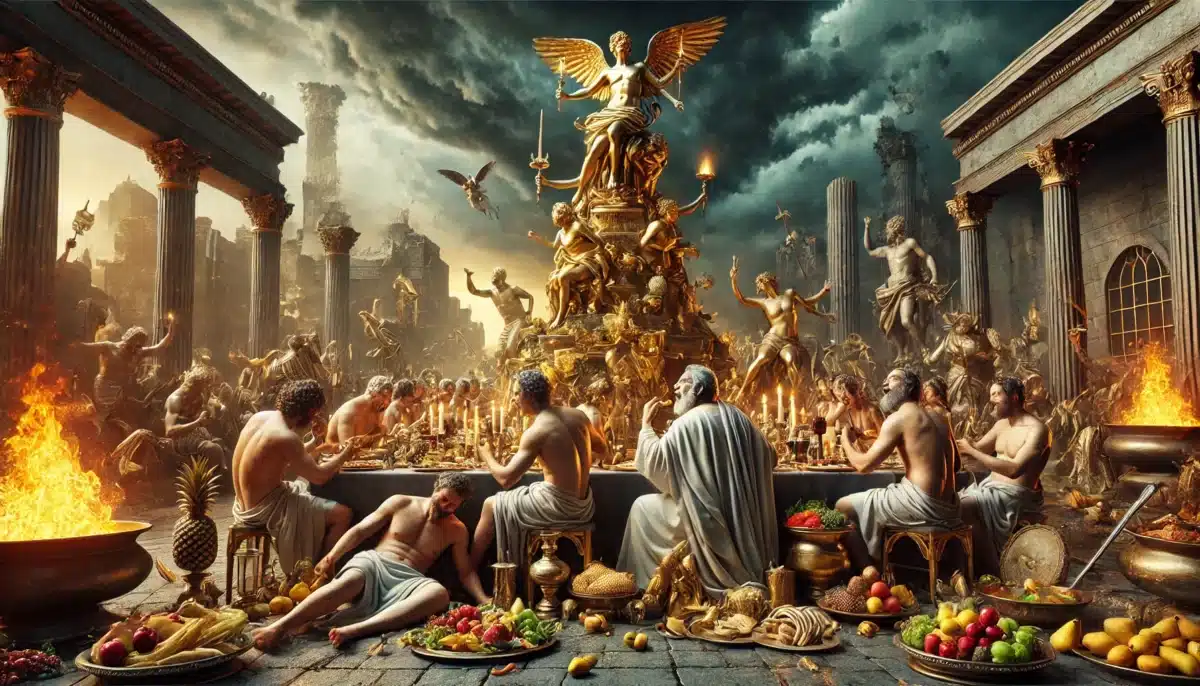
The Bible contains numerous examples of sexual misconduct that would be considered immoral by today’s standards. Let’s explore some of the most egregious instances of sexual immorality found in the scriptures.
Adultery
King David, a man described as being after God’s own heart, committed adultery with Bathsheba, the wife of Uriah. Not only did David sleep with another man’s wife, but he also arranged for Uriah’s death to cover up his sin (2 Samuel 11). Even though facing consequences for his actions, David remained a central figure in the Bible’s narrative.
Fornication
The Bible mentions several instances of fornication, or sexual relations outside of marriage. In Genesis 38, Judah sleeps with his daughter-in-law Tamar, mistaking her for a prostitute. This act of fornication leads to Tamar’s pregnancy and the birth of twins, who become part of Jesus’ lineage.
Homosexuality
While the Bible condemns homosexuality as a sin (Leviticus 18:22, Romans 1:26-27), it also includes a story of same-sex attraction between David and Jonathan. Their relationship is described as surpassing the love of women (2 Samuel 1:26), leading some to interpret their bond as romantic or sexual in nature.
Incest
The Bible contains several disturbing examples of incest:
- Lot’s daughters get him drunk and sleep with him to preserve their family line (Genesis 19:30-38).
- Abraham marries his half-sister Sarah (Genesis 20:12).
- Amnon rapes his half-sister Tamar (2 Samuel 13).
These instances of incest are not explicitly condemned in their respective narratives, raising questions about the Bible’s stance on sexual morality.
Idolatry and False Worship

The Bible frequently condemns idolatry and the worship of false gods. One of the most infamous examples is the story of the golden calf in Exodus 32. While Moses was receiving the Ten Commandments on Mount Sinai, the Israelites grew impatient and asked Aaron to make them a god to worship: “And he received the gold from their hand, and he fashioned it with an engraving tool, and made a molded calf. Then they said, ‘This is your god, O Israel, that brought you out of the land of Egypt!'” (Exodus 32:4, NKJV).
God’s anger burned against the Israelites for their idolatry. He declared, “They have turned aside quickly out of the way which I commanded them. They have made themselves a molded calf, and worshiped it and sacrificed to it” (Exodus 32:8, NKJV). As punishment, about three thousand men were killed that day.
The Bible also recounts King Solomon’s fall into idolatry. Even though his renowned wisdom, “Solomon did evil in the sight of the Lord, and did not fully follow the Lord, as did his father David. Then Solomon built a high place for Chemosh the abomination of Moab, on the hill that is east of Jerusalem, and for Molech the abomination of the people of Ammon” (1 Kings 11:6-7, NKJV). His actions led to the downfall and division of his kingdom.
Other examples of idolatry in the Bible include:
- The worship of Baal and Asherah by the Israelites (Judges 2:13)
- Jeroboam’s setting up of golden calves in Bethel and Dan (1 Kings 12:28-30)
- The worship of the Babylonian gods by the exiled Israelites (Ezekiel 8:14-16)
These stories underscore the Bible’s clear stance against idolatry and the severe consequences that follow those who engage in false worship. They serve as a warning to remain faithful to the one true God and avoid the temptation of worshiping anything or anyone else.
Here is the optimized section with the requested subheadings and content for the listicle article on examples of immorality in the bible:
Murder and Violence
The Bible contains numerous instances of murder and violence that raise moral questions. Let’s examine two disturbing examples from the Old Testament.
Cain and Abel
The first recorded murder in the Bible is when Cain kills his brother Abel out of jealousy and anger:
“Now Cain talked with Abel his brother; and it came to pass, when they were in the field, that Cain rose up against Abel his brother and killed him.” (Genesis 4:8 NKJV)
God punishes Cain by cursing him to be a fugitive and vagabond on the earth. But, God also protects Cain from retribution by others, marking him so that no one finding him would kill him.
This story illustrates that murder provokes God’s judgment but also His mercy. It shows God values justice but provides grace even to a murderer.
Moses’ Anger
Moses, the great prophet and lawgiver, also committed murder in a fit of rage against an Egyptian:
“He looked this way and that way, and when he saw no one, he killed the Egyptian and hid him in the sand.” (Exodus 2:12 NKJV)
Moses fled as a fugitive from Pharaoh for his crime. Yet later, God appears to Moses and chooses him to lead Israel out of slavery.
Remarkably, Moses goes on to have a close relationship with God and to receive the Ten Commandments, which prohibit murder. His life shows that God can still use very flawed people to accomplish His will.
Lying and Deception
The Bible contains several troubling examples of lying and deception. Let’s explore some notable instances and their implications.
Abraham and Sarah
In Genesis 12 and 20, Abraham lies about his wife Sarah, claiming she is his sister out of fear for his life. He does this first to Pharaoh, then later to Abimelech. God intervenes, plaguing Pharaoh’s house (Gen. 12:17) and threatening Abimelech (Gen. 20:3).
Even though these lies, God still blesses Abraham:
“And the LORD had blessed Abraham in all things.” (Gen 24:1 NKJV)
This raises questions about the consequences of deception, even when done out of self-preservation. It suggests that God can still work through imperfect people to fulfill His plan.
Jacob and Esau
Jacob, with his mother Rebekah’s help, deceives his father Isaac to steal his twin brother Esau’s blessing (Gen. 27). He puts on Esau’s clothes and goatskins to appear hairy like Esau. When Isaac questions him, Jacob lies outright:
“I am Esau your firstborn; I have done just as you told me.” (Gen. 27:19 NKJV)
Jacob faces consequences – Esau vows to kill him, forcing Jacob to flee. Yet in a dream, God reaffirms Jacob’s blessing (Gen. 28:13-15), and he goes on to father the twelve tribes of Israel. Again, God uses a deceiver to accomplish His plan, but not without repercussions and moral complexity that invites our grappling.
Disobedience and Rebellion
The Bible contains numerous examples of individuals who disobeyed God’s commands or rebelled against His authority. Let’s examine two prominent instances of disobedience and rebellion in the Bible.
Adam and Eve
The story of Adam and Eve’s disobedience in the Garden of Eden is perhaps the most well-known example of rebellion against God. In Genesis 3, we see how the serpent tempted Eve to eat from the tree of the knowledge of good and evil, which God had specifically forbidden.
Even though God’s clear instructions, Eve succumbed to temptation and ate the fruit, then gave some to Adam, who also ate it. This act of disobedience brought sin and death into the world, as God had warned:
“But of the tree of the knowledge of good and evil you shall not eat, for in the day that you eat of it you shall surely die” (Genesis 2:17, NKJV).
Their rebellion had far-reaching consequences for all of humanity, as sin became part of the human condition. It’s a sobering reminder of the importance of obeying God’s commands and the potential consequences of disobedience.
Jonah
The story of Jonah is another example of disobedience and rebellion against God’s direct command. In the book of Jonah, God instructed the prophet to go to Nineveh and preach against their wickedness. But, Jonah attempted to flee from God’s presence by boarding a ship headed in the opposite direction.
God intervened by sending a great storm and causing Jonah to be swallowed by a large fish. Inside the fish, Jonah repented and agreed to obey God’s command. After being delivered from the fish, Jonah went to Nineveh and preached, resulting in the city’s repentance.
Even though this, Jonah still struggled with God’s decision to show mercy to the Ninevites, revealing his continued rebellious attitude. This story highlights the futility of trying to run from God’s call and the importance of obedience, even when we don’t fully understand or agree with God’s plans.
Greed and Selfishness
Greed and selfishness are character flaws that lead to immoral behavior. The Bible provides cautionary tales of individuals who succumbed to these vices, highlighting the destructive consequences that follow.
Achan’s Theft
In Joshua 7, Achan disobeys God’s command and keeps some of the plunder from the battle of Jericho for himself. His greed brings judgment upon the entire nation of Israel. As a result, they suffer defeat in their next battle against Ai.
When confronted, Achan confesses:
“When I saw among the spoils a beautiful Babylonian garment, two hundred shekels of silver, and a wedge of gold weighing fifty shekels, I coveted them and took them. And there they are, hidden in the earth during my tent, with the silver under it.” (Joshua 7:21, NKJV)
Achan’s selfish act led to his own death and that of his family. This story serves as a stark reminder that our actions have consequences not just for ourselves but also for those around us.
Ananias and Sapphira
In Acts 5, we encounter the story of Ananias and Sapphira, a couple who sold their property and kept back part of the proceeds for themselves while claiming to have given the full amount to the apostles.
“But Peter said, ‘Ananias, why has Satan filled your heart to lie to the Holy Spirit and keep back part of the price of the land for yourself? While it remained, was it not your own? And after it was sold, was it not in your own control? Why have you conceived this thing in your heart? You have not lied to men but to God.'” (Acts 5:3-4, NKJV)
Their deception and greed result in both of them falling dead at Peter’s feet. This incident demonstrates that God values honesty and generosity, and He will not tolerate deceit and selfishness within the church.
These examples from Scripture remind us to guard our hearts against greed and to cultivate a spirit of generosity and integrity. As believers, we are called to put others before ourselves and to trust in God’s provision rather than hoarding wealth for our own gain.
Conclusion
The Bible is a complex text that contains both moral guidance and troubling examples of immorality. Throughout this article, I’ve explored various instances of sexual misconduct, idolatry, murder, deception, disobedience, greed, and selfishness found within its pages. These narratives challenge our understanding of the Bible as a flawless moral authority and prompt us to grapple with difficult questions about divine justice and the nature of God.
As I’ve examined these stories, it’s become clear that the Bible doesn’t shy away from depicting human failings and the consequences of sin. But, it also reveals a God who extends mercy and grace, using flawed individuals to accomplish His purposes. Engaging with these complex narratives can deepen our understanding of morality, faith, and the human condition, inviting us to reflect on our own lives and the world around us.
How Did Persecution Influence Biblical Scandals?
Persecution played a significant role in shaping biblical scandals, as it often led individuals to make desperate choices. Many biblical examples of persecution highlight how pressure from rulers and religious authorities resulted in betrayals, denials, and moral conflicts. These struggles tested faith, revealing both human weakness and divine perseverance through adversity.


Pastor Duke has been preaching and teaching the Bible since 1988. He has shared his knowledge online since 2011.


 By
By


