
The Bible is full of powerful examples of accountability that demonstrate God’s desire for us to live with integrity and righteousness. Throughout scripture, we see how God holds people accountable for their actions, whether they’re kings, prophets, or ordinary individuals.
I’ve always been fascinated by these stories of accountability in the Bible. They serve as a reminder that we’re all answerable to God and that our choices have consequences.
In this text, I’ll explore some of the most striking examples of accountability in the Bible, from Adam and Eve’s fall in the Garden of Eden to David’s confrontation with the prophet Nathan. By examining these accounts, we can gain a deeper understanding of God’s character and learn valuable lessons about living a life of accountability and obedience to Him.
Adam and Eve: The First Example of Accountability

The story of Adam and Eve in the Garden of Eden is the first instance of accountability in the Bible. In Genesis 2:16-17, God gives Adam clear instructions:
“And the Lord God commanded the man, saying, ‘Of every tree of the garden you may freely eat; but of the tree of the knowledge of good and evil you shall not eat, for in the day that you eat of it you shall surely die.'” (NKJV)
Even though this warning, Adam and Eve choose to disobey God and eat from the forbidden tree. When God confronts them about their actions, they try to shift the blame:
- Adam blames Eve: “The woman whom You gave to be with me, she gave me of the tree, and I ate.” (Genesis 3:12, NKJV)
- Eve blames the serpent: “The serpent deceived me, and I ate.” (Genesis 3:13, NKJV)
But, God holds each of them accountable for their individual choices. He pronounces consequences for their disobedience:
| Person | Consequence |
|---|---|
| Adam | Cursed ground, difficult labor, eventual return to dust (Gen. 3:17-19) |
| Eve | Pain in childbirth, desire for husband’s role (Gen. 3:16) |
| Serpent | Cursed above all animals, enmity with woman’s seed (Gen. 3:14-15) |
This story teaches us that God expects obedience and holds us responsible for our actions. We can’t blame others for our own choices. Like Adam and Eve, we must take ownership of our decisions and face the consequences, both good and bad.
Cain and Abel: Consequences of Jealousy and Murder
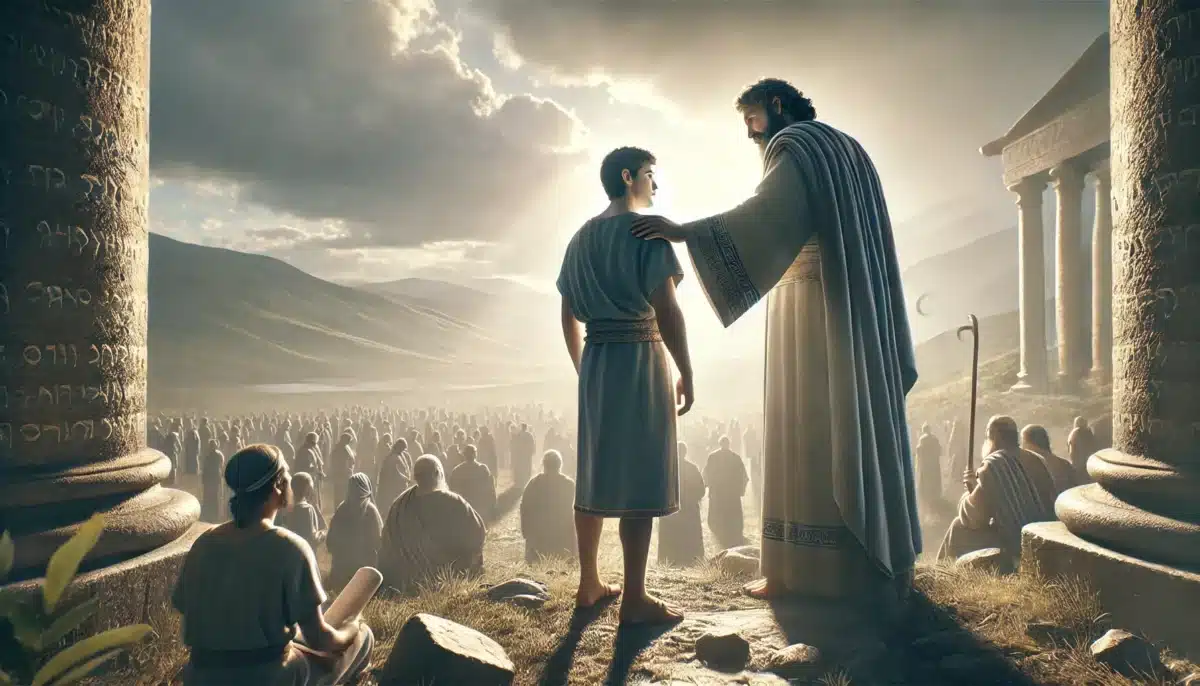
The story of Cain and Abel in Genesis 4 is another powerful example of accountability in the Bible. Cain and Abel, the sons of Adam and Eve, both brought offerings to the Lord. But, God respected Abel’s offering but did not respect Cain’s.
This ignited jealousy and anger in Cain’s heart. Even though God’s warning to rule over sin, Cain allowed his wrath to consume him. In a fit of rage, he murdered his brother Abel in the field.
God swiftly confronted Cain, asking, “Where is Abel your brother?” (Genesis 4:9 NKJV). Cain’s infamous response, “Am I my brother’s keeper?” reveals his unrepentant heart.
God held Cain fully accountable for his heinous act. As a consequence, God pronounced a curse upon him:
“So now you are cursed from the earth, which has opened its mouth to receive your brother’s blood from your hand. When you till the ground, it shall no longer yield its strength to you.” (Genesis 4:11-12 NKJV)
Cain was banished from God’s presence and became a restless wanderer on the earth. His punishment served as a stark reminder of the serious repercussions of giving in to sinful desires.
This account teaches us several vital lessons about accountability:
- God sees our hearts and motives, not just our outward actions.
- Jealousy and anger, if left unchecked, can lead to devastating sins.
- We are responsible for mastering our sinful impulses.
- Murder is a grievous offense that incurs severe divine judgment.
- Attempting to conceal or deny our wrongdoings is futile before God.
The tragic story of Cain and Abel underscores the importance of being accountable to God for our thoughts, emotions, and actions. It warns us of the destructive power of unconstrained envy and wrath, urging us to cultivate a heart of love and righteousness.
Moses: Accountability for Disobedience
The story of Moses striking the rock in Numbers 20 is a powerful example of accountability in the Bible. God instructed Moses to speak to the rock to bring forth water for the grumbling Israelites. But, in a moment of frustration and anger, Moses disobeyed God’s command and struck the rock twice with his staff.
God held Moses accountable for his disobedience, declaring, “Because you did not believe Me, to hallow Me in the eyes of the children of Israel, hence you shall not bring this assembly into the land which I have given them” (Numbers 20:12, NKJV). This consequence was severe – Moses would not be allowed to enter the Promised Land.
Moses’ story teaches us several valuable lessons about accountability:
- Even spiritual leaders are accountable to God
- Disobedience has consequences, no matter one’s position
- God expects us to trust and obey Him completely
- Our actions can have far-reaching implications
Even though his faithful service and intimate relationship with God, Moses was not exempt from the consequences of his disobedience. His story reminds us that we are all accountable to God for our actions, words, and attitudes. As Christians, we must strive to live in obedience to God’s commands, trusting in His wisdom and goodness, even when we face challenging circumstances.
David and Bathsheba: Facing the Consequences of Adultery
The story of David and Bathsheba in 2 Samuel 11-12 stands out as a poignant example of accountability in the Bible. Even though being a man after God’s own heart, David’s sin with Bathsheba and the subsequent murder of her husband Uriah brought severe consequences.
Nathan Confronts David
- After David’s affair with Bathsheba and the orchestration of Uriah’s death, God sent the prophet Nathan to confront him (2 Samuel 12:1).
- Nathan wisely approached David with a parable about a rich man who took a poor man’s beloved lamb, arousing David’s anger and causing him to declare, “As the Lord lives, the man who has done this shall surely die!” (2 Samuel 12:5, NKJV).
- Nathan boldly pointed out David’s sin, proclaiming, “You are the man!” (2 Samuel 12:7, NKJV), holding him accountable for his actions.
- This confrontation forced David to face the gravity of his transgressions and the inevitable consequences that would follow.
- Upon hearing Nathan’s words, David immediately acknowledged his sin, confessing, “I have sinned against the Lord” (2 Samuel 12:13, NKJV).
- Although God forgave David, He still held him accountable for his actions, declaring that the child born to Bathsheba would die and that the sword would never depart from David’s house (2 Samuel 12:14, 10).
- David faced the heartbreaking loss of his child and endured ongoing turmoil within his family, including the rebellion of his son Absalom (2 Samuel 15-18).
- Even though the painful consequences, David’s genuine repentance, as seen in Psalm 51, demonstrates the importance of taking responsibility for one’s sins and seeking God’s mercy and restoration.
Jonah: Running from God’s Call
The story of Jonah is a powerful example of accountability in the Bible. It teaches us that we can’t run from God’s call on our lives.
Jonah’s Disobedience
God commanded Jonah to go to Nineveh and preach against their wickedness. But Jonah didn’t want to obey. He tried to flee from God’s presence by boarding a ship heading in the opposite direction.
Jonah’s disobedience had consequences. God sent a violent storm that threatened to sink the ship. The sailors cast lots and discovered that Jonah was to blame. They reluctantly threw him overboard, and the storm ceased.
“But Jonah arose to flee to Tarshish from the presence of the Lord. He went down to Joppa, and found a ship going to Tarshish; so he paid the fare, and went down into it, to go with them to Tarshish from the presence of the Lord.” (Jonah 1:3 NKJV)
Accountability in the Belly of the Fish
God didn’t let Jonah off the hook. He prepared a great fish to swallow Jonah, and Jonah spent three days and nights in its belly. It was there, in the depths of despair, that Jonah finally acknowledged his sin and cried out to God for mercy.
“Then Jonah prayed to the Lord his God from the fish’s belly. And he said: ‘I cried out to the Lord because of my affliction, And He answered me.'” (Jonah 2:1-2 NKJV)
God heard Jonah’s prayer and commanded the fish to vomit him onto dry land. Jonah had learned his lesson. He went to Nineveh and preached God’s message, and the entire city repented.
- We can’t run from God’s call
- Disobedience has consequences
- God is merciful when we repent
Ananias and Sapphira: Accountability for Lying
The story of Ananias and Sapphira in Acts 5:1-11 is a sobering example of accountability for deception in the early church. This married couple sold a piece of property and kept back part of the proceeds for themselves, while presenting the remainder to the apostles as if it were the full amount.
Peter, filled with the Holy Spirit, confronted Ananias about his deception:
“Ananias, why has Satan filled your heart to lie to the Holy Spirit and keep back part of the price of the land for yourself? While it remained, was it not your own? And after it was sold, was it not in your own control? Why have you conceived this thing in your heart? You have not lied to men but to God.” (Acts 5:3-4, NKJV)
Upon hearing these words, Ananias fell down and breathed his last. Three hours later, his wife Sapphira arrived, unaware of what had happened. Peter questioned her about the price of the land, and she also lied, confirming the amount Ananias had presented.
Peter responded,
“How is it that you have agreed together to test the Spirit of the Lord? Look, the feet of those who have buried your husband are at the door, and they will carry you out.” (Acts 5:9, NKJV)
Sapphira immediately fell down at his feet and breathed her last.
This account demonstrates several key principles of accountability:
- God takes deception seriously, especially within the church.
- We are accountable not only for our actions but also for the motives of our hearts.
- Attempting to deceive God’s people is tantamount to lying to God Himself.
- The consequences of deception can be severe and immediate.
- Maintain integrity and honesty in all dealings
- Guard against greed and the temptation to misrepresent the truth
- Recognize that God sees the heart and holds us accountable for our motives
Judas Iscariot: The Betrayal and Its Consequences
Judas Iscariot, one of the twelve disciples, serves as a striking example of accountability in the New Testament. Even though being chosen by Jesus and witnessing His miracles firsthand, Judas eventually betrayed the Lord for thirty pieces of silver (Matthew 26:14-16).
The Gospel accounts reveal the devastating consequences of Judas’ actions:
- Betrayal with a kiss (Matthew 26:47-50)
- Jesus’ arrest and trial (Matthew 26:57-68)
- Judas’ remorse and suicide (Matthew 27:3-5)
Judas’ betrayal set in motion the events leading to Jesus’ crucifixion, fulfilling the scriptures (John 13:18). Yet, even in this dark moment, Jesus acknowledged Judas’ accountability, saying, “The Son of Man indeed goes just as it is written of Him, but woe to that man by whom the Son of Man is betrayed!” (Mark 14:21).
The story of Judas illustrates the grave consequences of sin and the importance of remaining faithful to God. It also highlights the reality that we are all accountable for our choices, even when we are close to Jesus.
As Peter later reflected, “Judas by transgression fell, that he might go to his own place” (Acts 1:25). This sobering account reminds us to guard our hearts, resist temptation, and stay true to our commitment to Christ.
Peter’s Denial: Accountability and Restoration
Peter’s story in the gospels provides a poignant example of accountability and restoration. As one of Jesus’ closest disciples, Peter boldly declared his loyalty, stating, “Even if all are made to stumble because of You, I will never be made to stumble” (Matthew 26:33, NKJV). But, Jesus predicted that Peter would deny Him three times before the rooster crowed.
True to Jesus’ words, Peter did deny knowing Him three times on the night of His arrest. Luke 22:61-62 records, “And the Lord turned and looked at Peter. Then Peter remembered the word of the Lord, how He had said to him, ‘Before the rooster crows, you will deny Me three times.’ So Peter went out and wept bitterly.” This moment of accountability was a turning point for Peter.
After Jesus’ resurrection, He appeared to Peter and the other disciples on the shore of the Sea of Tiberias. In a powerful conversation, Jesus asked Peter three times, “Simon, son of Jonah, do you love Me?” (John 21:15-17). This exchange mirrored Peter’s three denials, giving him the opportunity to reaffirm his love and commitment to Christ.
Jesus’ restoration of Peter demonstrates:
- God’s grace and forgiveness
- The importance of repentance
- The power of accountability in our spiritual growth
Peter’s experience teaches us that even when we fail, God is ready to forgive and restore us. As Peter went on to become a bold leader in the early church, his story reminds us that our failures do not define us. Instead, they can be opportunities for growth and renewed commitment to follow Christ.
Accountability in the Parables of Jesus
Jesus often used parables to teach profound spiritual truths. Several of these parables underscore the importance of accountability in our lives.
The Parable of the Talents
In Matthew 25:14-30, Jesus tells the parable of a man who entrusted his servants with his property before going on a journey. To one servant, he gave five talents, to another two, and to another one, each according to his ability. The servants with five and two talents invested and doubled their amounts, while the servant with one talent hid it in the ground.
Upon the master’s return, he held each servant accountable for their stewardship:
“And so he who had received five talents came and brought five other talents, saying, ‘Lord, you delivered to me five talents; look, I have gained five more talents besides them.'” (Matthew 25:20, NKJV)
The master commended the faithful servants but condemned the wicked, lazy servant who failed to invest his talent:
“You wicked and lazy servant, you knew that I reap where I have not sown, and gather where I have not scattered seed. So you ought to have deposited my money with the bankers, and at my coming I would have received back my own with interest.” (Matthew 25:26-27, NKJV)
This parable teaches us that:
- God expects us to use our gifts and resources wisely
- We will be held accountable for how we steward what God has given us
- Faithful stewardship leads to greater responsibilities and rewards
The Pharisee and the Tax Collector
In Luke 18:9-14, Jesus tells the parable of two men who went to the temple to pray – a Pharisee and a tax collector. The Pharisee boasted about his righteousness, thanking God that he was not like other sinners. In contrast, the tax collector humbly acknowledged his sin and pleaded for God’s mercy.
Jesus held the Pharisee accountable for his self-righteousness and pride:
“I tell you, this man went down to his house justified rather than the other; for everyone who exalts himself will be humbled, and he who humbles himself will be exalted.” (Luke 18:14, NKJV)
This parable teaches us that:
- God resists the proud but gives grace to the humble
- We will be held accountable for our attitudes and motives
- True righteousness comes from humility and repentance, not self-exaltation
These parables powerfully illustrate the theme of accountability woven throughout Scripture. As believers, we must embrace the truth that we are responsible for our choices, attitudes, and actions before God.
The Importance of Mutual Accountability Among Believers
As believers, we’re called to live in community with one another. This involves mutual accountability, which is essential for our spiritual growth and maturity.
Iron Sharpens Iron (Proverbs 27:17)
The Bible tells us, “As iron sharpens iron, so a man sharpens the countenance of his friend” (Proverbs 27:17, NKJV). This verse highlights the importance of having close relationships with other believers who can challenge, encourage, and sharpen us in our faith.
When we surround ourselves with godly friends, they can:
- Offer wise counsel and advice
- Provide a fresh perspective on our struggles
- Help us identify blind spots in our lives
- Encourage us to pursue righteousness
By engaging in honest and transparent relationships, we can grow in our faith and become more like Christ.
Confessing Sins to One Another (James 5:16)
James 5:16 instructs us, “Confess your trespasses to one another, and pray for one another, that you may be healed” (NKJV). This verse emphasizes the importance of vulnerability and accountability within the body of Christ.
When we confess our sins to trusted brothers and sisters in the faith, we:
- Experience the healing power of God’s forgiveness
- Break free from the isolation and shame of hidden sin
- Receive prayer, support, and encouragement from others
- Gain victory over persistent struggles
By being open and honest about our weaknesses, we create opportunities for growth, healing, and a deeper dependence on God’s grace.
Ultimate Accountability: Answering to God
As believers, we must recognize that our ultimate accountability is to God Himself. Every aspect of our lives will be evaluated considering His standards.
Giving an Account (Romans 14:12)
The Apostle Paul reminds us in Romans 14:12 (NKJV), “So then each of us shall give account of himself to God.” This verse underscores the personal responsibility we have for our actions and choices. No one can stand in our place or answer for us; we alone will stand before God to give an account.
Our words, deeds, and even our thoughts will be examined. This accountability should motivate us to live with integrity, seeking to please God in all we do. It’s a sobering reminder that we cannot hide anything from Him and that our lives should reflect our commitment to Christ.
Judgment Seat of Christ (2 Corinthians 5:10)
Paul further elaborates on this accountability in 2 Corinthians 5:10 (NKJV), stating, “For we must all appear before the judgment seat of Christ, that each one may receive the things done in the body, according to what he has done, whether good or bad.” This judgment is not about salvation, as that is secured by faith in Christ, but rather about rewards and consequences for how we lived our lives as believers.
Our works will be tested by fire, revealing their true nature and motives (1 Corinthians 3:12-15). Those that endure will result in eternal rewards, while those that prove worthless will be burned up. This judgment serves as a powerful incentive to:
- Live wholeheartedly for Christ
- Invest in things of eternal value
- Seek to glorify God in all we do
Knowing that we will stand before Christ should fill us with reverence and a desire to be found faithful. It’s a reminder that our lives have eternal significance and that we should strive to hear, “Well done, good and faithful servant” (Matthew 25:23).
Conclusion: Learning from Biblical Examples of Accountability
The Bible is filled with powerful stories that demonstrate God’s expectation for us to live with integrity and accountability. From the fall of Adam and Eve to the betrayal of Judas, these narratives teach vital lessons about the consequences of our choices and the importance of obedience to God.
As I’ve explored these examples, I’ve been struck by the consistent message that we can’t hide from God or escape the consequences of our actions. Whether it’s Moses’ disobedience at the rock, David’s sin with Bathsheba, or Ananias and Sapphira’s deception, God holds us accountable for our decisions.
Yet, during these sobering stories, there’s also hope. Peter’s restoration shows that our failures don’t define us and that God’s grace can transform our lives. The parables of Jesus remind us that true righteousness comes from humility and stewardship.
Eventually, these biblical examples point to our need for accountability, both before God and within the body of Christ. As I strive to live wholeheartedly for Him, I’m inspired to embrace transparency, seek wise counsel, and remember, my choices have eternal significance.
How Do Examples of God’s Wrath Illustrate the Importance of Accountability in Biblical Stories?
Biblical narratives vividly depict god’s wrath examples to emphasize the significance of accountability. Stories of destruction and judgment serve as powerful reminders that actions have consequences. These examples illustrate how failing to uphold moral standards leads to divine retribution, urging individuals to embrace responsibility in their choices and relationships.
Share On Pinterest!


Related Posts

Best Bible Studies About Faith: A Comprehensive Buyer's Guide
Last updated: May 2026 Discover the 5 best Bible studies about faith for individuals and groups. Compare prices, formats, and features to find the perfect study for your spiritual growth.
 May 12, 2026
10 Bible Verses About Healing Every Christian Should Know
Last updated: June 2026 Discover 10 powerful Bible verses about healing — from Jehovah Rapha to James 5 — with honest pastoral context for every season of faith, waiting, and prayer.
May 9, 2026
Why Most People Study the Bible Wrong — And How a Structured Study Changes Everything
Last updated: May 2026 Most Christians read the Bible but never truly study it. Discover the common mistakes that keep believers spiritually stuck — and how a structured Bible study changes everything.
May 26, 2026
5 Lies We Believe About Love That the Bible Corrects
Last updated: May 2026 The Bible's view of love looks nothing like Hollywood's. Discover 5 common lies about love — and what Scripture actually says about the real thing.
May 26, 2026


 By
By


