

A recent Lifeway Research survey found that only 32% of churchgoers read their Bible daily. That number should unsettle us. Not because God keeps a scoreboard, but because His Word is the primary way He speaks to His children. If we are not opening the Book, we are missing the conversation.
Here is the good news: the problem is rarely a lack of desire. Most believers want to study Scripture. They just feel lost on how to do it well. That is exactly why I put together this guide on Bible study techniques that actually work for real people with real schedules. Whether you are a small group leader preparing next Sunday’s lesson, a new believer cracking open Genesis for the first time, or a pastor looking for fresh approaches, these methods will help you move from passive reading to luminous, life-changing engagement with God’s Word.
“Your word is a lamp to my feet and a light to my path.” — Psalm 119:105 (NKJV)

Key Takeaways 📋
- Bible study techniques are not one-size-fits-all. The best method is the one you will actually use consistently.
- Prayer and context are non-negotiable foundations. Always pray before you read, and always consider who wrote the passage, to whom, and why.
- The Observe-Interpret-Apply framework is a simple, powerful structure anyone can learn in minutes.
- Consistency beats intensity. Reading three chapters daily for a year outperforms a weekend marathon every time.
- Community amplifies understanding. Studying with others fills in blind spots you cannot see alone.
Why Bible Study Techniques Matter More Than Ever
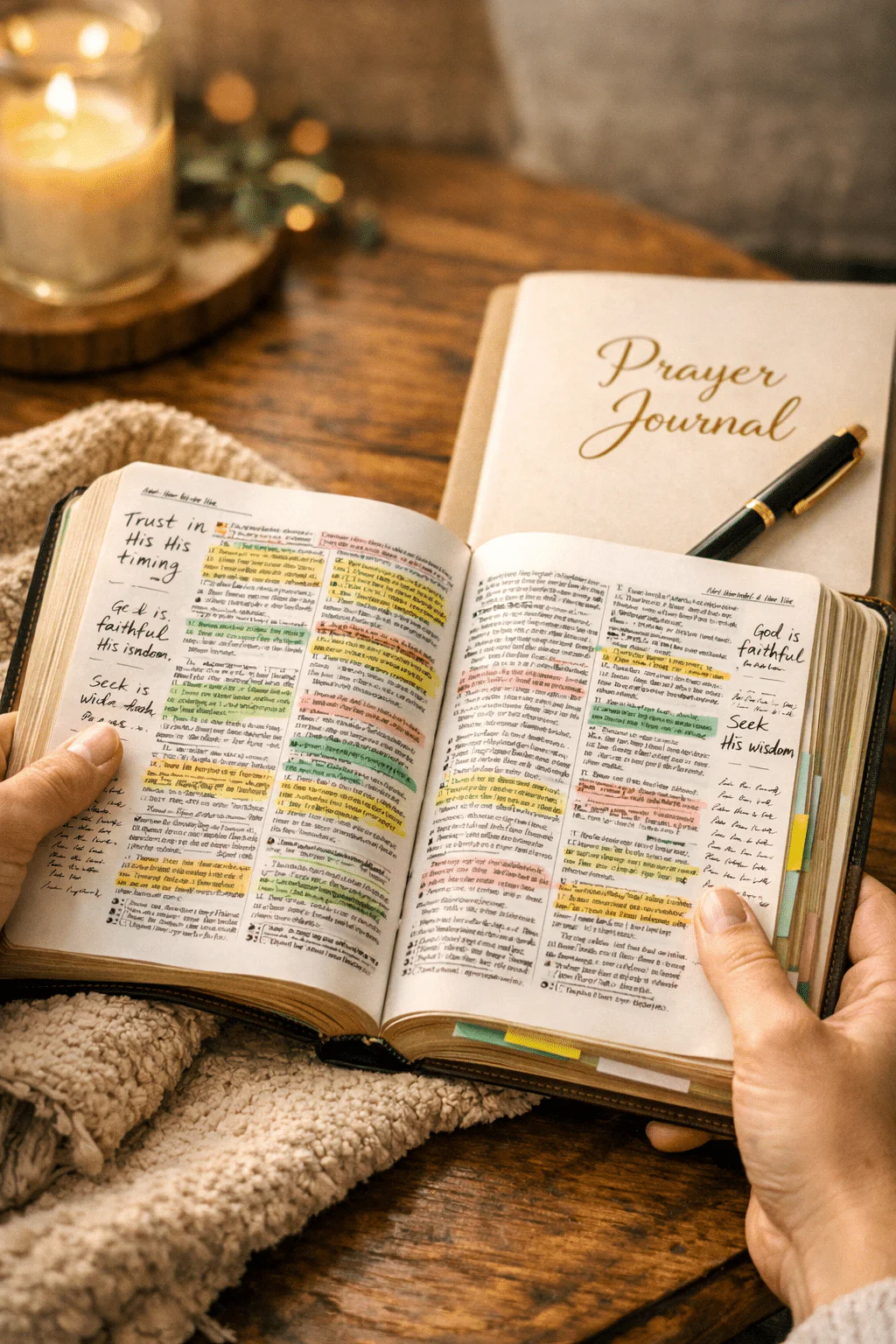
Let me be direct. We live in a world overflowing with information and starving for wisdom. Social media serves up bite-sized opinions about faith every second, and much of it is untethered from actual Scripture. Without solid Bible study techniques, believers are vulnerable to drifting into what sounds good rather than anchoring themselves in what is good.
The apostle Paul warned Timothy about this very thing: “For the time will come when they will not endure sound doctrine, but according to their own desires, because they have itching ears, they will heap up for themselves teachers” (2 Timothy 4:3, NKJV).
The antidote is not more sermons or podcasts (though those help). The antidote is you, personally, learning to rightly divide the Word of truth. When you develop strong study habits, you build discernment. You learn to recognize God’s voice. And you equip yourself to lead others with confidence.
If you are looking for a starting point, our inductive Bible study methods guide breaks down one of the most trusted approaches step by step.
Foundational Bible Study Techniques Every Believer Should Know

Before diving into specific plans and strategies, you need a solid foundation. Think of these as the bedrock skills that make every other technique more effective.
1. Pray Before You Study 🙏
This sounds obvious, but it is the step most people skip. Before you read a single verse, ask the Holy Spirit to open your eyes. “Open my eyes, that I may see wondrous things from Your law” (Psalm 119:18, NKJV). Prayer shifts your posture from academic analysis to spiritual receptivity [5].
2. Consider the Context
Every verse lives inside a paragraph, a chapter, a book, and the grand narrative of Scripture. Before you pull a verse out and build a doctrine on it, ask these questions:
- Who wrote this?
- To whom was it written?
- What was happening historically?
- Why was this message necessary?
Context prevents misapplication. It is the difference between reading a letter addressed to you and reading someone else’s mail [5].
3. Use the Observe-Interpret-Apply Method
This three-step framework is the backbone of inductive Bible study and one of the most reliable Bible study techniques available:
| Step | Question to Ask | What You Do |
|---|---|---|
| Observe | What does the text say? | Read carefully. Note repeated words, commands, promises, and contrasts. |
| Interpret | What does the text mean? | Use context, cross-references, and original language tools to understand the author’s intent. |
| Apply | What does the text mean for me? | Identify one specific action, attitude shift, or truth to carry into your day. |
This method keeps you honest with the text. It prevents you from jumping straight to application before you understand what God actually said [5].
4. Think of the Bible as a Book About God
Here is a subtle but seismic shift: the Bible is not primarily a book about you. It is a book about God. Yes, it contains incredible wisdom for daily living. But its first purpose is to reveal who God is: His character, His promises, His redemptive plan. When you approach Scripture asking “What does this teach me about God?” before “What does this do for me?”, everything changes [5].
For a deeper look at God’s character in action, check out these examples of goodness in the Bible.
5. Question the Text
Do not be afraid to ask hard questions. Wrestle with passages that confuse you. Write down what you do not understand. Some of the richest study moments come from sitting with tension rather than rushing past it. God is not intimidated by your questions. He welcomes them.
Practical Bible Study Techniques for Building a Consistent Habit

Knowing how to study is only half the equation. You also need a sustainable rhythm. Here are practical strategies that help real people stay consistent.
6. Pair Bible Study with an Existing Habit
This is one of the simplest and most effective tricks I have seen work. Attach your Bible reading to something you already do every day. Coffee in the morning? Open your Bible beside your mug. Lunch break at work? Read one chapter before you eat. The existing habit becomes a trigger for the new one [8].
7. Create a Designated Sacred Space
Pick a spot. It does not need to be fancy. A kitchen table corner, a favorite chair, a desk in your bedroom. When you consistently return to the same place, your mind begins to associate that space with meeting God. It signals to your brain (and your family) that this time matters [8].
8. Start Small and Stay Consistent
I have watched too many believers launch into an ambitious reading plan in January and abandon it by February. Here is the truth: consistency beats intensity every single time. Reading one chapter a day for 365 days will transform you more than reading ten chapters a day for two weeks [8].
Pastor Craig Groeschel recommends three foundational steps: choose a Bible translation you understand, find a consistent reading rhythm, and learn to read with context and purpose [1]. That is it. No complicated system required.
9. Use Flexible Reading Plans with Catch-Up Days
Life happens. Kids get sick. Work gets hectic. The best reading plans build in margin. Stephen Witmer’s two-year Bible reading plan, for example, includes catch-up days each month so you never feel hopelessly behind [3]. Trillia Newbell’s “52 Weeks in the Word” method includes built-in rest days and flexible start dates, so you can begin anytime rather than waiting for January 1 [3].
Here is a quick comparison of popular plans:
| Plan | Duration | Structure | Best For |
|---|---|---|---|
| Scripture Together 365 | 1 year | OT/NT alternating, 5 days reading + devotion day + sermon day [2] | Disciplined daily readers |
| Witmer’s Two-Year Plan | 2 years | OT & NT with Psalms/Proverbs cycled 4x, catch-up days [3] | Those who want a slower pace |
| 52 Weeks in the Word | 1 year | Weekly reflections, prayer prompts, rest days [3] | Flexible schedules |
| Single Book Deep Dive | Varies | One book read slowly with reflection [4] | New believers or deep study |
10. Try the Single Book Deep Dive
Instead of racing through the entire Bible, choose one book and live in it. Pick Ephesians, for example. Read it slowly. Read it again. Journal your observations. Look up cross-references. Let it marinate. This approach develops a kind of granular, deep contextual understanding that surface-level reading simply cannot produce [4].
If you want to try this approach, our guide on how to do a Bible character study pairs beautifully with a single-book deep dive.
Bible Study Techniques for Groups and Families

Studying alone is essential. Studying with others is transformational. “As iron sharpens iron, so a man sharpens the countenance of his friend” (Proverbs 27:17, NKJV).
11. Small Group Discussion Method
When you bring a passage to a group, try this simple framework:
- Read the passage aloud (have different people read different translations).
- Observe together: “What stands out to you?”
- Interpret together: “What do you think this meant to the original audience?”
- Apply together: “How does this change the way we live this week?”
This method works for home groups, Sunday School classes, and even casual gatherings. It keeps the conversation anchored in Scripture rather than drifting into opinion. For more on building community through study, explore our resource on Bible study about fellowship.
12. Family-Centered Bible Study
You do not need a seminary degree to lead your family in Scripture. Guided family Bible studies use short passages, simple discussion questions, and even activities for children to keep everyone engaged [4]. The goal is conversation, not a lecture.
Here are some practical tips:
- Keep it short. Ten to fifteen minutes is plenty for families with young kids.
- Ask open-ended questions. “What do you think God was feeling in this story?” works better than “What verse is this?”
- Let kids participate. Let them read, draw, or act out the story.
- Pray together at the end. Even a simple “Thank You, God, for teaching us tonight” builds a lasting habit.
Our Bible study on creation is a wonderful starting point for families because the narrative is vivid, visual, and full of wonder.
Tools That Enhance Your Bible Study Techniques
You do not need expensive resources to study well. But a few tools can make a real difference:
- 📓 A Bible Study Journal: Writing forces you to think more carefully about what you have read. Check out our Bible study journal ideas for creative ways to get started.
- 🖍️ A Highlighting System: Color-coding themes (promises in yellow, commands in blue, attributes of God in green) helps you see patterns across Scripture. We have a full guide on setting up a Bible study highlighting system.
- 📖 A Study Bible: Translations like the NKJV Study Bible or the ESV Study Bible include footnotes, cross-references, and historical context right on the page.
- 🤝 A Study Partner: Accountability changes everything. Find one person who will text you each week and ask, “What did you read?”
Overcoming Common Obstacles
Let me address the elephants in the room.
“I don’t have time.” You have time for what you prioritize. Start with five minutes. Five honest minutes with God’s Word will do more for your soul than an hour of scrolling.
“I don’t understand what I’m reading.” That is normal. Use a modern translation. Read a study Bible. Ask your pastor. And remember, the Holy Spirit is your teacher (John 14:26).
“I keep falling behind on my plan.” Switch to a plan with built-in catch-up days [3]. Or abandon the plan entirely and just read the next chapter. Progress is not perfection.
“The Bible feels irrelevant to my life.” Start with a topic that matters to you right now. Struggling with fear? Read through the stories of faith that conquered fear. Dealing with stress? The Psalms were written by people who understood pressure, grief, and desperation.
Conclusion: Your Next Step Starts Today
Here is what I want you to walk away with: Bible study techniques are not about becoming a scholar. They are about becoming closer to God. Every method in this article exists for one purpose: to help you hear the Father’s voice more clearly and obey it more faithfully.
You do not need to master all twelve techniques at once. Pick one. Start today. Maybe it is the Observe-Interpret-Apply method. Maybe it is creating a sacred space in your home. Maybe it is joining a small group this month.
Whatever you choose, remember this promise: “Draw near to God and He will draw near to you” (James 4:8, NKJV).
He is not hiding. He is waiting. Open the Book.
References
[1] Watch – https://www.youtube.com/watch?v=TOYVC1In1i0
[2] Do You Have A Plan To Read The Bible In 2026 Heres An Option – https://ca.thegospelcoalition.org/article/do-you-have-a-plan-to-read-the-bible-in-2026-heres-an-option/
[3] Top 5 Bible Reading Plans For 2026 – https://bibletolife.com/resources/articles/top-5-bible-reading-plans-for-2026/
[4] 5 Simple Ways To Read The Bible More In 2026 – https://discipleshipcliff.com/5-simple-ways-to-read-the-bible-more-in-2026/
[5] 30 Day Bible Reading Plan To Build A Bible Study Habit In 2026 – https://www.precept.org/2026/02/30-day-bible-reading-plan-to-build-a-bible-study-habit-in-2026/
[8] Start Reading Bible – https://momlifetoday.com/start-reading-bible/
Test Your Knowledge!
Answer all 10 questions, then submit to see your score.
Related Posts

Why a Guided Bible Study on Faith Changes Everything
Last updated: May 2026 Discover why a guided Bible study on faith does what casual reading can't — and how going deep in Scripture on this one subject changes the way you pray, trust, and live.
 May 12, 2026
Why Casual Bible Reading Isn't Enough — The Case for Structured Bible Study
Last updated: May 2026 Casual Bible reading is a good start — but it's not enough for real spiritual growth. Discover why structured Bible study transforms your faith in ways surface reading never can.
May 21, 2026
Best Bible Studies About Faith: A Comprehensive Buyer's Guide
Last updated: May 2026 Discover the 5 best Bible studies about faith for individuals and groups. Compare prices, formats, and features to find the perfect study for your spiritual growth.
May 12, 2026
A 9-Week Rhythm for Studying the Fruit of the Spirit on Your Own
Last updated: June 2026 By Duke Taber Most personal Bible study plans die quietly in week two. You start with real intention. You buy the notebook.…
Jun 12, 2026


 By
By


