

I’ll never forget the day I realized my Bible study routine was suffering—not because of lack of desire, but because I didn’t have a dedicated space. I was bouncing between the kitchen table (covered in breakfast dishes), the couch (where I’d inevitably fall asleep), and even my car during lunch breaks. My scattered approach led to scattered focus. Everything changed when I created a simple corner in my home specifically for meeting with God. Suddenly, my time in the Word became more consistent, more focused, and more fruitful.
If you’re looking for Bible Study Space Ideas that can revolutionize your time with God, you’re in the right place. Creating a dedicated area for Scripture study isn’t about Pinterest-perfect aesthetics—it’s about removing barriers between you and God’s Word. Whether you have an entire room or just a corner, the right Bible study space can help you “be still, and know that I am God” (Psalm 46:10, NKJV).
Key Takeaways
- A dedicated Bible study space increases consistency in your devotional life by removing decision fatigue and environmental distractions
- Your space doesn’t need to be large or expensive—even a repurposed closet or corner can become a powerful place of spiritual growth
- Personalization matters: Include elements that draw your heart toward worship, like scripture art, meaningful objects, and organized study tools
- Functionality trumps aesthetics: The best Bible study space is one you’ll actually use, with comfortable seating, good lighting, and easy access to resources
- Family-friendly spaces can accommodate both personal study and group discipleship, making your investment serve multiple purposes
1. The Cozy Corner Bible Study Nook 📖

One of my favorite Bible Study Space Ideas is transforming an unused corner into a dedicated study nook. This approach works beautifully in bedrooms, living rooms, or even large hallways.
What You’ll Need:
- A comfortable reading chair (prioritize back support for longer study sessions)
- Small side table or lap desk
- Good lighting source (natural or lamp)
- Bookshelf or basket for Bible study resources
The beauty of a corner nook is its simplicity. I’ve seen incredible transformations where believers took a forgotten corner and turned it into their daily meeting place with God. One small group leader I know placed her chair facing a window, allowing natural light to illuminate her Bible each morning. She told me, “When I sit in that chair, my mind knows it’s time to focus on God’s Word.”
Practical Setup Tips:
Start by identifying the quietest corner in your home. Look for spaces away from high-traffic areas where interruptions are less likely. Position your chair to face something peaceful—a window with a garden view, a blank wall where you can hang scripture art, or even just away from the television.
Keep your Bible, journal, and a few trusted study resources within arm’s reach. I recommend a small basket or shelf system to prevent clutter. As Proverbs 14:23 reminds us, “In all labor there is profit, but idle chatter leads only to poverty” (NKJV). An organized space helps you labor effectively in the Word rather than waste precious study time searching for materials.
Making It Personal:
Add elements that draw your heart toward worship. This might include:
- A small plant (caring for it can become a prayer reminder)
- Framed scripture verse that speaks to your current season
- Soft throw blanket for comfort
- Candle for a sensory worship element (I love lighting one as I begin my study time)
2. The Minimalist Bible Study Space Ideas for Maximum Focus
In our cluttered, distraction-filled world, a minimalist approach to your Bible study space can be incredibly powerful. This design philosophy embraces the truth of Matthew 6:22: “The lamp of the body is the eye. If therefore your eye is good, your whole body will be full of light” (NKJV).
Core Elements of Minimalist Design:
A minimalist Bible study space strips away everything non-essential, leaving only what serves your study. This typically includes:
- One simple desk or table surface
- One chair with good ergonomics
- Your Bible (perhaps one primary translation)
- A single journal or notebook
- One writing instrument
- Optional: one piece of scripture art
The power of this approach lies in its ability to eliminate visual noise. Research shows that physical clutter competes for our attention and decreases performance and increases stress[1]. When you sit down to study God’s Word, you don’t want your environment fighting for mental bandwidth.
Setting Up Your Minimalist Space:
Choose a neutral color palette—whites, grays, or natural wood tones work beautifully. Mount a floating desk to the wall if floor space is limited. Keep surfaces clear except for what you’re currently using.
I personally practice a “one in, one out” rule with my minimalist study space. If I add a new commentary or study resource, something else must be removed or relocated. This discipline has taught me to be more intentional about what truly serves my spiritual growth.
The Spiritual Benefit:
There’s something deeply biblical about simplicity. Jesus often withdrew to solitary places to pray (Luke 5:16). A minimalist space creates that same sense of withdrawal—a visual and physical separation from the chaos of daily life. When you enter your minimalist study area, you’re practicing what Brother Lawrence called “the practice of the presence of God”—creating space where nothing competes with Him for your attention.
3. Multi-Functional Family Bible Study Areas
Not everyone has the luxury of a personal, private study space—and that’s okay! Some of the most powerful Bible Study Space Ideas accommodate the whole family, serving both personal devotions and group study times.
Designing for Flexibility:
A multi-functional Bible study area needs to work for different ages, study styles, and group sizes. The living room often serves this purpose best, but the key is intentional organization.
Essential Components:
- Central gathering spot: A coffee table or ottoman where Bibles and materials can be spread out
- Comfortable seating for multiple people: Sectional sofa, floor cushions, or a combination
- Storage system: Baskets, bins, or a bookshelf to house various study materials
- Lighting: Overhead lighting plus individual reading lights
- Writing surfaces: Lap desks or clipboards for journaling
I’ve watched families transform their living rooms into powerful discipleship centers. One family I know designated a large basket for each family member, containing their personal Bible, journal, and current study materials. During family devotion time, everyone grabs their basket and gathers in the living room. For personal study times, individuals can take their basket to any quiet spot in the house.
Making It Work for All Ages:
Include age-appropriate resources:
- Children: Bible storybooks, coloring pages, simple devotionals
- Teens: Study Bibles, topical guides, journaling supplies
- Adults: Commentaries, concordances, theological resources
Proverbs 22:6 instructs us to “train up a child in the way he should go, and when he is old he will not depart from it” (NKJV). A family Bible study space makes this training natural and accessible, not forced or formal.
Practical Organization:
Use clear labeling systems so everyone knows where materials belong. Consider a rotating system where different family members lead devotions, taking ownership of the space. One creative idea: create a family prayer wall where requests and praises are posted, making your study space interactive and current.
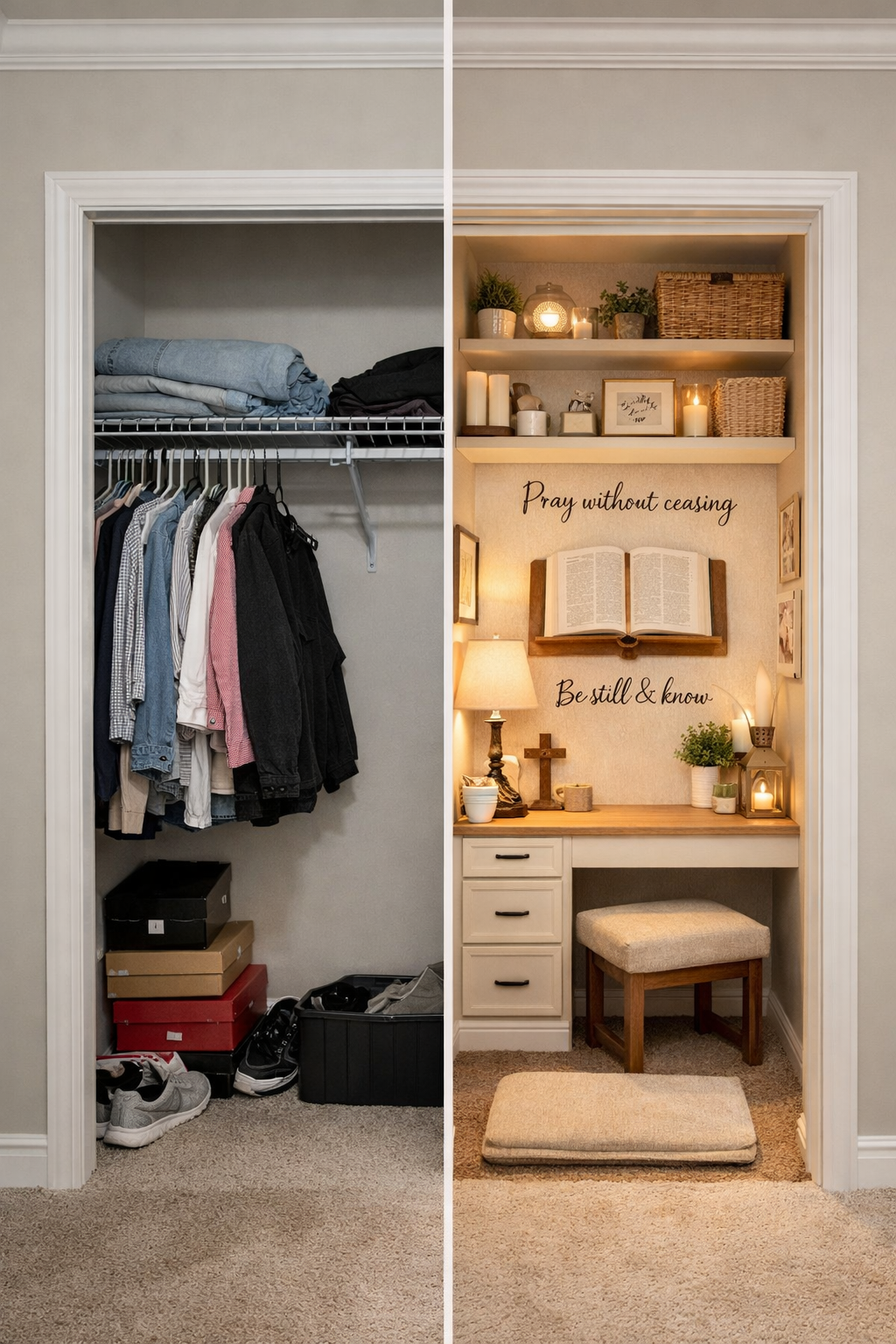
4. The Repurposed Closet Prayer Room

One of the most creative Bible Study Space Ideas I’ve encountered is the converted closet—a modern take on the “prayer closet” Jesus mentioned in Matthew 6:6: “But you, when you pray, go into your room, and when you have shut your door, pray to your Father who is in the secret place” (NKJV).
Why a Closet Works:
- Privacy: A door you can close creates psychological and physical separation
- Intimacy: The small space feels cocooning and focused
- Availability: Most homes have an underutilized closet
- Transformation: Repurposing space demonstrates priority
Converting Your Closet:
Start by completely emptying the closet. You’ll be amazed at how much space you actually have once it’s cleared out. Here’s a step-by-step approach:
- Install a small shelf or floating desk at a comfortable height for writing
- Add a cushion or small stool for seating (measure first!)
- Improve lighting with battery-operated LED strips or a small lamp
- Create storage using wall-mounted baskets or hooks
- Personalize with scripture art, prayer lists, or worship music speaker
I know a pastor’s wife who converted her hall closet into a prayer room. She installed a small shelf, added a cushion on the floor, and decorated the walls with handwritten scripture verses. She told me, “When I close that door, the world disappears. It’s just me and God.” Her consistency in prayer increased dramatically because she had a dedicated space that removed all barriers.
Maximizing Small Space:
In a closet conversion, every inch matters:
- Use vertical space with wall-mounted organizers
- Keep only essentials inside (Bible, journal, pen, prayer list)
- Consider a fold-down desk that tucks away when not in use
- Add a small bulletin board for prayer requests and scripture memory cards
The Spiritual Impact:
There’s something powerful about having a physical space that represents your commitment to seeking God. Every time you open that closet door, you’re making a statement: “This time is sacred. This space is holy.” It becomes a tangible reminder of God’s invitation in Jeremiah 29:13: “And you will seek Me and find Me, when you search for Me with all your heart” (NKJV).
5. The Natural Light Bible Study Space
Lighting dramatically affects our ability to focus, our mood, and our energy levels. Creating a Bible study space that maximizes natural light isn’t just aesthetically pleasing—it’s functionally superior for extended study sessions.
The Science Behind Natural Light:
Studies show that natural light improves concentration, reduces eye strain, and enhances overall well-being[2]. When you’re studying God’s Word, you want your physical environment supporting your mental clarity, not hindering it.
Positioning Your Study Space:
Identify the windows in your home that receive the best natural light throughout the day. Consider when you typically study:
- Morning studiers: East-facing windows provide gentle morning light
- Afternoon studiers: South-facing windows offer consistent brightness
- Evening studiers: West-facing windows capture sunset glow (though you’ll need supplemental lighting)
Position your desk or chair perpendicular to the window rather than facing it directly. This prevents glare on your Bible pages while still capturing maximum light. I learned this the hard way after weeks of squinting at my Bible because I’d positioned my chair facing a bright window!
Enhancing Natural Light:
Even if you don’t have ideal window placement, you can maximize available light:
- Use light-colored curtains that filter rather than block light
- Position mirrors to reflect natural light deeper into the space
- Paint walls in light, reflective colors (white, cream, pale yellow)
- Keep window areas clear of obstructions
Supplemental Lighting:
Even the best natural light needs backup for cloudy days or evening study. Invest in:
- A quality desk lamp with adjustable brightness
- Warm-toned bulbs (2700-3000K) that feel natural and reduce eye strain
- Task lighting that focuses on your study materials without creating harsh shadows
The Spiritual Connection:
Light is a powerful biblical metaphor. Psalm 119:105 declares, “Your word is a lamp to my feet and a light to my path” (NKJV). When you study God’s Word in a well-lit space, you’re creating a physical reminder of this spiritual truth. The natural light illuminating your Bible’s pages becomes a tangible representation of how Scripture illuminates your life’s path.
6. The Portable Bible Study Kit
Not everyone can dedicate a permanent space to Bible study—and that’s perfectly fine! One of the most practical Bible Study Space Ideas is creating a portable study kit that transforms any location into your study space.
What Makes a Great Portable Kit:
The key is organization and completeness. Your portable kit should contain everything you need so you’re never unprepared when study time arrives.
Essential Components:
- A quality Bible carrying case or tote bag (something durable and appropriately sized)
- Your primary Bible (consider size and weight for portability)
- Study journal or notebook
- Writing supplies (pens, highlighters, colored pencils)
- Small concordance or topical guide
- Index cards for scripture memory
- Bookmark or ribbon markers
- Optional: Small devotional book or study guide
I’ve used a portable study kit for years during my lunch breaks at work. Having everything in one place means I can transition from meetings to Bible study in seconds. There’s no excuse of “I don’t have my materials” because they’re always with me.
Organizing Your Kit:
Use pouches or small containers within your main bag to keep items organized:
- One pouch for writing supplies
- One section for your Bible and current study book
- A pocket for loose papers or study sheets
- A small zippered section for index cards
Creating Space Anywhere:
With a portable kit, you can create a Bible study space:
- At a coffee shop during quiet morning hours
- In your car during lunch break
- At a park bench on beautiful days
- In a waiting room
- While traveling
The Apostle Paul wrote many of his epistles from prison—hardly an ideal study environment! Yet he made the most of his circumstances. Second Timothy 4:13 shows Paul requesting “the books, especially the parchments,” demonstrating his commitment to studying regardless of location. Your portable kit embodies this same flexibility and commitment.
Making It Sacred:
Even though your physical location changes, you can create rituals that signal “study time”:
- Always begin with the same prayer
- Light a travel candle (battery-operated if needed)
- Put in earbuds with instrumental worship music
- Spread out a small cloth as your “study surface”
These consistent elements create a sense of sacred space even in secular locations.
7. The Technology-Enhanced Bible Study Space

In 2026, we have unprecedented access to Bible study tools through technology. Creating a Bible study space that thoughtfully integrates digital resources can deepen your understanding of Scripture while maintaining focus on God’s Word.
Balancing Digital and Physical:
The challenge with technology is that the same device offering Bible study apps also provides endless distractions. The solution is intentional design and boundaries.
Essential Tech Components:
- Tablet or computer dedicated to study (if possible, separate from entertainment devices)
- Quality Bible software (Logos, Accordance, or free options like Blue Letter Bible)
- Study apps for original language research, cross-references, and commentaries
- Note-taking app synced across devices (Evernote, OneNote, or Notion)
- Headphones for sermon audio or worship music
- Charging station to keep devices powered
Setting Up Your Tech Space:
Position your screen to avoid glare from windows or overhead lights. Ensure your desk has adequate space for both digital devices and physical materials—I still prefer a physical Bible open alongside my digital resources.
Create a distraction-free digital environment:
- Turn off all notifications during study time
- Use focus apps that block distracting websites
- Keep only study-related tabs open
- Consider a separate user profile on your device just for Bible study
Maximizing Digital Resources:
Technology offers incredible study advantages:
- Original language tools: Instantly access Hebrew and Greek definitions
- Cross-referencing: See related passages with one click
- Commentaries: Access hundreds of scholarly resources
- Search functions: Find every occurrence of a word or phrase
- Audio Bibles: Listen while following along visually
I use technology to create detailed study notes that I can search later. When preparing to teach, I can instantly find all my notes on a particular passage or topic—something impossible with only physical notebooks.
The Spiritual Caution:
Technology is a tool, not a substitute for Spirit-led study. Proverbs 3:5-6 reminds us to “trust in the LORD with all your heart, and lean not on your own understanding; in all your ways acknowledge Him, and He shall direct your paths” (NKJV). All the commentaries and original language tools in the world cannot replace the Holy Spirit’s illumination of Scripture.
Use technology to enhance, not replace, your personal engagement with God’s Word.
8. The Standing Desk Bible Study Space
Sitting for extended periods affects our health and energy levels. A standing desk option for your Bible study space can improve focus, increase energy, and benefit your physical health—all while studying God’s Word.
Why Consider a Standing Option:
Research indicates that alternating between sitting and standing throughout the day improves circulation, reduces back pain, and increases alertness[3]. For those who study for extended periods, a standing option can be transformative.
Setting Up a Standing Study Space:
You don’t need an expensive motorized desk. Simple solutions include:
- Adjustable standing desk converter placed on existing furniture
- Kitchen counter or bar height table (if the height works for you)
- DIY standing desk using shelving units or stacked books (temporary solution)
- Adjustable music stand for holding your Bible (ultra-budget option)
The key is finding the right height. Your elbows should rest at approximately 90 degrees when your hands are on your Bible or writing surface. Your screen (if using one) should be at eye level to prevent neck strain.
Creating Comfort:
Standing for long periods requires some adjustments:
- Use an anti-fatigue mat to reduce foot and leg strain
- Wear supportive footwear (not barefoot or in slippers)
- Keep a tall stool nearby for occasional sitting
- Shift your weight regularly and take movement breaks
I alternate between sitting and standing during my study time. I’ll stand for focused reading and note-taking, then sit for deeper reflection and prayer. This variation keeps my mind alert and my body comfortable.
Spiritual Benefits:
There’s something about standing that creates a posture of readiness and attentiveness. Throughout Scripture, people stood in God’s presence—standing before the Lord was a posture of service and worship (Deuteronomy 10:8). While sitting is certainly acceptable for Bible study, occasionally standing can refresh both body and spirit.
Making It Work:
Start gradually if you’re new to standing. Begin with 15-20 minutes and increase over time. Listen to your body. Some days you’ll have energy for standing; other days, sitting is better. The goal is creating options that serve your study, not rigid rules that hinder it.
9. The Seasonal Outdoor Bible Study Space
One of my favorite Bible Study Space Ideas is taking advantage of good weather by creating an outdoor study option. There’s something about being in God’s creation while reading God’s Word that deepens the experience.
Why Study Outdoors:
Nature itself declares God’s glory. Psalm 19:1 proclaims, “The heavens declare the glory of God; and the firmament shows His handiwork” (NKJV). Studying Scripture while surrounded by creation adds a dimension of worship to your study time.
Creating Your Outdoor Space:
Identify a spot on your property (or nearby) that offers:
- Relative quiet (away from street noise if possible)
- Some shade (direct sun makes reading difficult and uncomfortable)
- Comfortable seating (bench, chair, or even a blanket)
- A flat surface for writing (portable table, lap desk, or clipboard)
I’ve set up a simple outdoor study space on my back patio. A comfortable chair, a small side table, and an umbrella for shade create the perfect environment for morning study during spring and fall.
Practical Considerations:
Outdoor study requires some adaptations:
- Weather protection: Have a backup plan for sudden weather changes
- Material protection: Use a waterproof bag or container for your Bible and supplies
- Insect management: Citronella candles or natural repellent
- Glare reduction: Position yourself with the sun behind you
- Noise: Accept that outdoor spaces include natural sounds (birds, wind, etc.)
Seasonal Rotation:
Create different outdoor spaces for different seasons:
- Spring: Garden bench among blooming flowers
- Summer: Shaded porch or under a tree
- Fall: Patio with warm blanket and hot coffee
- Winter: Enclosed sunroom or covered porch (in milder climates)
The Worship Connection:
Studying outdoors naturally leads to worship. When I read about God’s power in creation (Romans 1:20) while sitting in my garden, the truth becomes visceral. When I study God’s provision while watching birds gather food (Matthew 6:26), the lesson deepens.
Outdoor study isn’t practical every day, but incorporating it seasonally adds richness to your Bible study routine. It’s a reminder that all of life—not just indoor, “religious” spaces—is sacred when we’re walking with God.
10. The Accountability Partner Bible Study Space
Some of the most effective Bible Study Space Ideas involve other people. Creating a space designed for partnership and accountability can dramatically increase your consistency and depth of study.
Why Accountability Matters:
Ecclesiastes 4:9-10 teaches, “Two are better than one, because they have a good reward for their labor. For if they fall, one will lift up his companion” (NKJV). An accountability partnership in Bible study provides encouragement, different perspectives, and mutual growth.
Designing a Shared Space:
If you’re meeting in person, create a space that accommodates two people comfortably:
- Seating: Two chairs positioned at a slight angle (not directly facing, which can feel confrontational)
- Shared surface: Coffee table or desk where both can access materials
- Individual space: Each person should have room for their own Bible and notes
- Privacy: Choose a location where you can talk freely without interruption
Virtual Accountability Spaces:
In 2026, many accountability partnerships happen virtually. Set up your space to facilitate video calls:
- Good camera angle: Position your device so your face is clearly visible
- Proper lighting: Face a window or use a ring light
- Minimal background distractions: Clean, simple backdrop
- Quality audio: Use headphones with a microphone for clear communication
I meet weekly with an accountability partner via video call. We’ve both set up our study spaces to make these calls feel personal and focused. We share our screens when discussing passages, pray together, and check in on our individual study commitments.
Structure for Accountability:
Effective accountability partnerships include:
- Regular schedule: Same day and time each week
- Shared study plan: Reading the same passages or following the same study
- Honest reporting: Transparency about struggles and victories
- Prayer: Interceding for each other’s spiritual growth
- Practical goals: Specific, measurable commitments
Making It Work Long-Term:
Accountability partnerships thrive when both people are equally committed. Set clear expectations from the beginning:
- How long will you meet? (30 minutes? An hour?)
- What will you study together?
- How will you handle missed meetings?
- What level of transparency is expected?
The beauty of an accountability partnership is that it transforms your Bible study space from a solitary place into a community experience—even if that community is just two people. Iron sharpens iron (Proverbs 27:17), and your study space becomes the forge where that sharpening happens.
Bringing It All Together: Your Next Steps
Creating a dedicated Bible study space isn’t about perfection—it’s about intentionality. Whether you implement one of these Bible Study Space Ideas or combine several, the goal remains the same: removing barriers between you and God’s Word.
Start Where You Are:
You don’t need to renovate your home or spend hundreds of dollars. Start with what you have:
- Identify your best option from the ideas above based on your space, budget, and lifestyle
- Gather basic supplies: Bible, journal, pen, comfortable seating
- Designate the space: Even if it’s just a corner, claim it for Bible study
- Set a start date: Don’t wait for perfect conditions; begin tomorrow
- Commit to consistency: Use your space daily for at least two weeks to establish the habit
Personalize Your Space:
Make your Bible study space uniquely yours:
- Display scripture that speaks to your current season
- Include objects that remind you of God’s faithfulness
- Organize materials in a way that makes sense to you
- Adjust and refine as you discover what works
Remember the Purpose:
Your Bible study space is a tool, not an end in itself. The goal isn’t Instagram-worthy aesthetics—it’s consistent, deep engagement with Scripture. As Jesus said in John 5:39, “You search the Scriptures, for in them you think you have eternal life; and these are they which testify of Me” (NKJV).
Your space should point you to Christ, not to itself.
The Transformation Awaits:
I’ve watched countless believers transform their spiritual lives by simply creating a dedicated Bible study space. The physical act of preparing a space demonstrates to your heart that God’s Word deserves priority. It removes the daily decision of “where should I study?” and replaces it with the simple action of going to your designated spot.
When you sit in that chair, open that closet door, or spread out your portable kit, you’re telling God, “I’m here. I’m ready. Speak to me through Your Word.” And He will. Because God promises in Jeremiah 33:3, “Call to Me, and I will answer you, and show you great and mighty things, which you do not know” (NKJV).
Your Bible study space is where that calling happens. It’s where God answers. It’s where great and mighty things are revealed.
My Prayer for You:
As you create your Bible study space, my prayer is that it becomes more than a physical location—that it becomes a meeting place with the Living God. May it be a space where confusion finds clarity, where anxiety finds peace, where questions find answers, and where your soul finds rest.
May your time in God’s Word, supported by a thoughtful and intentional space, transform not just your knowledge but your very life. And may you, like the Psalmist, be able to say, “I have treasured the words of His mouth more than my necessary food” (Job 23:12, NKJV).
Your Bible study space is waiting. The Word is ready. God is calling.
It’s time to answer.
Conclusion
Creating a dedicated Bible study space is one of the most practical investments you can make in your spiritual growth. Whether you choose a cozy corner nook, a minimalist desk, a repurposed closet, or a portable kit, the key is intentionality. Your space doesn’t need to be large, expensive, or picture-perfect—it simply needs to remove barriers between you and God’s Word.
The Bible Study Space Ideas we’ve explored offer options for every living situation, budget, and personal preference. From technology-enhanced setups to peaceful outdoor spots, from standing desks to accountability partnerships, there’s an approach that will work for your unique circumstances.
Remember, the space itself isn’t sacred—but what happens there can be. When you consistently show up to meet with God in His Word, transformation follows. Your dedicated space becomes a physical reminder of your spiritual commitment, a tangible expression of the priority you place on Scripture.
Don’t wait for perfect conditions. Start today with what you have, where you are. Clear a corner, organize a basket, or simply designate a chair. Then open God’s Word and let Him speak.
Your Bible study space is more than a place—it’s a practice, a discipline, and ultimately, a pathway to knowing God more deeply. As you implement these ideas, may your space become a sanctuary where heaven meets earth, where the eternal Word illuminates your daily life, and where you consistently encounter the God who loves you beyond measure.
References
[1] McMains, S., & Kastner, S. (2011). Interactions of Top-Down and Bottom-Up Mechanisms in Human Visual Cortex. Journal of Neuroscience, 31(2), 587-597.
[2] Boubekri, M., et al. (2014). Impact of Windows and Daylight Exposure on Overall Health and Sleep Quality of Office Workers. Journal of Clinical Sleep Medicine, 10(6), 603-611.
[3] Garrett, G., et al. (2016). Call Center Productivity Over 6 Months Following a Standing Desk Intervention. IIE Transactions on Occupational Ergonomics and Human Factors, 4(2-3), 188-195.
Share On Pinterest


Related Posts

Why Casual Bible Reading Isn't Enough — The Case for Structured Bible Study
Last updated: May 2026 Casual Bible reading is a good start — but it's not enough for real spiritual growth. Discover why structured Bible study transforms your faith in ways surface reading never can.
 May 21, 2026
Why Most People Study the Bible Wrong — And How a Structured Study Changes Everything
Last updated: May 2026 Most Christians read the Bible but never truly study it. Discover the common mistakes that keep believers spiritually stuck — and how a structured Bible study changes everything.
May 26, 2026
What Happens When You Study the Bible Consistently? (Real Results)
Last updated: May 2026 Wondering what really happens when you study the Bible consistently? Discover the real spiritual, emotional, and relational results — backed by research and grounded in Scripture.
May 14, 2026
Best Bible Studies About Faith: A Comprehensive Buyer's Guide
Last updated: May 2026 Discover the 5 best Bible studies about faith for individuals and groups. Compare prices, formats, and features to find the perfect study for your spiritual growth.
May 12, 2026


 By
By


