
When we jump into ancient history, certain names stand out as powerful figures who shaped the world around them. Sargon II of Assyria is one of those names—a king whose reign left a lasting mark on his time and beyond. His story isn’t just about politics or conquest; it’s a glimpse into how empires rise and fall under divine providence.
Sargon II ruled during a turbulent period, leading with strength and strategy to expand his kingdom. But what set him apart wasn’t just his military might—it was how his actions fit into the larger narrative of history. Understanding his life helps us see how God’s hand moves through nations and leaders, even in times when they may not acknowledge Him.
The Rise Of Sargon II
Sargon II ascended to the throne of Assyria in 722 BC. His rise followed a period of political instability, with internal disputes weakening the empire’s leadership.
He claimed legitimacy by presenting himself as chosen by divine favor. Many rulers in ancient times believed their authority came from higher powers, aligning with Proverbs 21:1, which says, “The king’s heart is in the hand of the Lord” (NKJV).
Sargon’s military campaigns solidified his power. He conquered Samaria and ended the Kingdom of Israel in 721 BC. These events fulfilled earlier prophecies like those found in Isaiah 7:8-9, warning against disobedience to God.
His administrative reforms strengthened Assyria’s control over its vast territories. He reorganized provinces and appointed loyal governors to ensure stability.
Key achievements during his early reign included:
- Defeat of Urartu: Sargon crushed this northern rival.
- Construction Projects: Founded Dur-Sharrukin (“Fortress of Sargon”), showcasing his might.
- Diplomatic Alliances: Secured treaties to maintain regional dominance.
A table summarizing major milestones:
| Year | Event | Significance |
|---|---|---|
| 722 BC | Ascension to throne | Marked end of civil unrest |
| 721 BC | Fall of Samaria | Fulfilled prophecy; expanded territory |
| ~717 BC | Founding of Dur-Sharrukin | Symbolized strength and unity |
Even though these accomplishments, pride often characterized his rule. Scripture warns against such arrogance. Obadiah 1:3 states, “The pride of your heart has deceived you” (NKJV).
Sargon II’s Reign And Achievements
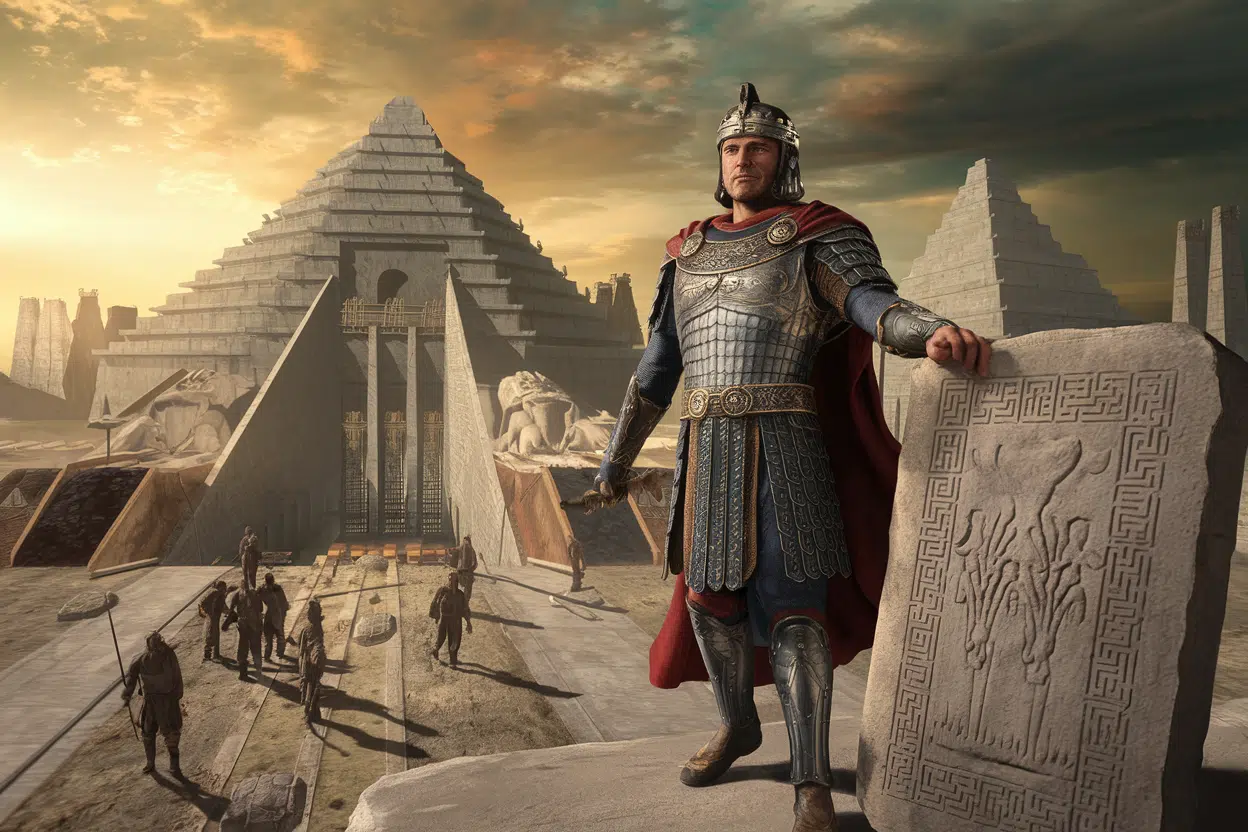
Sargon II ruled from 722 to 705 BC, leaving a lasting mark on history. His reign combined military success, administrative efficiency, and monumental construction.
Military Campaigns
Sargon’s military campaigns expanded Assyrian dominance in the ancient world. In 721 BC, he conquered Samaria, fulfilling prophecies such as “I will cause Israel to be carried away into captivity” (Amos 7:17, NKJV). This event marked the end of the northern kingdom of Israel.
He defeated Urartu in 714 BC, securing control over vital trade routes. His victory weakened regional resistance and strengthened Assyria’s strategic position. Sargon also led campaigns against Babylon and its allies to suppress rebellion and establish his authority.
His armies employed advanced tactics like siege warfare and psychological intimidation. For example, inscriptions describe his forces dismantling city walls or deporting entire populations to prevent uprisings. These actions reflected his belief that divine favor guided his conquests.
Administrative Reforms
Sargon’s administrative reforms centralized power within the empire. He reorganized provinces into smaller units governed by loyal officials who reported directly to him. This structure reduced corruption and improved efficiency.
He standardized taxation systems across all territories under Assyrian rule. Tribute payments funded military operations and grand projects while reinforcing loyalty among vassal states.
Deportation policies resettled rebellious populations into other regions of the empire. By dispersing these groups, Sargon minimized local resistance while integrating diverse cultures under one administration.
Records show he established communication networks for swift transmission of orders between cities like Nineveh and Dur-Sharrukin. These measures ensured tighter control over distant regions without relying solely on force.
Architectural Contributions
Sargon constructed Dur-Sharrukin (modern Khorsabad) as a symbol of power and divine approval for his reign. The city’s name means “Fortress of Sargon,” reflecting its purpose as both a royal residence and administrative center.
The city included massive walls measuring up to 24 feet thick for defense purposes. Inside were palaces adorned with reliefs depicting victories attributed to divine intervention—a visual reminder of God’s sovereignty over nations (Daniel 2:21).
Ziggurats dedicated to Assyrian deities emphasized religious devotion at the heart of governance. These structures showcased both technological skill and spiritual acknowledgment during Sargon’s time.
Archaeological findings reveal advanced urban planning with straight streets connecting temples, markets, and residential areas efficiently—an early model of organized city design promoting orderliness throughout society.
Sargon II’s Legacy

Sargon II left a lasting impact on the Assyrian Empire and broader history. His reign reflected both human ambition and divine orchestration in shaping empires.
Influence On Assyrian Empire
Sargon’s rule strengthened the empire’s foundations. He centralized authority, ensuring greater control over distant provinces. By standardizing taxation systems, he reduced corruption and increased state revenue.
His military strategies became a model for future rulers. Advanced siege techniques allowed him to conquer fortified cities like Samaria, fulfilling biblical warnings against rebellion: “The king of Assyria took Samaria and carried Israel away to Assyria” (2 Kings 17:6, NKJV). Deportation policies suppressed uprisings by relocating rebellious groups.
Architectural achievements showcased his vision. Dur-Sharrukin symbolized power through massive walls and temples dedicated to their gods. It also served as an administrative hub for efficient governance.
These actions solidified Assyrian dominance but revealed pride in his accomplishments. Scripture warns that “pride goes before destruction” (Proverbs 16:18, NKJV), illustrating the spiritual lesson behind his legacy.
Sargon II In Historical Records
Ancient texts highlight Sargon’s conquests and reforms. The Annals of Sargon describe victories over Babylon and Urartu with detailed accounts of battles.
Archaeological evidence supports these records. Excavations at Dur-Sharrukin reveal advanced urban planning, including organized streets and monumental gates reflecting order under his reign.
Biblical references connect his actions to prophecy fulfillment. Isaiah refers to him indirectly during events tied to Israel’s captivity (Isaiah 20:1). These alignments emphasize how God used foreign rulers in His plans even though their lack of acknowledgment.
Tablets from surrounding regions mention treaties imposed by Sargon on subdued kings. These documents illustrate his influence across Mesopotamia while underscoring God’s sovereignty over nations’ rise and fall throughout history.
What are the Historical Connections Between Sargon II and Shalmaneser V of Assyria?
The reigns of Sargon II and Shalmaneser V of Assyria present a fascinating narrative of power dynamics. Understanding the shalmaneser v historical context reveals how Shalmaneser V’s abrupt end paved the way for Sargon II’s rise, shaping Assyrian politics and military strategies during a transformative period in ancient history.
Conclusion
Sargon II’s reign stands as a powerful testament to the complexities of leadership, ambition, and divine influence in ancient history. His military conquests, administrative reforms, and architectural achievements shaped the Assyrian Empire while leaving an enduring legacy for future generations.
By examining his life and actions, we gain a deeper understanding of how human endeavors intertwine with broader historical and spiritual narratives. Sargon’s story reminds us that even the most powerful rulers are part of something far greater than themselves.
Related Posts
The Hebrews 11 'Hall of Faith' — A Deep Dive
Last updated: May 2026 Explore Hebrews 11's hall of faith and discover how biblical heroes like Abel, Noah, and Abraham trusted God against impossible odds. Read our deep dive analysis.
 May 15, 2026
How to Have Faith When Life Gets Hard — What the Bible Says
Last updated: May 2026 When life falls apart, faith can feel impossible. Discover what the Bible actually says about trusting God in hard times — honest, practical, and grounded in Scripture.
May 15, 2026
When Worship Becomes Your Weapon: The Connection Between Praise and Spiritual Warfare in 2 Chronicles 20
Last updated: June 2026 By Duke Taber There are moments in life when the threat in front of you is simply too large to fight with…
Jun 2, 2026
Best Bible Studies About Faith: A Comprehensive Buyer's Guide
Last updated: May 2026 Discover the 5 best Bible studies about faith for individuals and groups. Compare prices, formats, and features to find the perfect study for your spiritual growth.
May 12, 2026


 By
By


