

Geshem the Arab was a key figure mentioned in the Book of Nehemiah. He challenged those who rebuilt ancient walls and showed how opposition can arise when people are called to restore what’s broken.
His actions highlight the resilience of those who stood firm and refused to be discouraged. Some accounts see him as a figure who tried to sow doubt but eventually failed to halt a greater purpose.
By understanding his role readers can appreciate how faith can triumph over adversity even when opposition seems strong.
Historical Context Of Geshem The Arab
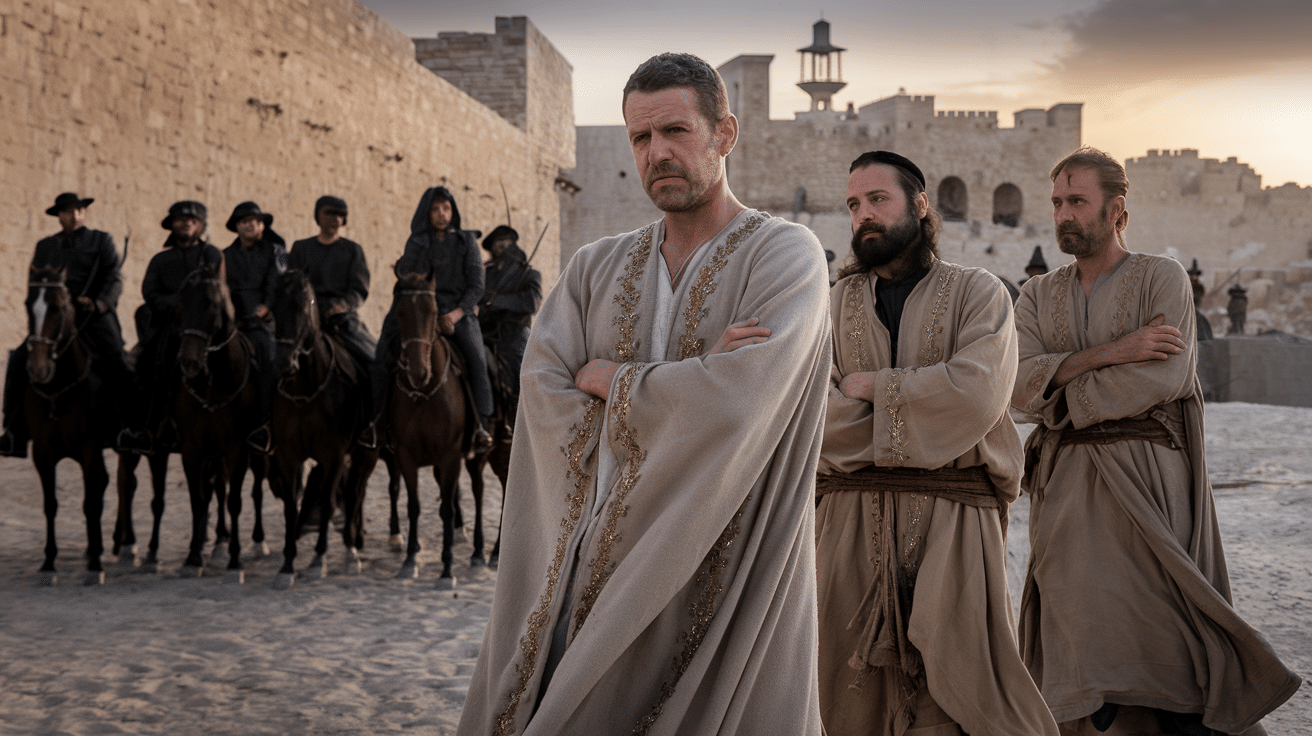
Geshem influenced events in Jerusalem around 445 BC. He acted with Sanballat and Tobiah to oppose Nehemiah’s work.
He appears in the Persian period when local leaders guarded their territories. Archival records note shifting power dynamics in regions bordering Judah.
He tried to discourage the builders. “But when Sanballat the Horonite, Tobiah the Ammonite official, and Geshem the Arab heard of it, they laughed at us and despised us” (NKJV, Nehemiah 2:19). This opposition targeted the morale of those restoring the walls.
He operated through alliances with regional powers. Historical documents suggest his influence reached desert trade routes and caravan towns. Threats included false letters and intimidation.
Small details in the narrative reveal a leader who formed strategies against Jerusalem’s restoration. “Then Sanballat and Geshem sent to me, saying, ‘Come, let us meet together…'” (NKJV, Nehemiah 6:2). Deception was a key tactic to halt progress.
Below is a brief table of references and key elements:
| Reference | Focus |
|---|---|
| Nehemiah 2:19 | Ridicule of builders |
| Nehemiah 6:2 | Invitation to harm Nehemiah |
| Nehemiah 6:6-7 | Accusation of rebellion against the king |
He symbolized persistent opposition to sacred work. Historical customs reflect how local rulers tried to secure political and economic control. Yet the project continued, aided by strong resolve and faith.
Role In The Biblical Narrative

Geshem the Arab emerges in the Book of Nehemiah as a force against the reconstruction of Jerusalem’s walls. He’s closely aligned with Sanballat and Tobiah.
Opposition To Nehemiah
He challenges Nehemiah’s call to rebuild, as described in “Nehemiah 2:19 NKJV”:
“But when Sanballat the Horonite, Tobiah the Ammonite official, and Geshem the Arab heard of it, they laughed at us and despised us, and said, ‘What is this thing that you are doing? Will you rebel against the king?'”
He employs ridicule and strategic rumors. He mocks the workers and questions their loyalty.
He circulates false letters to create fear among leaders. He accuses the builders to undermine their morale.
He forges alliances with Sanballat, a regional governor, and Tobiah, an Ammonite official. He coordinates direct pressure on local authorities.
Common tactics:
- Ridicule (open scorn directed at the builders)
- Intimidation (threatening letters and alliances)
- Deception (rumors of rebellion and disloyalty)
Political Influence
He exerts influence through alliances with neighboring districts around 445 BC. He seeks control by working with leaders in Samaria and Ammon.
He sometimes links his authority to regional kings. He aligns with influential figures to restrict resources.
He shapes public opinion through rumors. He uses official channels or local governors to block trade routes.
He creates confusion among Jerusalem’s inhabitants. He frames the rebuilding efforts as acts of defiance.
Table: Key Individuals Involved
| Name | Role | Region |
|---|---|---|
| Geshem | Opponent | Arabia |
| Sanballat | Regional Governor | Samaria |
| Tobiah | Ammonite Official | Ammon |
These figures cooperate to halt reconstruction. They attempt to sow division among the returning exiles.
Cultural And Geographic Background
Geshem lived in a region spanning the southern territories near the Arabian Peninsula. He engaged with diverse cultures that traveled on major trade routes, which fueled commerce and political alliances.
He interacted with local powers tied to Judea and Samaria, creating complex networks of influence. His role is recorded in the text saying, “But when Sanballat the Horonite, Tobiah the Ammonite official, and Geshem the Arab heard of it, they laughed at us and despised us…” (Nehemiah 2:19 NKJV).
Below is a table summarizing select territories linked to Geshem’s sphere:
| Territory | Primary Influence |
|---|---|
| Arabia | Trade Alliances |
| Samaria | Political Pressure |
| Ammon | Resource Control |
Relationships With Surrounding Tribes
He strengthened ties with officials who held authority over vast districts. He maintained dialogue with community leaders who oversaw caravan routes.
He formed bonds with tribal chiefs if they shared political interests and trade benefits. He sometimes cultivated unstable alliances to shape power dynamics across borders.
Legacy And Modern Interpretations
Many readers view Geshem’s story as an account of powerful opposition. They see him as a figure of external pressure that seeks to derail sacred projects.
Some interpret his presence in Nehemiah 6:1‑9 (NKJV) as a symbol of persistent threats. These threats challenge faith-focused endeavors.
They note 3 key approaches that still echo today:
- Ridicule: Public attempts to shame or mock leadership.
- Misinformation: Use of rumors and letters to sow doubt.
- Strategic Alliances: Partnering with others to apply collective pressure.
Teachers reference these tactics when discussing perseverance. They call attention to how faithful agents remain resolute.
| Tactic | Example Reference | Common Effect |
|---|---|---|
| Ridicule | Nehemiah 2:19 (NKJV) | Discourages workers |
| Misinformation | Nehemiah 6:6–7 (NKJV) | Creates confusion |
| Alliances | Nehemiah 6:2 (NKJV) | Amplifies resistance |
Some modern discussions look at Geshem as a cautionary figure who tried to instill fear. They link his actions to broader lessons on unity and conviction.
Others highlight Nehemiah’s response. They cite “I am doing a great work, so that I cannot come down” (Nehemiah 6:3, NKJV) to show steadfast focus.
What Can Gehazi’s Story Teach Us About Overcoming Opposition Through Faith?
Gehazi’s story warns of the dangers of greed and the importance of integrity. Instead of trusting God’s provision, he deceived Elisha for personal gain, leading to devastating consequences. Gehazi lessons on greed integrity remind us that faith and honesty are key to overcoming opposition and staying on the right path.
Conclusion
Geshem’s actions highlight the recurring tensions that often surface when communities strive to restore or uphold cherished traditions. Though he’s formidable his story reminds believers that strong conviction can counteract intimidation and rumor.
He’s a testament to the enduring hope found in faith-based work showing that perseverance prevails over those seeking to derail unity. His role in the Book of Nehemiah underscores how determination and unwavering focus can spark completion of even the most daunting communal endeavors.
Share On Pinterest!


Pastor Duke has been preaching and teaching the Bible since 1988. He has shared his knowledge online since 2011.


 By
By