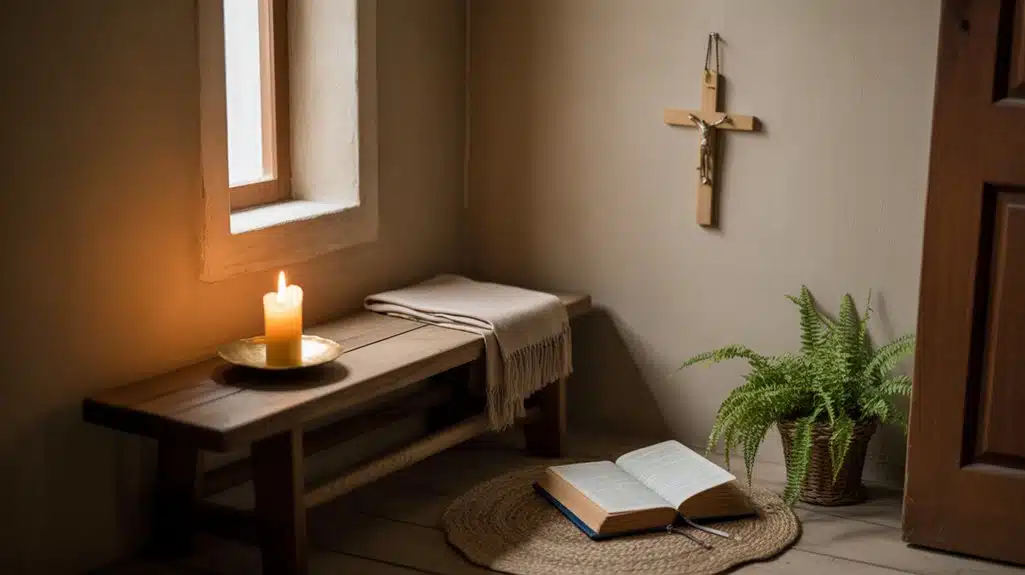

A door closing behind you can become the most sacred sound of your day. When you step into a dedicated prayer space, you’re following a pattern Jesus Himself established—withdrawing to quiet places to commune with the Father.
Creating your own prayer closet doesn’t require a renovation or a spare room. It simply requires intentionality.
What you’ll discover in these next steps might reshape how you experience God’s presence entirely.

For You or Your Church!
A 13-week Prayer Bible study course perfect for Mid-Week services, home groups, or personal growth!
Key Takeaways
- Choose a quiet, secluded location with good ventilation and lighting control to minimize distractions during prayer.
- Create a calming atmosphere using soft lighting, peaceful colors like blues and greens, and minimal meaningful décor.
- Include essential items: a prayer journal, Bible, comfortable seating, and sacred symbols like a cross or candle.
- Establish consistent daily prayer times, incorporating morning rituals and evening reflections to build spiritual discipline.
- Regularly declutter and refresh your space with seasonal themes to maintain a sacred, intentional atmosphere for communion with God.
Understanding the Biblical Foundation for a Prayer Closet

When Jesus taught His disciples about prayer, He painted a vivid picture that has inspired believers for centuries. In Matthew 6:6, He instructed them to enter their inner room, close the door, and pray to the Father in secret. This wasn’t merely about physical location—it was about cultivating intimate communion with God away from distraction and pretense.
The prayer significance of this teaching runs deep. You’re invited into a sacred space where authenticity flourishes and your heart speaks freely.
Biblical examples reinforce this pattern: Daniel prayed in his upper room three times daily, while Elijah sought solitude on Mount Carmel.
Your prayer closet represents more than furniture and décor. It’s a designated meeting place between you and your Creator.
When you establish this intentional space, you’re following a scriptural tradition that prioritizes relationship over ritual and depth over display.
Choosing the Perfect Location in Your Home

Although your entire home belongs to God, designating a specific corner or room for prayer creates a powerful anchor for your spiritual life.
When selecting your space, consider quietness first. Jesus sought solitary places to pray, and you’ll benefit from minimal foot traffic and household noise.
Look for areas that offer natural separation from daily distractions. Walk-in closets, spare bedrooms, basement corners, or even converted pantries can become spiritual sanctuaries where you meet with God consistently. The size matters less than the privacy it affords.
Consider practical elements too. Does the space have adequate ventilation? Can you control the lighting? These personal retreats work best when they’re comfortable enough for extended time in God’s presence.
Don’t overlook unconventional options. A garden shed, attic nook, or screened porch might serve beautifully.
Pray about your choice—God will guide you to the right spot.
Essential Items Every Prayer Closet Needs

Once you’ve found your sacred space, the next step involves gathering the items that will support your prayer life.
Start with a prayer journal to record your conversations with God, track answered prayers, and document spiritual insights. Scripture tells us to “write the vision and make it plain” (Habakkuk 2:2), and your journal becomes a tangible testimony of God’s faithfulness.
Include your Bible, perhaps a devotional, and a comfortable cushion or chair. Sacred symbols that deepen your focus—a simple cross, a candle representing Christ’s light, or artwork depicting biblical scenes—can anchor your attention during prayer.
Consider adding tissues for emotional moments, a blanket for comfort, and perhaps soft instrumental music for atmosphere.
Some find that essential oils or a small plant brings life to their space.
Creating the Right Atmosphere With Lighting and Décor

The atmosphere of your prayer closet shapes how readily your heart settles into God’s presence. Soft, warm lighting naturally calms your spirit, while harsh fluorescent bulbs create tension. Consider battery-operated candles, string lights, or a small lamp with a dimmer switch for mood enhancement that draws you toward reflection.
Color psychology matters in your sacred space. Blues and greens evoke peace and restoration, reflecting Scripture’s imagery of still waters and green pastures. Warm earth tones ground you, while soft whites suggest purity and surrender. Choose what resonates with your spirit’s needs.
Keep décor minimal but meaningful. A simple cross, a treasured verse on the wall, or a small plant brings life without distraction.
Organizing Your Devotional Materials and Resources

Five essential items form the foundation of most prayer closets: a Bible, a journal, a devotional book, a pen, and perhaps a hymnal or worship playlist. Your devotional organization system doesn’t need complexity—it needs accessibility. When everything has its place, you’ll spend less time searching and more time seeking God’s presence.
Consider this simple resource management framework:
| Category | Items | Storage Solution |
|---|---|---|
| Scripture | Bible, concordance | Desktop book stand |
| Writing | Journal, pens, highlighters | Small drawer or basket |
| Reading | Devotionals, prayer guides | Wall-mounted shelf |
You’ll want to rotate your devotional materials seasonally, keeping current resources within arm’s reach while storing others nearby. A small basket or wooden crate works beautifully for this purpose. Remember, the goal isn’t perfection—it’s creating a space where nothing hinders your communion with the Father.
Establishing a Consistent Prayer Routine in Your Space

Once you’ve created your sacred space, you’ll need to anchor it with intentional rhythms that transform occasional visits into faithful habits.
Setting specific daily prayer times—whether early morning, lunch hour, or evening—gives structure to your spiritual life and helps you honor your commitment to meet with God.
You’ll also find that building accountability systems, like sharing your prayer goals with a trusted friend or joining a prayer group, strengthens your resolve when motivation wavers.
Setting Daily Prayer Times
Rhythm shapes the spiritual life more than we often realize. When you anchor prayer to specific times, you’re following a pattern Jesus himself practiced—withdrawing at dawn and seeking the Father in evening hours.
Your morning rituals set the trajectory for everything that follows. Before emails demand attention or responsibilities crowd in, you’ve already oriented your heart toward God. These early moments create a foundation that carries you through chaos.
Evening reflections offer something different—a holy pause to process the day with your Creator. You bring your failures, victories, and questions into his presence before sleep resets your mind.
Start with two fixed times. Don’t overcomplicate this. Daniel prayed three times daily, but consistency matters more than frequency. Choose times you’ll actually keep.
Creating Accountability Systems
How often have your best intentions for prayer dissolved by mid-morning, swallowed by the urgent demands that crowd out what matters most?
You’re not alone in this struggle, and Scripture reminds us that “two are better than one” (Ecclesiastes 4:9).
Finding prayer partners transforms solitary discipline into shared commitment. Choose someone who’ll ask honest questions and celebrate your faithfulness. A simple weekly text checking in creates remarkable consistency.
Consider joining accountability groups at your church or forming one with two or three trusted friends. Share your prayer closet goals openly. When others expect you to show up before God, you’re far more likely to actually appear.
Your prayer life flourishes in community, even when the actual moments happen alone.
Maintaining and Refreshing Your Prayer Closet Over Time

As seasons change, your prayer closet can reflect the rhythms of the church calendar through simple updates—a purple cloth during Lent, fresh greenery at Christmas, or bright colors celebrating Easter’s resurrection joy.
You’ll also want to regularly declutter this sacred space, removing items that no longer serve your communion with God and keeping only what draws your heart toward Him.
Like the temple courts Jesus cleansed, your prayer closet thrives when it remains set apart and intentionally maintained for its holy purpose.
Seasonal Decor Updates
When the seasons shift outside your window, your prayer closet offers a beautiful opportunity to reflect those changes within your sacred space.
Consider incorporating seasonal themes that align with the church calendar. During Advent, add a simple wreath or purple cloth. In spring, fresh flowers can remind you of resurrection hope.
Autumn leaves speak to harvest gratitude and God’s faithfulness. You don’t need elaborate transformations. Small festive accents—a nativity figure at Christmas, palm branches before Easter—create meaningful connections between your prayers and the broader rhythms of faith.
Scripture reminds us that “to everything there’s a season” (Ecclesiastes 3:1). Let your prayer closet breathe with these natural cycles, keeping your space feeling alive and intentional throughout the year while maintaining its core purpose: meeting with God.
Decluttering Sacred Spaces
Just as seasonal updates bring fresh energy to your prayer closet, regular decluttering preserves its sacred atmosphere and keeps distractions at bay. Sacred minimalism isn’t about emptiness—it’s about intentionality. Every item in your prayer space should serve your communion with God.
Begin by removing anything that pulls your attention away from worship. Old bulletins, accumulated notes, and well-meaning gifts can create visual noise that interrupts your focus. Ask yourself: does this draw me closer to Christ?
Practice spiritual organization by establishing a simple system. Keep only your current Bible, journal, and essential devotional materials within reach. Store seasonal items elsewhere until needed.
Frequently Asked Questions
Can I Share My Prayer Closet With Other Family Members?
Yes, you can absolutely share your prayer closet with family members! This shared space often strengthens family unity, creating a sacred rhythm where everyone encounters God. Just coordinate times so each person enjoys uninterrupted moments with Him.
How Long Should I Spend in My Prayer Closet Each Day?
Your daily time depends on your personal routine and season of life. Start with 10-15 minutes and let it grow naturally. Jesus withdrew often to pray—it’s about consistency and heart connection, not a rigid clock.
What if I Live in a Small Apartment With No Extra Space?
You don’t need extra square footage—you need creative solutions. A corner chair, closet nook, or even a designated pillow becomes sacred space. Space optimization means transforming any spot where you consistently meet God.
Should Children Have Their Own Separate Prayer Closets?
You can nurture children’s spiritual development by creating simple, age-appropriate prayer spaces. A cozy corner with a cushion works beautifully! Starting personal prayer habits early helps kids build their own meaningful connection with God.
Is It Okay to Use My Prayer Closet for Meditation Too?
Yes, you can blend meditation techniques with prayer in your sacred space. Many believers find spiritual benefits in quiet reflection alongside conversation with God. Your closet becomes richer when stillness deepens your communion with Him.
Final Thoughts
You’ve got everything you need to create a sacred space that’ll transform your prayer life. Studies show that people who pray in a dedicated space report 40% deeper spiritual connection than those who don’t. That’s not just a number—it’s countless believers discovering what you’re about to experience. So take that first step today. Your prayer closet awaits, and more importantly, so does He.
Share On Pinterest


Related Posts

Faith vs. Works: What Does the Bible Teach?
Last updated: May 2026 Faith vs. works — does the Bible contradict itself? Discover what Paul, James, and the whole of Scripture actually teach about how faith and works relate in the Christian life.
 May 18, 2026
Best Bible Studies About Faith: A Comprehensive Buyer's Guide
Last updated: May 2026 Discover the 5 best Bible studies about faith for individuals and groups. Compare prices, formats, and features to find the perfect study for your spiritual growth.
May 12, 2026
What Is Soaking Worship — and Is It Biblical?
Last updated: June 2026 By Duke Taber If you've spent time in charismatic or Pentecostal circles, you've probably heard the term. Someone invites you to a…
Jun 4, 2026
Why a Guided Bible Study on Faith Changes Everything
Last updated: May 2026 Discover why a guided Bible study on faith does what casual reading can't — and how going deep in Scripture on this one subject changes the way you pray, trust, and live.
May 12, 2026


 By
By


