
By Duke Taber
Most of us grew up thinking worship meant singing. Show up on Sunday, open the hymnal or follow the words on the screen, and you were worshiping. Maybe you raised your hands. Maybe you didn’t. Either way, the service ended, you went home, and worship waited patiently for next week.
But what if the word itself has been quietly telling us something bigger all along, and we’ve just been too comfortable with our English to notice?
The original languages of Scripture — Hebrew and Greek — use a constellation of words where we use just one. Each of those words carries a specific weight, a precise image, a distinct invitation. When you start to see what they actually say, the word “worship” never looks quite the same again. It expands. It reaches down into Monday morning. It asks more of you than a Sunday song set ever could.
That expansion is not a burden. It is a gift.

The Problem with One Word
In English, we flatten everything into “worship.” We worship at church. We worship in song. We talk about worship leaders, worship styles, worship wars. The word has been stretched to cover so much territory that it has, in some ways, lost its edge.
The Hebrew and Greek writers had no such problem. They had a vocabulary that was rich, physical, and unambiguous. Each word for worship or praise described something particular — a posture, an action, a sound, an intention. Together they painted a complete picture of what it means for a human being to stand before a holy God.
Understanding these words will not make you a better singer. But it may make you a more honest, complete, and transformative worshiper. That is worth far more.
Shachah: The Word That Costs You Something

The most common Hebrew word translated “worship” in the Old Testament is shachah (Strong’s 7812). It appears 171 times and means, at its core, to bow down — to prostrate oneself before a superior. According to biblical language scholars, shachah accounts for the vast majority of Old Testament worship references, and it almost always describes a physical act: falling flat, face to the ground, in the presence of someone greater.
“Oh come, let us worship and bow down; let us kneel before the Lord our Maker.” — Psalm 95:6 (NKJV)
Notice the redundancy in that verse. Worship and bow down are the same word. The Holy Spirit is not being repetitive — He is being emphatic. This is about the posture of the body reflecting the posture of the heart.
Shachah is the word used when Abraham bowed before the three visitors at his tent. It is the word used when Moses bowed his head and worshiped after hearing from God at Sinai. It is the word used when Joshua fell on his face before the angel of the Lord. In every case, something costs the worshiper something. The floor. The dignity. The illusion of standing at eye level with God.
I have sat through many worship services where the music was excellent and the lighting was perfect and nobody appeared to be inconvenienced at all. Shachah suggests that genuine worship is a form of surrender. Not performance. Surrender.
Proskuneo: The Greek Word That Carries the Same Weight

When the Hebrew Old Testament was translated into Greek — the Septuagint — the translators almost always chose proskuneo to render shachah. That choice was deliberate. The two words share the same core meaning: to bow down, to prostrate oneself, to fall before someone in reverence.
Proskuneo is the dominant New Testament word for worship. It appears 60 times. The wise men came to Jerusalem saying they had seen the star of the King of the Jews and they wanted to proskuneo him. When they found the child, they fell down and did exactly that. Mary grabbed hold of Jesus’ feet after the resurrection and proskuneoed him. Thomas declared “My Lord and my God” in a moment of pure proskuneo.
Every use of the word carries the same texture: someone recognizing they are in the presence of a being infinitely above them, and responding with their whole body.
The word likely derives from roots connected to the idea of kissing the hand toward someone — a gesture of profound deference to a king or master. By the time of the New Testament, it had settled firmly into the idea of full bodily prostration before the divine. It is the opposite of casual. It assumes that something in the room changes when you enter God’s presence, and that the appropriate response is not applause but collapse.
Jesus used this word in His famous conversation with the Samaritan woman:
“But the hour is coming, and now is, when the true worshipers will worship the Father in spirit and truth; for the Father is seeking such to worship Him.” — John 4:23 (NKJV)
True proskuneo — genuine bowing before God — is not tied to a location. It is tied to the condition of the heart. That is the revolution Jesus brought to the concept of worship. Not that physical reverence no longer matters, but that location is no longer the qualifier. Spirit and truth are.
Abad: When Work Is Worship
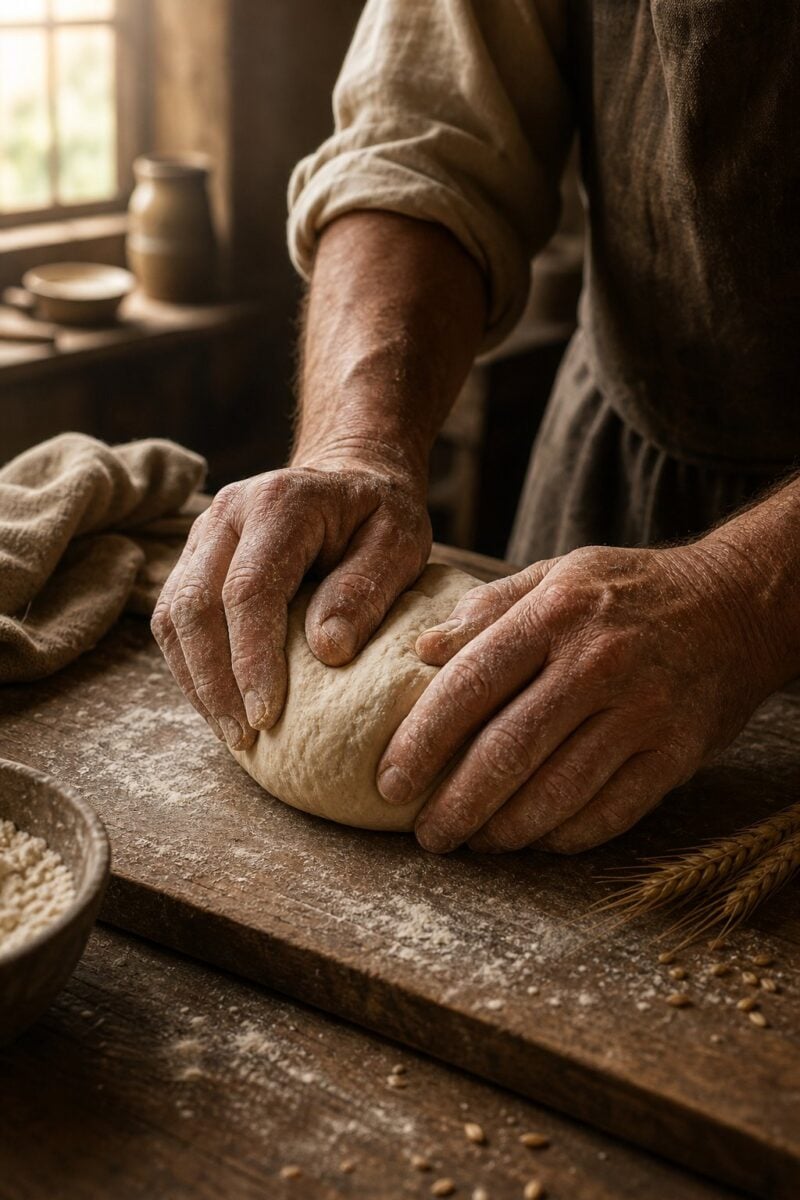
Here is where things get genuinely startling for most Western Christians. One of the key Hebrew words translated “worship” in your Bible is abad, which primarily means to work, to serve, to labor.
It is the same word used in Genesis when Adam was placed in the garden to tend and keep it. The word for tilling the ground and the word for serving God are the same word. This is not an accident of etymology. It is a theological statement embedded in the language itself.
When Moses confronted Pharaoh — “Let my people go, that they may serve Me” — the word is abad. Israel was not being liberated from labor. They were being liberated for a different kind of labor. Serving God. Doing the work of His kingdom. That was the worship Pharaoh was blocking.
This reframes everything. The committed nurse who cares for patients with gentleness and prayer, the father who builds a table for his family, the volunteer who serves the food pantry every Saturday — if done with a heart oriented toward God, this is abad. This is worship. Understanding biblical worship means understanding that service to God and neighbor is not separate from Sunday morning. It is the same act.
Paul captured this in Romans 12:
“I beseech you therefore, brethren, by the mercies of God, that you present your bodies a living sacrifice, holy, acceptable to God, which is your reasonable service.” — Romans 12:1 (NKJV)
The word translated “service” in that verse is the Greek latreia — the New Testament counterpart to abad. Your whole life, offered to God, is described as worship.
Halal: When Worship Gets Loud

Now we arrive at the word that gave us “Hallelujah.” Halal means to praise with a kind of noisy, even reckless abandon. Lexicons describe it as “to be clamorously foolish,” to “shine,” to “boast” — in the best possible sense, to make a spectacle of how great your God is.
The first time halal appears in the Bible, it is used to describe the Egyptian princes praising Sarai’s beauty to Pharaoh. They went on and on about it. They could not contain themselves. That is the energy halal brings to praise — an exuberance that cannot be managed into propriety.
Psalm 113 opens with “Hallelujah” — literally “you all halal Yahweh.” The entire Psalter is saturated with this word. It is a kind of holy bragging about God. Not because God needs our promotion but because our hearts, when they finally see who He is, cannot stay quiet.
This is where I will say something honestly: many of us in Reformed and evangelical traditions have sanitized the emotional content out of worship because we feared emotionalism. And there is real danger in that fear — feelings are not the measure of truth. But halal exists in the Bible. God put it there. He apparently expects some occasions of worship to look a little undignified. David danced before the ark with what some might call embarrassing enthusiasm. Michal despised him for it, and God sided with David.
Authentic worship includes the full emotional range. Quiet reverence and holy noise both belong.
Yadah, Zamar, and Tehillah: A Vocabulary of Praise

The Hebrew language gives us several more words worth knowing.
Yadah comes from the word for “hand” and means to extend or throw out the hands — an act of surrender and thanksgiving simultaneously. It appears 114 times in the Old Testament, and in nearly 100 of those instances it is translated as praise or thanksgiving. When you lift your hands in worship, you are doing yadah — declaring by your posture that your hands are empty, that you receive from God, that you have nothing to offer except yourself.
Zamar is a musical word meaning to pluck strings and sing. It describes instrumental praise, the sound of a dedicated musicianship offered to God. When the Psalms speak of singing praise with harp and lyre, zamar is often the word behind it. This is the word behind much of the rich musical worship tradition in Scripture, from the Levitical choirs to the songs of Asaph to the Psalms of David.
Tehillah, derived from halal, means a hymn or song of praise — the kind of spontaneous, Spirit-born singing that wells up from a heart full of God. Psalm 22:3 says God is “enthroned upon the praises (tehillah) of Israel.” That is a staggering image. God inhabits the songs of His people. The music is not background atmosphere for an experience of God. The music is the throne room.
Together these words suggest that biblical worship involves multiple types of expression: silent prostration and exuberant shouting, instrumental music and lifted hands, thankful service and bold declaration. No single style owns this territory.
Latreuo: The Lifetime Word

The Greek latreuo (noun: latreia) carries the same weight as abad. It means to serve, particularly in a religious or priestly sense, but with the connotation of ongoing, sustained devotion rather than a single act. It is the word Paul uses in Romans 12:1 when he calls us to offer our bodies as living sacrifices, which is our “reasonable service” — latreia.
The same word appears in Hebrews 12:
“Therefore, since we are receiving a kingdom which cannot be shaken, let us have grace, by which we may serve God acceptably with reverence and godly fear.” — Hebrews 12:28 (NKJV)
“Serve acceptably” is latreuo. This is not a call to better church attendance. It is a call to a life comprehensively shaped by devotion to God — every season of it, every corner of it.
Sebomai and Eusebeo: The Reverence Words

Two other Greek words appear occasionally as “worship” in the New Testament. Sebomai and its related form eusebeo carry the sense of awe, deep reverence, and godly fear. They are the words behind phrases like “devout” and “godly.” They capture the emotional texture underneath all the other words — that sense of holy dread and holy delight that attends the genuine presence of God.
This is the “fear of the Lord” that Proverbs calls the beginning of wisdom. It is not terror exactly, though it has an edge. It is the recognition that you are near something infinitely greater than yourself, and that recognition recalibrates everything about you.
What This Changes in Practice

When you see this full vocabulary, several things shift.
First, worship can no longer be outsourced to Sunday. Abad and latreuo insist that your work, your relationships, and your daily choices are the substance of your worship life. How you worship God in everything you do is not a metaphor. It is a literal biblical category.
Second, physical expression matters. Shachah, proskuneo, yadah, barak — these are all words rooted in bodily action. The idea that genuine worship is a purely internal, spiritual-only transaction is not supported by the biblical vocabulary. The body was made to bow. The hands were made to be raised. The voice was made to sing loudly sometimes and whisper quietly at other times.
Third, the full emotional range of worship is legitimate. Halal exists alongside shachah. The Psalms contain both wild praise and devastated lament. Worship in times of crisis has its own vocabulary because the Scriptures never pretended that life would only give us reasons to dance.
Fourth, music is not the same as worship — it is one expression of it. Zamar and tehillah honor the place of music in the life of the people of God. But they sit alongside abad and latreuo, which require no instruments at all. The essential role of music in worship is real and irreplaceable. It is also not the whole of what God is asking for.
The Person These Words Are Describing

I want to close with something personal. When I first studied these words in depth years ago, the thing that struck me was not how much they demanded but how much they described. They were describing a person who has truly encountered God — someone who falls down because they cannot stand when they see His holiness, someone who shouts because they cannot stay quiet when they see His goodness, someone who works with their hands as an act of love for the One who made them.
These words do not describe a worship style. They describe a transformed heart responding from the inside out to the reality of who God is.
That is what God is after. Not better Sunday services, though those matter. Not a more perfect musical production, though excellence honors Him. He is after the person the vocabulary is describing. The one who bows, and shouts, and serves, and sings, and lifts their hands, and kneels — not because it is required but because they have seen Something and they cannot respond any other way.
“Oh come, let us worship and bow down; let us kneel before the Lord our Maker. For He is our God, and we are the people of His pasture, and the sheep of His hand.” — Psalm 95:6–7 (NKJV)
That is the whole picture. That is what the words have been trying to tell us.
A Closing Invitation

If this study has opened something in you, take it somewhere. Do a simple word study on the Bible using a Hebrew and Greek concordance — most are free online. Look up every occurrence of shachah in the Psalms. Read every proskuneo in John’s Gospel. Let the words do their work.
And then worship with whatever the Spirit prompts: bow your head, lift your hands, sing loudly, serve someone in need, offer your Monday morning to God with the same intentionality you bring on Sunday. That is the full biblical picture. All of it is worship.
Resources
- Strong’s Concordance — Shachah (H7812)
- Spirit & Truth: What Is True Biblical Worship?
- Worship Arts Conservatory: Proskuneo
- FIRM Israel: Praise and Worship in Hebrew
- Blue Letter Bible — Free Hebrew and Greek word study tools
- AnsweredFaith.com: The Meaning of Worship in the Bible

Pastor Duke has been preaching and teaching the Bible since 1988. He has shared his knowledge online since 2011.

 By
By