

Women have always played a pivotal role in the foundation and growth of Pentecostal movements. Their contributions, both as leaders and laypersons, have been instrumental in shaping the modern Pentecostal church. Yet, as these movements have evolved, the roles and influence of women have seen significant shifts.
Initially celebrated for their fervor and spiritual gifts, women’s leadership roles became more constrained with the institutionalization of Pentecostalism.
Even though strong female adherence, leadership opportunities have often been limited by theological and organizational structures. This dynamic has sparked ongoing discussions about authority, gender, and the future of women in Pentecostal ministry.
Key Takeaways
- Women have been foundational to the growth and spiritual dynamism of Pentecostal movements, initially celebrated for their fervor and granted leadership roles that over time became constrained by organizational structures.
- Despite facing institutional barriers, women in Pentecostal movements have continued to play pivotal roles, from early trailblazers like Lucy Farrow and Aimee Semple McPherson to contemporary leaders such as Sarah Omakwu and Esther Ibanga, showcasing leadership diversity and social outreach.
- The theological support for women in leadership within Pentecostal movements is deeply rooted in Scripture, with figures like Deborah and Phoebe exemplifying God’s approval of women in authority, while contemporary debates focus on contextual interpretations of scriptural passages on gender roles.
- The inclusion of women in leadership positions has transformed church dynamics, introducing nurturing and compassionate environments that foster community engagement and embody servant leadership, thereby enriching congregational life and expanding church influence.
- Women’s leadership in Pentecostal movements has not only been about spiritual authority but also involves significant contributions to justice initiatives, community development, and theological education, thus underscoring the movement’s capacity for transcultural impact and societal transformation.
Historical Background of Pentecostal Movements
Emergence of Pentecostal Movements
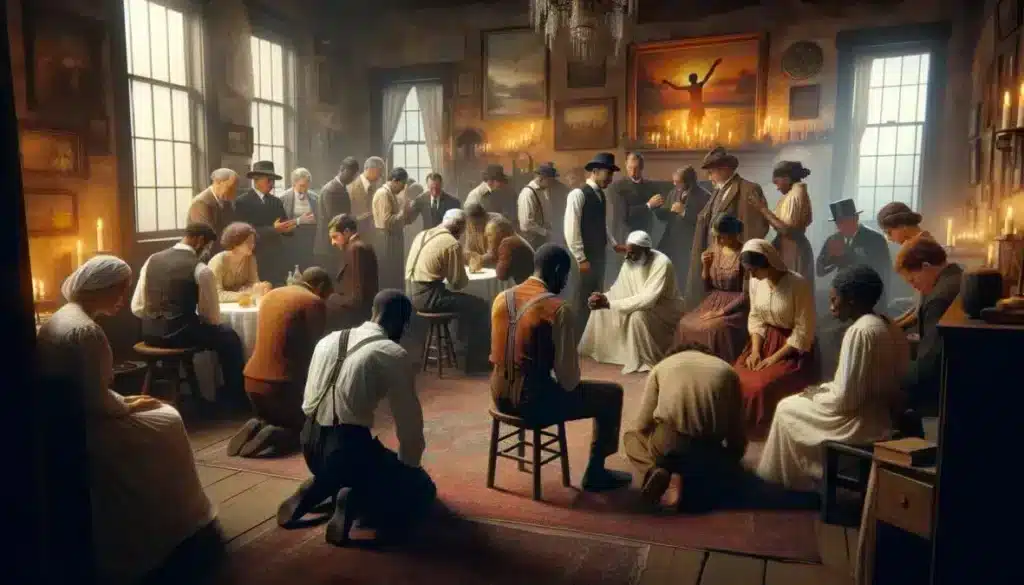
Pentecostalism took root in the early 20th century, marking a fresh wave of Christian revivalism. Its origins can be traced back to small, fervent prayer meetings, where participants sought a deeper, more intense experience with the Holy Spirit.
These gatherings emphasized personal faith, direct experience of God’s presence, and the belief in the gifts of the Holy Spirit as outlined in the New Testament.
Acts 2:4 encapsulates the Pentecostal experience: “And they were all filled with the Holy Spirit and began to speak with other tongues, as the Spirit gave them utterance.” This scriptural basis became the cornerstone of Pentecostal beliefs and practices.
Growth and Spread of Pentecostal Movements
From its inception, the movement witnessed unparalleled growth. It rapidly spread beyond its initial American boundaries, influencing believers worldwide. The zeal for missionary work fueled its expansion, leading to the establishment of churches across continents.
Central to this spread was a universal appeal to spiritual renewal and empowerment for service, resonating with diverse cultures and communities. They were not merely spreading a new theology but also a transformative personal experience that promised a direct encounter with the divine.
This spiritual dynamism is rooted in Mark 16:17-18, which promises, “These signs will follow those who believe: In My name they will cast out demons; they will speak with new tongues; …they will lay hands on the sick, and they will recover.”
The fulfillment of this scripture within the Pentecostal community contributed significantly to its global appeal and exponential growth, marking it as one of the fastest-growing segments of Christianity today.
Women in Pentecostal Movements

Early Women Leaders in Pentecostal Movements
In the early 20th century, women were pivotal in shaping Pentecostalism. They led prayer meetings, evangelized, and preached with conviction. Lucy Farrow, often heralded as the catalyst for the Azusa Street Revival, introduced speaking in tongues to William J. Seymour, further igniting the Pentecostal flame.
Women like Maria Woodworth-Etter and Aimee Semple McPherson drew thousands to Christ through their healing services and powerful preaching, embodying the belief that “In the last days, God says, I will pour out my Spirit on all people. Your sons and daughters will prophesy…” (Acts 2:17, NKJV).
Challenges Faced by Women in Pentecostal Movements
Even though their early contributions, women in Pentecostal movements often encountered institutional barriers. As the movements grew, a shift towards male-dominated leadership structures became apparent.
While groups like the Assemblies of God acknowledged women’s roles by allowing them to serve in various capacities, only 25% of their credentialed ministers were women into the 21st century.
This figure mirrors the early days, highlighting a stagnant progression in gender equality within leadership ranks. Also, certain denominations limited women’s roles, aligning more closely with conservative theological perspectives that favored traditional gender roles over the egalitarian spirit of early Pentecostalism.
Impact of Women Leaders in Pentecostal Movements
Empowering Women in Leadership Positions
Women leaders have been pivotal in Pentecostal movements, shattering glass ceilings and challenging traditional gender roles. Their leadership has not only provided a platform for spiritual expression but also emphasized the importance of equal participation among genders.
As the Bible states in Galatians 3:28, “There is neither Jew nor Greek, there is neither slave nor free, there is neither male nor female; for you are all one in Christ Jesus.” This verse has been a cornerstone for many Pentecostal denominations advocating for an egalitarian approach to ministry leadership.
Transforming Church Dynamics
The inclusion of women in leadership roles has transformed church dynamics, introducing new perspectives and approaches to ministry. Their presence at the helm has often led to a more nurturing and compassionate church environment, embracing the diverse needs of congregations.
Women leaders, guided by the Holy Spirit, have proved to be instrumental in fostering community engagement and spiritual growth, embodying the essence of servant leadership as depicted in Mark 10:45, “For even the Son of Man did not come to be served, but to serve, and to give His life a ransom for many.”
Their leadership has not only enriched church life but also expanded the church’s reach and influence in communities worldwide.
Theological Perspectives on Women in Leadership
Biblical Support for Women in Leadership
The belief in women’s integral role within leadership circles finds its roots deeply embedded in Scripture. Notable figures such as Deborah, a prophetess and judge of Israel, exemplify divine approval of women in positions of authority (Judges 4:4-5).
The New Testament furthers this narrative with Phoebe, recognized as a deacon of the church in Cenchrea, illustrating the early church’s acceptance of women in significant roles (Romans 16:1).
Also, the outpouring of the Holy Spirit on both men and women, which empowered them to prophesy, underscores the Spirit’s indiscriminate equipping for ministry (Acts 2:17-18).
Debates and Controversies
Even though the clear instances of female leadership within the Bible, their roles in modern church leadership settings have sparked debates.
Central to the controversy is the interpretation of passages such as 1 Timothy 2:12, where Paul states, “I do not permit a woman to teach or to have authority over a man; she must be silent.” Critics argue this mandates a male-dominated leadership structure.
But, proponents of women in leadership counter by emphasizing the context of Paul’s letters, suggesting his instructions were specific to the cultural and situational context of the early church.
They also highlight other Scriptural passages that showcase how the Spirit endows both men and women for leadership, underlining the principle that spiritual gifts are not gender-specific.
Contemporary Women Leaders in Pentecostal Movements
Influential Women Leaders
In the heart of Pentecostalism, women have risen as pivotal figures. They bring a fresh dynamic to leadership, intertwining their spiritual fervor with administrative acumen.
Their roles vary, from pastors and evangelists to theologians and nonprofit organization leaders, each contributing uniquely to the fabric of the movement.
Women like Sarah Omakwu and Esther Ibanga stand out. Omakwu, leading one of the largest congregations, showcases the blend of spiritual insight and leadership prowess that marks contemporary Pentecostal leadership.
Similarly, Ibanga, with her peace-building efforts, exemplifies the social outreach potential inherent in Pentecostal movements.
Their Contribution to the Church
The contribution of women leaders in Pentecostal movements extends beyond their congregations. They’re instrumental in pioneering justice initiatives, championing women’s rights, and fostering community development.
Through their leadership, they embody the scripture, “There is neither Jew nor Greek, there is neither slave nor free, there is neither male nor female; for you are all one in Christ Jesus” (Galatians 3:28, NKJV).
In theological education, they’re reshaping curriculums to include a more comprehensive understanding of the Holy Spirit’s work, reflecting a balanced and inclusive approach to ministry. Their advocacy for marginalized communities brings to life the ideal of the Church as a refuge for all.
Also, their influence extends globally, with initiatives that cross borders, cultures, and social divides, illustrating Pentecostalism’s universal appeal and its capacity for transcultural impact.
As they navigate leadership with grace and conviction, they inspire a new generation to pursue a faith that actively transforms society.
Conclusion
Women leaders have undeniably left an indelible mark on the Pentecostal movements, blending spiritual depth with leadership acumen. Their roles have been transformative, not just within the church but in broader societal contexts as well.
By championing justice, advocating for women’s rights, and fostering community development, these leaders have showcased the dynamic and inclusive nature of Pentecostalism.
Even though facing institutional barriers, their resilience and dedication have paved the way for a more balanced and inclusive approach to ministry.
The stories of women like Lucy Farrow, Maria Woodworth-Etter, Aimee Semple McPherson, Sarah Omakwu, and Esther Ibanga serve as powerful testaments to the critical role women play in shaping the trajectory of Pentecostal movements.
Their contributions continue to inspire and influence, proving that leadership in Pentecostalism is as much about spiritual empowerment as it is about breaking new ground in ministry and societal engagement.
Frequently Asked Questions
Can a woman be the lead pastor of a church?
While some Christian denominations reserve the role of pastor for men, the Pentecostal movement has seen an evolving viewpoint. Many Pentecostal denominations and independent churches now recognize and ordain women as leaders, including the roles of pastors and elders, highlighting the movement’s diverse interpretations of scripture and roles within the church.
What is the leadership structure of a Pentecostal church?
Typically, a Pentecostal church’s leadership structure includes the Pastor, Elders, and Deacons. The Pastor serves as the head, focusing on teaching and spiritual guidance. Elders, elected by the congregation, oversee the spiritual well-being of members. Deacons handle service-oriented tasks. This structure can vary slightly based on the individual church or denomination’s practices.
Can Pentecostals kiss before marriage?
In Pentecostalism, the act of kissing before marriage is not explicitly deemed a sin. The emphasis is placed on maintaining purity and avoiding behaviors that might lead to premarital sex. Each individual’s convictions and understanding of biblical teachings on purity guide their actions in romantic relationships.
What are the rules for Pentecostal women?
Pentecostal women are not bound by strict dress codes or requirements to cover their heads during worship. The movement emphasizes personal faith and a direct relationship with God, allowing for freedom in areas such as attire, with an overarching emphasis on modesty and reverence for God’s presence.
Can a woman preach in a Pentecostal church?
Yes, women can preach in many Pentecostal churches. The Pentecostal movement, particularly within independent churches and some denominations, supports the ordination of women and their active participation as pastors and preachers. This practice highlights the movement’s focus on the Holy Spirit’s empowerment of all believers regardless of gender for ministry and leadership roles.
How Can Christian Journal Gifts Inspire Women Leaders in Pentecostalism?
Christian journal gifts can serve as thoughtful gifts to inspire faith and creativity among women leaders in Pentecostalism. These journals provide a space for reflection, prayer, and creative expression, empowering women to articulate their spiritual journeys and leadership visions. Such meaningful gifts foster a deeper connection to their faith.

Pastor Duke has been preaching and teaching the Bible since 1988. He has shared his knowledge online since 2011.


 By
By


