

Have you ever finished reading a chapter of the Bible and realized you couldn’t remember a single thing you just read? You’re not alone. I’ve been there more times than I’d like to admit. That’s exactly why learning how to journal for Bible Study changed everything for me—and it can do the same for you.
Bible journaling isn’t about being artistic or writing perfectly polished paragraphs. It’s about slowing down, engaging with God’s Word, and letting the Holy Spirit speak to your heart in a way you can actually remember. Whether you’re a seasoned small group leader or someone who just started reading the Bible last week, journaling transforms passive reading into an active conversation with God.
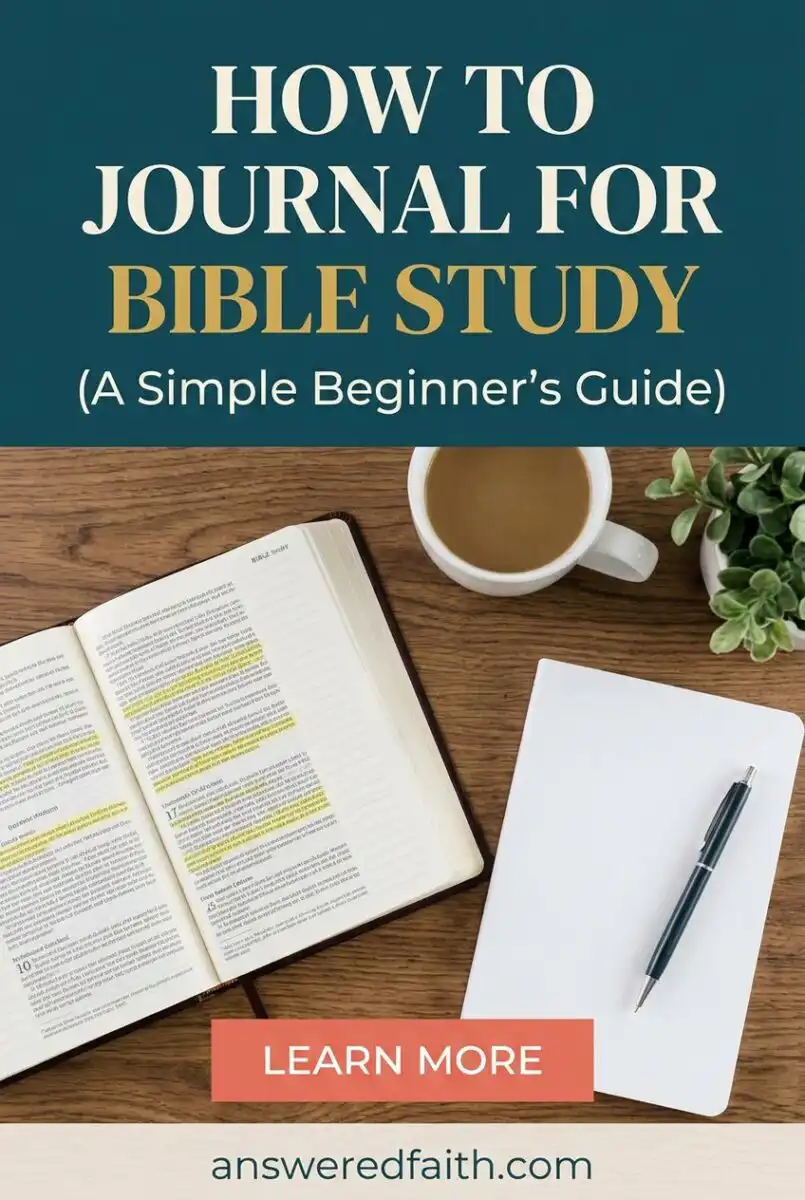
The best part? You don’t need fancy supplies or expensive kits. A simple notebook and a pen are enough to get started [1]. Let me walk you through exactly how to do this—step by step.
Key Takeaways 📝
- The SOAP method (Scripture, Observation, Application, Prayer) is the most beginner-friendly framework for Bible study journaling [1][3].
- You don’t need artistic talent or expensive supplies—Bible journaling is about reflection, not perfection [1].
- Four main approaches exist (written reflection, art journaling, verse mapping, and prayer journaling), so you can find what fits your learning style [1].
- Consistency matters more than length—even five minutes of journaling daily creates lasting spiritual growth.
- Bible journaling helps you apply Scripture to real life, turning head knowledge into heart transformation.
How to Journal for Bible Study Using the SOAP Method

If you’re wondering where to start, I always recommend the SOAP method. It’s the most widely used framework for Bible study journaling in 2026, and for good reason—it’s simple, structured, and incredibly effective [1][3][4].
SOAP stands for:
| Letter | Step | What You Do |
|---|---|---|
| S | Scripture | Write out a verse or passage that stands out to you |
| O | Observation | Note what you see—context, key words, themes |
| A | Application | Ask: “How does this apply to my life right now?” |
| P | Prayer | Write a prayer responding to what God showed you |
Here’s What SOAP Looks Like in Practice
Let’s say you’re reading Psalm 46:10 (NKJV): “Be still, and know that I am God.”
- Scripture: Write the verse word for word in your journal.
- Observation: God is commanding us to stop striving. The word “still” implies we’re often not still. He’s reminding us of who He is.
- Application: I’ve been anxious about my finances this week. God is telling me to stop trying to control everything and trust Him.
- Prayer: “Lord, help me to be still today. I release my worry about bills and deadlines to You. You are God, and I am not. I trust You. Amen.”
That’s it. No fancy formatting. No artistic skill required. Just honest engagement with Scripture.
💡 Pro Tip: If you’re new to Bible study methods, our guide on inductive Bible study methods pairs beautifully with journaling.
The HEAR Method: Another Great Option
If SOAP doesn’t click for you, try the HEAR method (Highlight, Explain, Apply, Respond). It’s gaining popularity as a personal application-focused alternative [3]. The key difference? HEAR emphasizes explaining the text in your own words before applying it, which helps you truly understand what you’re reading.
Both methods work. Pick the one that feels most natural and stick with it.
4 Approaches to Bible Study Journaling (Find Your Style)

One of the biggest myths about Bible journaling is that there’s only one “right” way to do it. The truth? There are at least four distinct approaches, and the best one is whichever helps you connect with God’s Word most deeply [1].
1. Simple Written Reflection ✍️
This is the most straightforward approach. You read Scripture, then write your thoughts, questions, and observations in a notebook. No frills, no fuss.
Best for: People who think through writing, beginners, and anyone who wants a low-pressure entry point.
I started here years ago, and honestly, some of my most powerful encounters with God happened through messy, stream-of-consciousness journal entries. Don’t underestimate simplicity.
If you want to study Scripture passage by passage, check out our guide on how to study the Bible verse by verse for a complementary approach.
2. Art Journaling 🎨
Art journaling involves illustrating verses through drawings, hand lettering, watercolors, or other creative expressions. Some people use wide-margin Bibles; others use separate sketchbooks.
Best for: Visual learners and creative thinkers.
Important reminder: This is about worship, not Instagram perfection. Your art doesn’t need to be gallery-worthy [1]. Stick figures count. Doodles count. What matters is that the creative process helps you meditate on God’s Word.
3. Verse Mapping 🗺️
Verse mapping is a deeper dive. You take a single verse and break it apart—looking at the original language, cross-references, historical context, and how it connects to the bigger story of Scripture.
Best for: Analytical thinkers and those who love digging deep.
A verse map might include:
- The verse in multiple translations
- Key words and their original Hebrew or Greek meanings
- Cross-references to related passages
- A personal summary of what the verse means
For a structured approach to studying individual people in Scripture, our Bible character study guide is a great companion resource.
4. Prayer Journaling 🙏
Prayer journaling combines Bible reading with written prayers. You read a passage, then write your prayer response directly in your journal. Over time, you build a beautiful record of your conversations with God.
Best for: People who want to strengthen their prayer life alongside Bible study.
Psalm 119:105 (NKJV) says, “Your word is a lamp to my feet and a light to my path.” Prayer journaling helps you walk in that light by immediately turning what you read into a conversation with your Father.
If you’re looking to deepen your prayer life, explore these 20 powerful Bible verses on cultivating a thriving prayer life.
What You Need to Start Journaling for Bible Study

Here’s the good news: the barrier to entry is incredibly low [1]. You don’t need to spend a fortune on supplies. Here’s what I recommend:
Essential Supplies (All You Really Need)
- ✅ A Bible (any translation you’re comfortable with)
- ✅ A notebook or journal (lined, blank, or dotted—your preference)
- ✅ A pen (seriously, that’s it)
Optional Extras (Nice to Have)
- 📌 Colored pens or highlighters for color-coding themes
- 📌 Sticky notes for adding thoughts without writing directly in your Bible [2]
- 📌 A Bible app (YouVersion, Blue Letter Bible) for quick cross-referencing
- 📌 Free online commentaries like Enduring Word for verse-by-verse insight [2]
🎯 Remember: Bible journaling effectiveness depends on reflection and connection with Scripture, not artistic skill or visual perfection [1]. Don’t let the fear of “not doing it right” keep you from starting.
Digital vs. Traditional: Both Work
Some people prefer typing notes on a tablet or phone. Others need the tactile experience of pen on paper. There’s no wrong choice here. Digital tools and traditional methods coexist beautifully in 2026 [2]. Use whatever keeps you consistent.
If you’re leading a group and want creative engagement ideas, our article on engaging Bible study ideas for teens has interactive activities that incorporate journaling elements.
How to Journal for Bible Study and Build a Lasting Habit

Starting is easy. Staying consistent is the real challenge. Here are practical strategies I’ve seen work—both in my own life and in the lives of people I’ve pastored over the years.
1. Start Small (Really Small) 🌱
Don’t commit to journaling for an hour every morning. Start with five minutes. Read one verse. Write one observation. Pray one sentence. You can always add more later, but starting small removes the pressure that kills consistency.
James 1:22 (NKJV) reminds us: “But be doers of the word, and not hearers only, deceiving yourselves.” Even a brief journaling session turns you from a passive hearer into an active doer.
2. Anchor It to an Existing Habit ⚓
Habit stacking works. Attach your journaling time to something you already do every day:
- After your morning coffee ☕
- Before bed as part of your wind-down routine
- During your lunch break at work
3. Use a Reading Plan for Structure
Without a plan, it’s easy to feel lost. A structured reading plan gives you direction. Consider starting with:
- A Gospel (like John) for a clear picture of Jesus
- Psalms for emotional honesty and worship
- A topical study on a subject you’re wrestling with
Our 30-day Bible reading plan for couples is a great option if you want to journal alongside your spouse.
4. Don’t Edit Yourself
Your journal is between you and God. It doesn’t need to be grammatically correct, theologically precise, or beautifully written. Write honestly. Write your doubts. Write your questions. Write your frustrations.
Some of David’s most powerful psalms were raw cries of pain. God can handle your honesty.
5. Review and Reflect Monthly 📅
Once a month, flip back through your journal entries. You’ll be amazed at what you see:
- Prayers that were answered
- Patterns God was working on in your heart
- Growth you didn’t notice in the moment
This is one of the most encouraging parts of Bible study journaling. It becomes a tangible record of God’s faithfulness in your life.
For encouragement during tough seasons, these 20 encouraging Bible verses on answered prayers will remind you that God hears every word you write.
6. Give Yourself Grace
You’ll miss days. Life happens. Don’t let a missed day become a missed month. Just pick your journal back up and start again. God’s mercies are new every morning (Lamentations 3:22-23, NKJV), and that includes mercy for imperfect quiet times.
Conclusion
Learning how to journal for Bible Study isn’t complicated—but it is transformational. Whether you choose the SOAP method, art journaling, verse mapping, or prayer journaling, the goal is the same: to slow down, listen to God, and let His Word change you from the inside out.
Here’s your action plan for this week:
- Grab a notebook and pen (nothing fancy needed).
- Pick one method—I recommend SOAP if you’re just starting.
- Choose a passage (start with John 1 or Psalm 23).
- Journal for five minutes tomorrow morning.
- Do it again the next day. And the next.
You don’t have to be perfect. You just have to be present. Open your Bible, open your journal, and let God speak. He’s been waiting for this conversation with you.
“Your word I have hidden in my heart, that I might not sin against You.” — Psalm 119:11 (NKJV)
At Answered Faith, we believe biblical education should be accessible to everyone. If you’re looking for affordable Bible study resources for your small group, Sunday School class, or personal growth, explore our printable Bible studies and devotionals to go even deeper.
Now grab that notebook and get started. 📖✍️
References
[1] A Beginner’s Guide to Bible Study Journaling: Creative Ways to Connect With Scripture – https://cogsoconline.org/blog/a-beginner-s-guide-to-bible-study-journaling-creative-ways-to-connect-with-scripture
[2] Watch – https://www.youtube.com/watch?v=5CUL-65jt0c
[3] How To Study The Bible: The 5 Best Methods For Beginners 2026 – https://www.eden.co.uk/blog/how-to-study-the-bible-the-5-best-methods-for-beginners-2026-p1814891
[4] How To Start Bible Journaling In 2026 – https://mrpen.com/blogs/christian/how-to-start-bible-journaling-in-2026%E2%9C%A8%E2%9C%9D%EF%B8%8F
[7] Journaling – https://www.thegospelcoalition.org/course/journaling/
Share On Pinterest



Pastor Duke has been preaching and teaching the Bible since 1988. He has shared his knowledge online since 2011.






 By
By