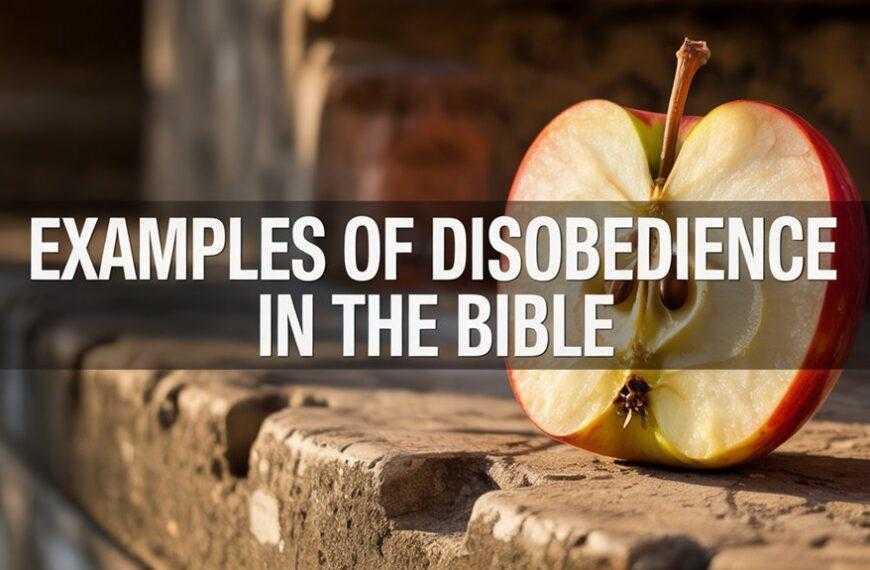
The Bible recounts striking cases of disobedience that indelibly shaped history. Adam and Eve, in their hubris, consumed the forbidden fruit, ushering in sin and a cataclysmic rift. Lot’s wife, in a moment of yearning, glanced back at Sodom and was transformed into salt. The Israelites, in their impetuosity, forged a golden calf amid their impatience. King Saul, in a grave miscalculation, spared Agag, mistaking partial obedience for unwavering loyalty. Jonah, in an act of defiance, fled God’s call to Nineveh. What patterns emerge from these failures?
Takeaways
- Adam and Eve disobeyed God by eating forbidden fruit, introducing original sin (Genesis 3).
- Lot’s wife looked back at Sodom against orders, turning into a pillar of salt (Genesis 19:26).
- Israelites impatiently built a golden calf idol while Moses was on Sinai (Exodus 32).
- King Saul spared livestock and Agag, rejecting God’s full command (1 Samuel 15).
- Jonah fled God’s call to preach in Nineveh, triggering a storm (Book of Jonah).
Adam and Eve Eat Forbidden Fruit

In the Garden of Eden, Adam and Eve disobeyed God’s command by eating from the forbidden tree of the knowledge of good and evil, as told in Genesis 3 (NKJV). This choice brought about forbidden knowledge, making them aware of morality, their nakedness, and shame.
Tempted by the serpent’s crafty words, Eve took the first bite and then gave some to Adam, ignoring God’s clear warning that eating the fruit would lead to death (Genesis 2:17).
This act of disobedience introduced original sin, breaking the perfect relationship between humanity and God. With their eyes opened, they tried to hide from God, who then pronounced curses: Adam would toil for his food, Eve would experience pain in childbirth, and both would be expelled from paradise to prevent them from living forever in sin (Genesis 3:16-19).
This story shows how curiosity, without obedience to God, can lead to serious consequences. It also reminds us of the importance of personal responsibility. Choosing our desires over God’s will is a lesson that still speaks to us today, urging us to be cautious about the temptation to pursue forbidden knowledge (Romans 5:12).
Lot’s Wife Defies the Escape Order

Lot’s wife disobeyed the angel’s urgent command to flee Sodom without looking back, as we see in Genesis 19:17 and 26 (NKJV). In the rush to escape, she turned around and looked back, which caused her to become a pillar of salt. This act shows us the serious consequences of ignoring God’s commands.
In the story, Sodom was a place filled with wickedness, and Lot’s hesitation showed his loyalty to his family and their home, even though it was doomed. The fiery destruction coming from heaven highlighted God’s swift judgment, but her choice to look back stopped her from escaping.
This event teaches us important lessons. Looking back symbolizes a hold on sin, which can keep us from being free.
We learn that it’s crucial to obey God quickly, to let go of harmful influences, and to focus on our spiritual safety rather than past comforts. Lot’s wife‘s fate reminds us that partial obedience can lead to danger, encouraging us to flee from temptation with our eyes set firmly ahead.
Israelites Build Golden Calf
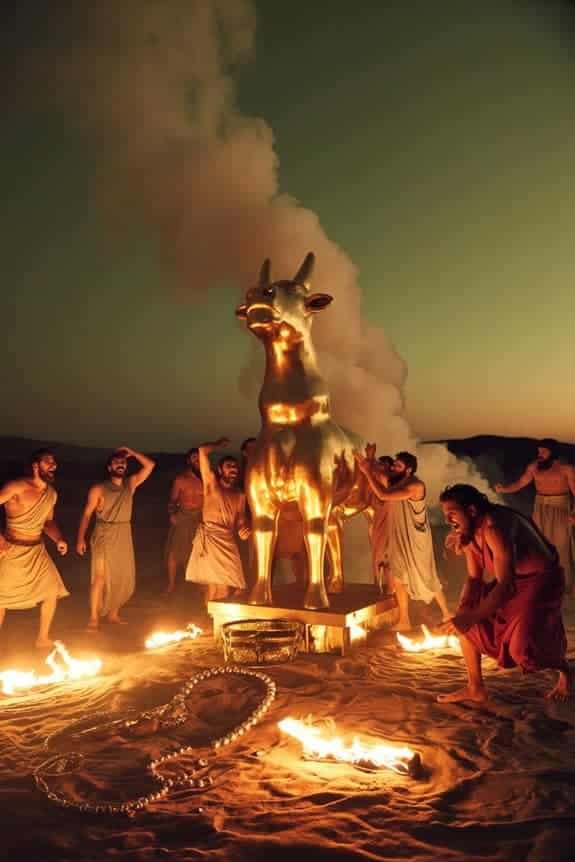
The Israelites showed a pattern of defiance at Mount Sinai when they grew impatient and made a golden calf idol while Moses was receiving the Ten Commandments from God (Exodus 32:1-4, NKJV). This incident with the golden calf highlights the rebellion of the Israelites. They were afraid of being abandoned and pressured Aaron to create an idol from their earrings, claiming it was the god who brought them out of Egypt.
- Impatience led to idolatry: They lost faith in Moses’ return and demanded a visible god, turning away from God’s invisible presence.
- Quick craftsmanship: Aaron took their gold and molded it into a calf, even building an altar for sacrifices and celebrations.
- False worship: They woke up early to celebrate, mixing pagan festivities with the worship of Yahweh.
- Group influence: Everyone in the camp joined in, making disobedience seem normal.
- Direct covenant violation: Right after hearing “no other gods,” they broke the first commandment.
This golden calf rebellion shows us how doubt can lead to idolatry. It teaches us an important lesson: waiting on God tests our true obedience and helps us avoid self-made disasters.
King Saul’s Fatal Disobedience

In 1 Samuel 15, we see King Saul fail once again. He spared King Agag and kept the best livestock from the Amalekites, going against God’s clear command to destroy everything.
The prophet Samuel confronted Saul, saying, “To obey is better than sacrifice” (1 Samuel 15:22, NKJV). Because of this disobedience, God rejected Saul as king and chose David to take his place.
These events teach us important lessons: partial obedience is like rebellion, which can take away our blessings and bring about judgment.
For us as believers, Saul’s story reminds us that we must fully obey God. Disobedience can have serious consequences, affecting not just our lives but also the lives of those who come after us. It can cost us valuable opportunities in our walk with the Lord.
Jonah Flees God’s Call to Nineveh

God commanded Jonah to go to Nineveh and preach a message of repentance to the wicked city. Instead of obeying, Jonah ran away by boarding a ship to Tarshish. His reluctance came from his deep dislike for the Assyrians, which led him to avoid God’s calling.
While Jonah was at sea, a fierce storm arose, showing God’s power as He sent a great wind. The sailors cast lots and discovered that Jonah was the reason for the storm. Jonah then told them to throw him overboard to calm the sea. God prepared a huge fish to swallow Jonah, and he spent three days and nights in its belly, praying for help.
- Jonah’s reluctance: His prejudice against his enemies caused him to put personal feelings ahead of obeying God.
- Divine intervention: The storm and the fish showed that God was determined to bring Jonah back to His purpose.
- Nineveh’s repentance: When Jonah finally preached to the city, they listened and turned from their evil ways, saving them from destruction.
- Lessons learned: Disobeying God can lead to danger; His mercy is for everyone.
- Practical takeaway: Running from God’s call can lead to loneliness, but surrendering to Him brings true purpose.
In the end, after his time in the fish, Jonah obeyed God, which led to Nineveh’s repentance and taught important lessons about submission.
Frequently Asked Questions
Who Was Korah in Numbers 16 Rebellion?
Like a spark igniting dry tinder, Korah’s lineage as a Levite kinsman of Moses fueled Numbers 16 rebellion, challenging Aaron’s priesthood. Rebellion consequences were dire: the earth swallowed Korah’s faction, fire devoured 250 leaders, affirming divine order.
Why Did Moses Disobey at Meribah?
Moses disobeyed at Meribah due to Moses’ frustration with the Israelites’ constant complaining amid thirst. Instead of speaking to the rock as God commanded, he struck it twice, revealing consequences of disobedience: barred from entering the Promised Land.
What Caused Miriam’s Leprosy Punishment?
Miriam’s leprosy stemmed from her pride-fueled criticism of Moses’ leadership, alongside Aaron, questioning his Cushite wife and authority. Divine justice swiftly enforced consequences of criticism and leadership accountability, afflicting her with leprosy as a stark warning. (35 words)
How Did Uzzah Die Touching Ark?
Uzzah died instantly when he reached out to steady the Ark of God after oxen stumbled beneath it. His actions violated God’s explicit command against touching the sacred vessel, resulting in divine judgment by lethal strike, as chronicled in 2 Samuel 6:6-7.
Why Did Ananias and Sapphira Lie?
Ananias and Sapphira lied about the land sale proceeds to feign greater generosity amid early church sharing, testing if greed masked as piety evades divine scrutiny. Ananias’ motivation stemmed from covetousness; Sapphira’s complicity sealed their fatal deceit. (35 words)
Final Thoughts
In the biblical story of rebellion, Adam and Eve take a bite of the forbidden fruit, and Lot’s wife looks back, turning into a pillar of salt (Genesis 19:26). The Israelites create a golden calf while waiting for Moses (Exodus 32:1-4). King Saul spares King Agag instead of following God’s command (1 Samuel 15:9), and Jonah tries to flee from God’s call to Nineveh by taking a ship in the opposite direction (Jonah 1:3). These examples show us that partial obedience is still disobedience. Remember, God’s plan is perfect; let’s follow His Word!
Share On Pinterest



Pastor Duke has been preaching and teaching the Bible since 1988. He has shared his knowledge online since 2011.






 By
By