

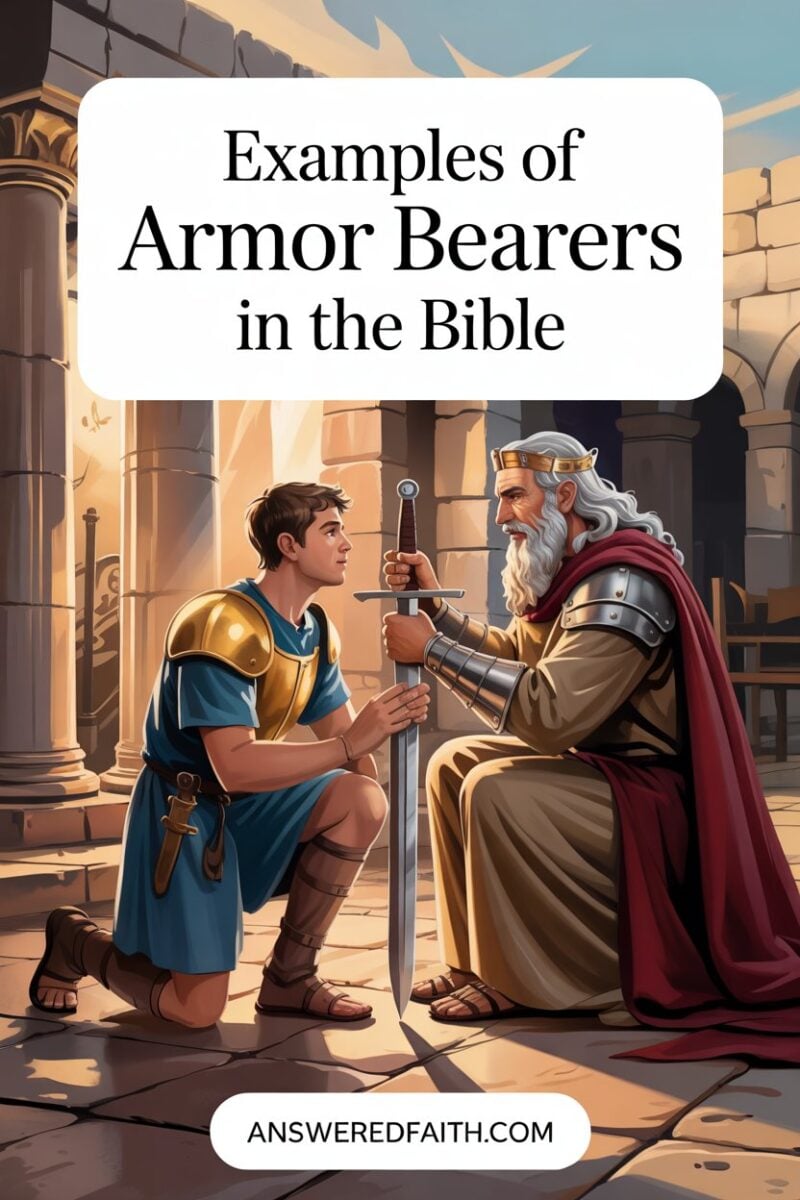
When you explore Scripture’s armor bearers, you’ll find five powerful examples that shaped Israel’s history. Jonathan’s armor bearer climbed impossible cliffs at Michmash, declaring “I’m with you heart and soul” before routing twenty Philistines. Saul’s bearer witnessed his king’s tragic end. Abimelech’s young attendant carried out a dark final command. David’s mighty men served as elite warrior-supporters, while Joab’s ten bearers faced the heartbreak of Absalom’s death. Each story reveals how ordinary servants became extraordinary difference-makers.
Key Takeaways
- Jonathan’s armor bearer climbed Michmash with him, killing twenty Philistines together in an act of extraordinary faith and loyalty.
- Saul’s armor bearer refused to kill the wounded king at Mount Gilboa, then fell on his own sword after Saul’s suicide.
- Abimelech’s armor bearer killed his master at Abimelech’s command to avoid the shame of being killed by a woman.
- David’s mighty men served as elite warrior armor bearers, protecting commanders like Joab during battles throughout David’s military campaigns.
- Joab’s ten armor bearers helped kill Absalom against David’s orders, demonstrating loyalty to their immediate commander over the king.
Jonathan’s Armor Bearer: Climbing to Victory at Michmash

When you’re facing impossible odds with someone you trust, courage becomes contagious.
Jonathan’s armor bearer discovered this truth at Michmash, where twenty Philistines guarded a narrow pass between two rocky cliffs. Jonathan’s courage sparked an audacious plan: they’d climb the cliff face together and confront the enemy garrison alone.
The Michmash strategy wasn’t military genius—it was faith in action. “Perhaps the Lord will work for us,” Jonathan said, inviting his armor bearer into divine possibility.
Without hesitation, the young man replied, “I’m with you heart and soul.” Together they scrambled up on hands and knees, weapons strapped to their backs, vulnerable yet determined.
You’ll notice the armor bearer didn’t just carry weapons; he carried faith. When they reached the top, the two-man army killed twenty soldiers, triggering panic throughout the Philistine camp.
Their partnership shows you that sometimes God’s victories come through ordinary people who simply say “yes” to extraordinary trust.
Saul’s Armor Bearer: Witness to a King’s Final Moments

| Request | Response | Result |
|---|---|---|
| “Draw your sword and kill me” | Refused out of fear | Saul’s desperation increased |
| Saul’s plea intensified | Armor bearer paralyzed | King fell on own sword |
| Watching his master die | Overwhelming grief | Fell on his sword too |
| Final act of loyalty | Death beside his king | United even in death |
You can’t miss the armor bearer’s loyalty here—he wouldn’t harm God’s anointed, even when commanded. After watching Saul take his own life, this faithful servant chose the same end. His devotion extended beyond duty; it reached into death itself. This sobering account reminds you that sometimes faithfulness means standing witness to heartbreak while maintaining your integrity.
Abimelech’s Armor Bearer: The Young Man Who Ended a Tyrant’s Life

The armor bearer’s loyalty proved absolute. He thrust his sword through his master, completing Abimelech’s downfall exactly as requested.
The armor bearer’s loyalty proved absolute—he thrust his sword through his master without question.
You’re witnessing a twisted form of devotion here—the young man didn’t question whether he should preserve a tyrant’s reputation. He simply obeyed.
This account reveals how armor bearers weren’t just equipment carriers; they’d become executioners if commanded.
You see the dangerous side of unquestioning loyalty. While the armor bearer spared Abimelech from shame, he couldn’t spare him from divine justice. The woman’s millstone had already sealed the tyrant’s fate.
David’s Mighty Men Who Served as Armor Bearers

Not all armor bearers served in darkness like Abimelech’s young man. When you read about David’s loyal companions, you’ll discover men who redefined what it meant to provide fierce battlefield support. These weren’t just weapon carriers—they were elite warriors who chose to serve.
Consider Joab’s armor bearers, who fought alongside him in countless battles. They didn’t merely hand him spears; they protected his blind spots while he led Israel’s armies.
You’ll find similar dedication in the men who served David’s thirty mighty warriors. Each armor bearer matched his master’s courage, creating an unbreakable partnership forged in combat.
What made them extraordinary wasn’t their strength alone but their willingness to decrease so others could increase. They understood that supporting a God-appointed leader meant participating in divine purpose.
When you’re called to support someone else’s mission, remember these men who found honor in what others might’ve considered secondary roles.
Joab’s Ten Armor Bearers in Battle Against Absalom

Ten young men surrounded Joab when he found Absalom hanging helplessly from an oak tree, and their actions that day would forever mark them as participants in one of Scripture’s most tragic military encounters.
You’ll notice these armor bearers didn’t question Joab’s strategy when he thrust three javelins into Absalom’s heart. Instead, they immediately struck and killed David’s rebellious son, ensuring the completion of their commander’s grim task.
Their loyalty reveals a harsh reality you’d face as an ancient armor bearer—sometimes you’d execute orders that violated direct royal commands. David had explicitly ordered Absalom’s protection, yet these ten men chose obedience to their immediate commander over the king’s wishes.
Absalom’s rebellion had torn Israel apart, and Joab believed ending his life would restore peace. While you might struggle with their decision, these armor bearers demonstrate how military service often demands split-second choices between competing loyalties, especially when kingdoms hang in the balance.
The Role and Responsibilities of Biblical Armor Bearers

When you examine the armor bearer’s position in ancient Israel, you’re looking at far more than a simple military assistant—these men served as confidential advisors, shield protectors, and trusted companions who’d literally stand between their masters and death.
Their armor bearer duties extended beyond carrying weapons; they’d scout enemy positions, deliver urgent messages, and provide counsel during critical moments.
You’ll notice these warriors exemplified biblical leadership through servant-hearted loyalty. They weren’t seeking glory but embraced their supporting role with honor.
Jonathan’s armor bearer climbed treacherous cliffs alongside him, while David served Saul even when the king’s jealousy threatened his life.
Their responsibilities demanded exceptional courage—they’d charge into battle first, testing enemy strength while protecting their master’s vulnerable spots.
This wasn’t blind obedience but strategic partnership. They understood that their master’s success meant victory for Israel, making their service an act of national devotion rather than personal ambition.
Frequently Asked Questions
Were Armor Bearers Allowed to Marry While Serving Their Masters?
You’ll find Scripture doesn’t prohibit armor bearer relationships including marriage. David’s armor bearers likely balanced marital obligations with service. They weren’t monks but warriors who’d serve faithfully while maintaining families, though duty sometimes meant extended separations.
What Age Did Young Men Typically Become Armor Bearers?
You’d think they started as toddlers, but armor bearers typically began their youthful service between fourteen and twenty years old. Training requirements varied, though you’ll find most learned combat skills while personally attending their masters daily.
How Were Armor Bearers Compensated for Their Military Service?
You’d receive compensation through battlefield spoils, land grants, or promotions rather than regular wages. Historical context shows armor bearers often advanced to higher positions—like David did—making their service an investment in future military leadership.
Could Armor Bearers Inherit Their Master’s Weapons After Death?
You’d likely inherit your master’s weapons after his death, as inheritance rights often favored loyal servants. These weapons carried deep symbolism—they weren’t just tools but sacred trusts representing honor, legacy, and your proven faithfulness in battle.
Did Armor Bearers Receive Special Military Training Before Their Appointment?
You’d likely receive specialized armor bearer training before appointment, mastering military skills beyond typical soldiers. Scripture doesn’t detail formal programs, but you’d need exceptional combat abilities, loyalty, and tactical understanding to protect Israel’s elite warriors effectively.
Conclusion
You might think armor bearers were just ancient military assistants with no relevance today. But envision this: they’re like the trusted friend who stands beside you in your toughest battles, carrying what you can’t handle alone. Whether it’s Jonathan’s bearer scaling cliffs or David’s mighty men protecting their leader, these stories remind you that God’s design includes faithful companions who’ll bear your burdens. You’re not meant to fight life’s battles solo—find your armor bearers.
Share On Pinterest



Pastor Duke has been preaching and teaching the Bible since 1988. He has shared his knowledge online since 2011.








 By
By