

Let me ask you something that gets right to the heart of it all. If you had to boil the Christian life down to its absolute bedrock, you’d have to land on the word obedience, wouldn’t you? For years, I’ve been absolutely captivated by those powerful, larger-than-life examples of sheer obedience we find in the pages of Scripture.
Think about it! Picture Abraham, a man well past his prime, told to pack up everything comfortable and familiar and to simply go… with no map in his hand, just a promise in his heart. Or imagine Moses, a man who felt completely inadequate, standing eyeball-to-eyeball with the most powerful ruler on earth to deliver God’s message. These stories, my friend, shout from the pages about the incredible blessings that flow from a life submitted to God’s will.
So, I want to invite you to explore some of these stunning accounts of obedience with me. Let’s dig into the lives of these biblical heroes and see what profound, practical lessons are in there for us today, right here in Mesquite.
Let’s take this journey together and investigate what it really means to trust and obey, especially when the challenges are immense and the path isn’t clear. Because we’ll discover that their courageous acts of obedience didn’t just shape their own destinies. No, sir. Each one became a vital, indispensable thread woven into the magnificent tapestry of God’s grand and glorious plan for all humanity.
Noah: Obeying God’s Command to Build the Ark

Noah’s story is a remarkable example of unwavering obedience to God’s instructions, even in the face of seemingly impossible circumstances. When God saw the wickedness of mankind, He chose Noah, a righteous man, to carry out His plan of saving humanity and the animals from the impending flood.
God gave Noah specific directions to construct an ark, as recorded in Genesis 6:14-16 (NKJV):
“Make yourself an ark of gopherwood; make rooms in the ark, and cover it inside and outside with pitch. And this is how you shall make it: The length of the ark shall be three hundred cubits, its width fifty cubits, and its height thirty cubits. You shall make a window for the ark, and you shall finish it to a cubit from above; and set the door of the ark in its side. You shall make it with lower, second, and third decks.”
Even though the enormity of the task and the lack of prior experience in shipbuilding, Noah trusted God and obeyed His commands. He faithfully followed the precise measurements and specifications provided by God, gathering the necessary materials and laboring tirelessly to construct the ark.
Noah’s obedience extended beyond just building the ark. He also followed God’s instructions to gather his family and the animals into the ark, ensuring their safety and survival during the flood (Genesis 7:1-5). This required great faith and trust in God’s providence, as Noah had to believe that God would sustain them throughout the duration of the flood.
Through his obedience, Noah demonstrated his unwavering faith in God’s plan and his willingness to submit to His authority. His story teaches us that when we trust in God and obey His commands, even when they seem daunting or incomprehensible, we can be assured of His protection and provision.
Noah’s obedience eventually led to the preservation of life on Earth and the establishment of a new covenant between God and humanity. His example encourages us to seek God’s will in our lives and to obey His instructions, knowing that our obedience can have far-reaching consequences in fulfilling God’s purposes.
Abraham: Following God’s Call to Leave His Homeland

Abraham exemplifies unwavering obedience to God’s call, leaving behind his familiar homeland to begin on a journey of faith. His trust in God’s plan serves as an inspiration for believers today.
Offering Isaac as a Sacrifice
In Genesis 22, God tests Abraham’s faith by commanding him to offer his beloved son Isaac as a sacrifice. Without hesitation, Abraham obeys, trusting that God will provide a way out:
“By faith Abraham, when he was tested, offered up Isaac, and he who had received the promises offered up his only begotten son.” (Hebrews 11:17 NKJV)
At the last moment, God intervenes and provides a ram as a substitute sacrifice. This event foreshadows God’s ultimate sacrifice of His own Son, Jesus Christ, for the sins of the world.
Abraham’s unwavering obedience demonstrates:
- Complete trust in God’s sovereignty
- Willingness to surrender his most precious possession
- Faith in God’s ability to fulfill His promises
Through his obedience, Abraham becomes a father of many nations and a model of faith for all generations. His story teaches us that obedience, even in the face of seemingly impossible circumstances, leads to great blessings and a deeper relationship with God.
Moses: Leading the Israelites Out of Egypt
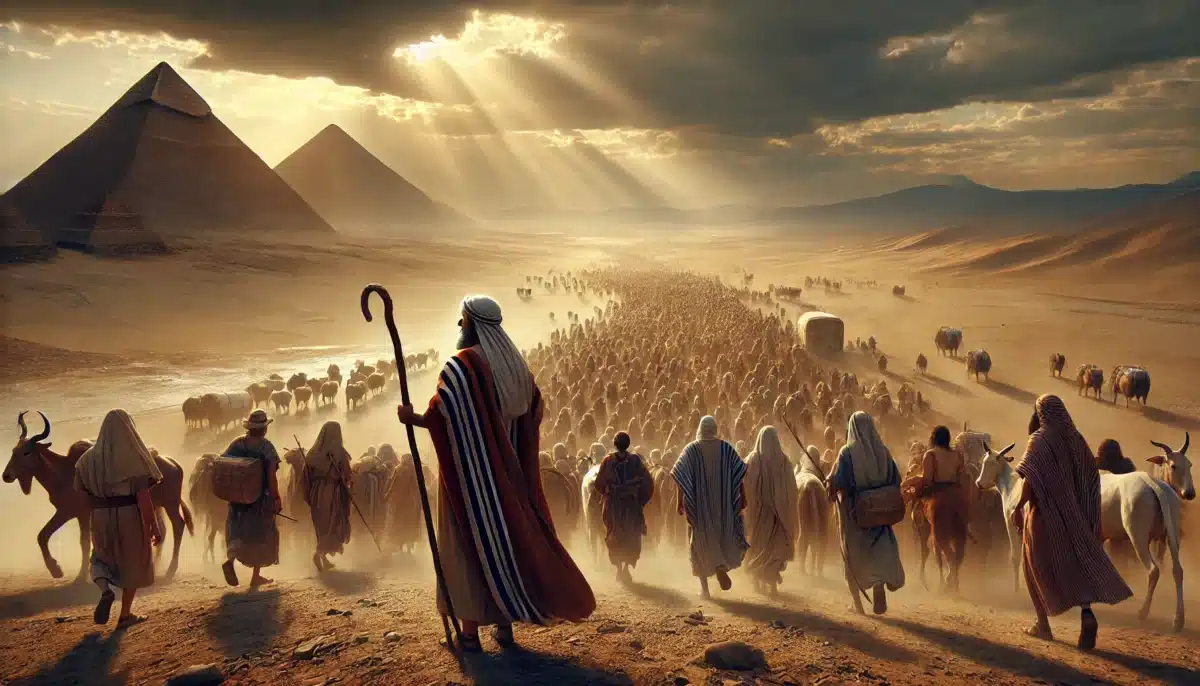
Moses’ obedience to God’s commands was instrumental in delivering the Israelites from slavery in Egypt. His unwavering faith and submission to God’s will serve as a powerful example for believers today.
- Moses meticulously followed God’s detailed instructions for constructing the tabernacle, a sacred dwelling place for His presence among the Israelites. As Exodus 40:16 states, “So Moses did; according to all that the Lord had commanded him, so he did.”
- God provided specific measurements, materials, and designs for every aspect of the tabernacle, from the curtains to the furniture. Moses ensured that every detail was executed precisely as God had directed.
- The Outer Court
- The Holy Place
- The Most Holy Place (Holy of Holies)
- Each area had its own unique furnishings and purpose:
| Area | Furnishings |
|---|---|
| Outer Court | Altar of Burnt Offering, Bronze Laver |
| Holy Place | Table of Showbread, Golden Lampstand, Altar of Incense |
| Most Holy Place | Ark of the Covenant |
- By faithfully obeying God’s instructions, Moses demonstrated his reverence for God’s holiness and his commitment to leading the Israelites in worship. His obedience ensured that the tabernacle would serve as a sacred space where God’s presence could dwell among His people.
Joshua: Conquering the Promised Land Through Obedience

Joshua’s story exemplifies the power of unwavering obedience to God’s commands. As Moses’ successor, Joshua was tasked with leading the Israelites into the Promised Land.
God’s instructions to Joshua were clear: “Be strong and of good courage; do not be afraid, nor be dismayed, for the Lord your God is with you wherever you go” (Joshua 1:9, NKJV). Joshua’s obedience was crucial to the Israelites’ success in conquering the land God had promised them.
One remarkable example of Joshua’s obedience is the battle of Jericho. God gave Joshua specific instructions:
- March around the city once a day for six days
- On the seventh day, march around the city seven times
- The priests should blow the trumpets
- The people should shout when they hear the trumpets
Joshua followed these instructions precisely, and the walls of Jericho miraculously fell, allowing the Israelites to take the city (Joshua 6:1-21).
Throughout the conquest of Canaan, Joshua remained obedient to God’s commands, even when they seemed unconventional. His obedience led to numerous victories and the fulfillment of God’s promise to give the land to the Israelites.
Joshua’s life teaches us that:
- Obedience to God’s word is essential for success
- God’s ways may not always make sense to us, but they are perfect
- Trusting in God’s promises and following His instructions lead to victory
As Joshua neared the end of his life, he challenged the Israelites to remain obedient to God: “Choose for yourselves this day whom you will serve… But as for me and my house, we will serve the Lord” (Joshua 24:15, NKJV). May we, like Joshua, commit to serving and obeying God wholeheartedly.
Ruth: Remaining Loyal to Naomi and God

Ruth’s story is a powerful testament to unwavering loyalty and obedience. Even though facing significant hardships, Ruth chose to remain faithful to her mother-in-law Naomi and to the God of Israel.
After losing her husband, Ruth had the opportunity to return to her homeland and start anew. Instead, she declared to Naomi, “Entreat me not to leave you, Or to turn back from following after you; For wherever you go, I will go; And wherever you lodge, I will lodge; Your people shall be my people, And your God, my God” (Ruth 1:16, NKJV).
Ruth’s commitment to Naomi extended beyond mere words. She accompanied Naomi to Bethlehem, leaving behind her familiar surroundings to embrace a new land and culture.
In Bethlehem, Ruth diligently worked to provide for herself and Naomi. She gleaned in the fields, gathering leftover grain to ensure their survival.
Ruth’s obedience to Naomi’s instructions led her to the field of Boaz, a kinsman-redeemer. Following Naomi’s guidance, Ruth approached Boaz at the threshing floor, seeking his protection and provision.
Boaz recognized Ruth’s noble character and loyalty, declaring, “…all the people of my town know that you are a virtuous woman” (Ruth 3:11, NKJV). He gladly took on the role of kinsman-redeemer, marrying Ruth and redeeming Naomi’s family line.
Ruth’s obedience and faithfulness were rewarded beyond measure. She became the great-grandmother of King David and an ancestor of Jesus Christ, the ultimate Redeemer.
Through Ruth’s example, we learn that:
- Loyalty to God and others brings blessings
- Obedience often requires sacrifice
- God honors those who remain faithful in difficult times
As believers, we are called to emulate Ruth’s unwavering commitment to God and to those He has placed in our lives. By remaining obedient and loyal, we open ourselves to experience God’s abundant blessings and play a part in His greater plan.
David: A Man After God’s Own Heart

David, the shepherd boy who became king, is a shining example of obedience and repentance in the Bible. Even though his flaws, he consistently sought to align his heart with God’s will.
Repenting After His Sin with Bathsheba
David’s most notorious mistake was his affair with Bathsheba and the subsequent murder of her husband, Uriah. When confronted by the prophet Nathan, David immediately acknowledged his sin and repented deeply, as seen in Psalm 51:
“Have mercy upon me, O God, According to Your lovingkindness; According to the multitude of Your tender mercies, Blot out my transgressions. Wash me thoroughly from my iniquity, And cleanse me from my sin.” (Psalm 51:1-2, NKJV)
David’s genuine repentance led to forgiveness and restoration, showing that:
- No one is beyond God’s mercy when they turn to Him in sincere repentance.
- Obedience involves humbly accepting correction and seeking to change.
Through his heartfelt prayer, David models the importance of:
- Acknowledging our sins before God
- Seeking His forgiveness and cleansing
- Submitting to His will and guidance
David’s life teaches us that even in our darkest moments, we can find hope and restoration through repentance and obedience to God.
Esther: Risking Her Life to Save Her People

Esther’s story is a remarkable example of courage and obedience in the face of danger. As a young Jewish woman living in Persia, Esther found herself in a unique position to save her people from annihilation.
When King Ahasuerus sought a new queen, Esther was chosen for her beauty and charm. But, she kept her Jewish identity a secret, as advised by her cousin Mordecai.
Haman, the king’s prime minister, plotted to destroy all the Jews in the empire. Mordecai urged Esther to intervene, saying, “Yet who knows whether you have come to the kingdom for such a time as this?” (Esther 4:14, NKJV).
Esther knew that approaching the king uninvited could result in her death. But she obeyed Mordecai’s plea, declaring, “I will go to the king, which is against the law; and if I perish, I perish!” (Esther 4:16, NKJV).
After fasting and praying for three days, Esther courageously entered the king’s presence. Miraculously, he welcomed her and granted her request to spare the lives of her people.
Esther’s obedience and faith saved the Jews from destruction. Her story teaches us that:
- God can use us in powerful ways when we trust Him
- Obedience often requires courage and sacrifice
- Our actions can have far-reaching consequences in God’s plan
Like Esther, we may face challenging situations that require us to step out in faith. But when we obey God’s leading, even in the face of fear, He can use us to accomplish great things for His kingdom.
Mary: Accepting God’s Plan to Bear the Messiah

Mary’s obedience to God’s plan is a powerful testament to her faith and trust in the Lord. When the angel Gabriel appeared to her, announcing that she would conceive and give birth to the Son of God, Mary humbly accepted this divine calling. “Behold the maidservant of the Lord! Let it be to me according to your word” (Luke 1:38, NKJV).
Even though the potential social stigma and personal challenges that lay ahead, Mary embraced her role as the mother of the Messiah. Her obedience required great courage and a willingness to surrender her own plans for the future.
Mary’s response to the angel’s message demonstrates several key aspects of obedience:
- Humility: Acknowledging God’s sovereignty and submitting to His will
- Trust: Believing in God’s plan, even when it seems daunting or impossible
- Courage: Facing potential hardships and societal judgment with faith
- Surrender: Letting go of personal desires to embrace God’s higher purpose
As a young, unmarried woman, Mary faced the possibility of being ostracized by her community. Yet, she trusted in God’s protection and provision, knowing that He would be with her every step of the way.
“For with God nothing will be impossible.” (Luke 1:37, NKJV)
Mary’s obedience paved the way for the fulfillment of God’s redemptive plan for humanity. Her willingness to bear the Son of God made it possible for Jesus to enter the world, live a sinless life, and eventually offer Himself as a sacrifice for our sins.
Through Mary’s example, we learn that obedience to God often involves stepping out in faith, even when the path ahead is uncertain. By trusting in His goodness and surrendering our lives to His will, we open ourselves to be used by God in remarkable ways.
As we reflect on Mary’s obedience, let us be inspired to say “yes” to God’s call on our lives, knowing that He will guide and strengthen us every step of the way.
Joseph: Trusting God’s Plan Despite Difficult Circumstances

Joseph’s story is a powerful testament to unwavering obedience and trust in God’s plan, even in the face of betrayal, false accusations, and imprisonment. Let’s explore how his faith and obedience led to the fulfillment of God’s purposes:
- Sold into slavery by his brothers
- Joseph’s brothers, jealous of their father’s favoritism, sold him into slavery (Genesis 37:28).
- Even though this betrayal, Joseph remained faithful to God in Potiphar’s house.
- Falsely accused and imprisoned
- After resisting the advances of Potiphar’s wife, Joseph was falsely accused and imprisoned (Genesis 39:20).
- In prison, he continued to trust God and use his gifts to interpret dreams.
- Elevated to a position of power
- God’s favor was with Joseph, and he was eventually brought before Pharaoh to interpret his dreams (Genesis 41:14-36).
- Recognizing the wisdom and Spirit of God in Joseph, Pharaoh appointed him as second-in-command over Egypt (Genesis 41:38-41).
- Reconciliation with his brothers
- During a famine, Joseph’s brothers came to Egypt for food, not recognizing him (Genesis 42:6-8).
- After testing their character, Joseph revealed his identity and forgave them, acknowledging God’s sovereign plan:
“But now, do not hence be grieved or angry with yourselves because you sold me here; for God sent me before you to preserve life.” (Genesis 45:5, NKJV)
- Preservation of God’s people
- Joseph’s obedience and trust in God’s plan led to the preservation of his family and the entire nation of Israel.
- His story illustrates that God can use even the most challenging circumstances to accomplish His purposes.
Joseph’s life is a powerful example of obedience, forgiveness, and trust in God’s sovereignty. His story encourages us to remain faithful to God, even when faced with injustice, knowing that He can work all things together for good (Romans 8:28).
The Disciples: Leaving Everything to Follow Jesus

The disciples set a remarkable example of obedience when they left everything behind to follow Jesus. Their unwavering commitment to the Lord’s call serves as an inspiration for believers today.
Obeying Jesus’ Great Commission
The disciples demonstrated extraordinary obedience to Jesus’ Great Commission. After His resurrection, Jesus appeared to the eleven disciples and instructed them to go into all the world, preaching the gospel and making disciples of all nations (Matthew 28:18-20). Even though the challenges and potential dangers, they obeyed without hesitation.
The disciples’ obedience to the Great Commission had a profound impact on the spread of Christianity:
- They traveled extensively, sharing the good news in various regions and countries.
- They faced persecution, imprisonment, and even martyrdom for their faith.
- Their unwavering commitment to Christ’s command led to the rapid growth of the early church.
“And they went out and preached everywhere, the Lord working with them and confirming the word through the accompanying signs. Amen.” (Mark 16:20, NKJV)
The disciples’ obedience to the Great Commission teaches us that following Jesus often requires stepping out of our comfort zones. We are called to share the gospel with others, even when it’s challenging or uncomfortable. By obeying this command, we participate in God’s plan to reach the lost and advance His kingdom.
Paul: Transformed from Persecutor to Apostle

Paul’s life is a remarkable example of radical obedience and transformation through Christ. His journey from a zealous persecutor of the early church to one of the most influential apostles demonstrates the power of God’s grace and the impact of surrendering to His will.
Enduring Hardships for the Gospel
Paul’s obedience to Christ led him to endure countless hardships for the sake of the gospel. In his second letter to the Corinthians, he recounts his struggles:
“From the Jews five times I received forty stripes minus one. Three times I was beaten with rods; once I was stoned; three times I was shipwrecked; a night and a day I have been in the deep; in journeys often, in perils of waters, in perils of robbers, in perils of my own countrymen, in perils of the Gentiles, in perils in the city, in perils in the wilderness, in perils in the sea, in perils among false brethren; in weariness and toil, in sleeplessness often, in hunger and thirst, in fastings often, in cold and nakedness” (2 Corinthians 11:24-27, NKJV).
Even though these challenges, Paul remained steadfast in his commitment to spreading the gospel. His unwavering obedience serves as an inspiration for believers to persevere through trials and trust in God’s strength.
Jesus: The Ultimate Example of Obedience to the Father

Jesus, the Son of God, demonstrated perfect obedience to the Father throughout His life on Earth. His unwavering commitment to fulfilling God’s plan of redemption serves as the ultimate example for all believers.
From the beginning of His ministry, Jesus made it clear that His purpose was to do the will of the Father. In John 6:38 (NKJV), He declares, “For I have come down from heaven, not to do My own will, but the will of Him who sent Me.” This statement underscores His complete submission to God’s authority.
One of the most significant instances of Jesus’ obedience is seen in His willingness to endure the cross. In the Garden of Gethsemane, as He faced the agony of the crucifixion, Jesus prayed, “Father, if it is Your will, take this cup away from Me; nevertheless not My will, but Yours, be done” (Luke 22:42, NKJV). Even though the immense suffering He would endure, Jesus chose to obey the Father’s plan for our salvation.
Jesus’ obedience was not only evident in His death but also in His daily life. He consistently prioritized His relationship with the Father, often withdrawing to pray and seek God’s guidance (Luke 5:16). By doing so, He modeled the importance of aligning our will with God’s and maintaining a close connection with Him.
Throughout His ministry, Jesus emphasized the significance of obedience in the lives of His followers. In John 14:15 (NKJV), He states, “If you love Me, keep My commandments.” He also promises that those who obey His teachings will experience a deep, abiding relationship with Him and the Father (John 14:23).
Key aspects of Jesus’ obedience include:
- Submitting to the Father’s will above His own
- Willingly sacrificing Himself for the salvation of humanity
- Consistently seeking the Father’s guidance through prayer
- Emphasizing the importance of obedience in the lives of His followers
As Christians, we are called to follow in Jesus’ footsteps and embrace a life of obedience to God. By studying His example and relying on the power of the Holy Spirit, we can learn to surrender our will and align our lives with the Father’s plan, knowing that obedience leads to a deeper, more meaningful relationship with Him.
Conclusion: Lessons We Can Learn from Biblical Obedience
The Bible is filled with incredible examples of obedience that teach us valuable lessons about trusting God and following His will. From Noah’s unwavering faith in building the ark to Abraham’s willingness to sacrifice his son, these stories demonstrate the power of surrender and the blessings that come from aligning our lives with God’s plan.
Moses, Joshua, Ruth, David, Esther, Mary, Joseph, the disciples, and Paul all exemplify different aspects of obedience – whether it’s stepping out in faith, persevering through trials, or sharing the gospel with others. Each of their stories reminds us that God can use our obedience to accomplish His purposes and bring about transformation in our lives and the world around us.
Eventually, Jesus provides the perfect model of obedience, submitting to the Father’s will even unto death on the cross. By following in His footsteps and seeking to live a life of obedience, we can experience a deeper relationship with God and play a part in His redemptive work in the world.
How Did Biblical Heroes Demonstrate Self-Control in Their Obedience to God?
Biblical heroes exemplified profound obedience to God through their unwavering commitment and discipline. Their stories offer powerful biblical selfcontrol lessons, showcasing how figures like Joseph resisted temptation and David refrained from revenge. These narratives inspire believers to cultivate patience and restraint in their own lives, reflecting divine values in their actions.
Share On Pinterest!


Related Posts

The Hebrews 11 'Hall of Faith' — A Deep Dive
Last updated: May 2026 Explore Hebrews 11's hall of faith and discover how biblical heroes like Abel, Noah, and Abraham trusted God against impossible odds. Read our deep dive analysis.
 May 15, 2026
How to Build a Personal Worship Rhythm That Actually Sticks
Last updated: June 2026 By Duke Taber You started strong. The alarm went off early, the Bible was open, the coffee was warm. For a few…
Jun 1, 2026
Faith in the Old Testament vs. New Testament — Key Differences
Last updated: May 2026 Discover how old testament vs new testament faith evolved from covenant obedience to personal relationship with Christ. Learn the key differences today.
May 13, 2026
How A Faith Bible Study Changed My Walk with God
Last updated: May 2026 Discover how a faith Bible study can transform your walk with God — deepening prayer, replacing thin faith with solid trust, and bringing Scripture to life.
May 13, 2026


 By
By


This post indeed blessed me and it sounds as if it new. Though, it’s the word of God. Thanks for blessing lives.
I need to learn more about obedient
I give God the glory for the message I still need to learn more about obedience