
The Bible contains many powerful examples of addiction and its devastating consequences. From the drunkenness of Noah to the gluttony of the Israelites in the wilderness, Scripture doesn’t shy away from depicting the struggles and pitfalls of human weakness.
As I jump into this topic, I’ll explore how these ancient stories still resonate with us today. By examining the lives of biblical figures like Samson and the Prodigal Son, we can gain valuable insights into the nature of addiction and the hope for redemption that’s found in Christ.
Join me on this journey as we uncover the timeless truths about addiction woven throughout the pages of God’s Word. Together, we’ll discover how these examples can strengthen our faith, offer comfort to those struggling, and point us toward the ultimate source of healing and restoration.
Samson’s Addiction to Lust (Judges 16)
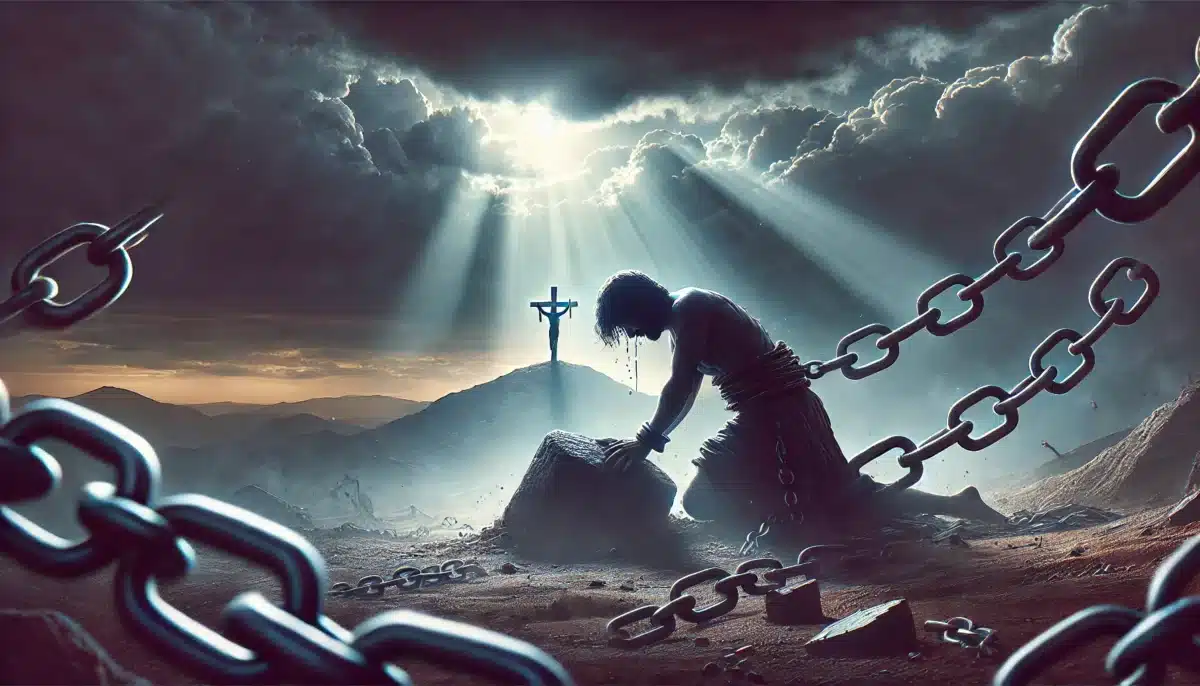
Samson’s story illustrates the destructive power of addiction, particularly when it comes to lust. Let’s jump into his story and see what lessons we can learn.
The Allure of Temptation
Samson, a man of incredible strength, found himself drawn to the allure of Delilah. Even though knowing she posed a threat, he couldn’t resist her charms. The Bible tells us that “she pestered him daily with her words and pressed him” (Judges 16:16, NKJV). Temptation can be persistent, wearing us down until we give in.
Samson’s story teaches us that:
- Even the strongest among us can fall prey to temptation.
- We must be vigilant in guarding our hearts and minds.
- Seeking God’s strength is essential in resisting the pull of sin.
The Consequences of Giving In
Samson’s inability to resist Delilah’s seduction led to his downfall. He revealed the secret of his strength, allowing the Philistines to capture him. They “put out his eyes, and brought him down to Gaza. They bound him with bronze fetters, and he became a grinder in the prison” (Judges 16:21, NKJV).
The consequences of Samson’s addiction were severe:
| Consequence | Description |
|---|---|
| Loss of Strength | Samson’s power was taken from him |
| Imprisonment | He was bound and forced to labor |
| Humiliation | Samson became a spectacle for his enemies |
Samson’s story is a stark reminder that giving in to addiction can lead to devastating consequences. It can rob us of our strength, our freedom, and our dignity.
King Saul’s Addiction to Envy (1 Samuel 18)

King Saul’s story is a cautionary tale about the dangers of envy and jealousy. His addiction to these destructive emotions eventually led to his downfall.
The Root of Jealousy
Saul’s jealousy towards David took root after the women sang, “Saul has slain his thousands, and David his ten thousands” (1 Samuel 18:7 NKJV). This comparison triggered Saul’s insecurity and fear of losing his kingdom to David.
Saul’s envy grew as “David behaved wisely in all his ways, and the Lord was with him” (1 Samuel 18:14 NKJV). Instead of celebrating David’s successes, Saul became increasingly suspicious and resentful.
The Destructive Power of Envy
Saul’s envy consumed him, leading to irrational behavior and poor decisions. He repeatedly tried to kill David, even though David had done nothing wrong (1 Samuel 18:10-11).
Saul’s jealousy also strained his relationship with his son Jonathan, who was loyal to David. Saul’s addiction to envy blinded him to the truth and caused him to lash out at those closest to him.
Eventually, Saul’s envy cost him his kingdom, his family, and his life. His story serves as a powerful reminder of the destructive nature of jealousy and the importance of guarding our hearts against this dangerous emotion.
Noah’s Addiction to Alcohol (Genesis 9:20-23)
Noah’s story serves as a cautionary tale about the dangers of alcohol addiction and its impact on one’s life and family.
The Dangers of Drunkenness
After the flood, Noah began farming and planted a vineyard. But, he fell victim to the dangers of drunkenness. The Bible states, “Then he drank of the wine and was drunk, and became uncovered in his tent” (Genesis 9:21 NKJV). Noah’s intoxication led to a compromising situation where he exposed himself, highlighting the risks associated with excessive alcohol consumption. Drunkenness can:
- Impair judgment
- Lower inhibitions
- Lead to inappropriate or sinful behavior
- Damage one’s reputation
- Strain relationships
As believers, we must be vigilant and exercise self-control to avoid falling into the trap of alcohol addiction.
The Impact on Family and Legacy
Noah’s addiction to alcohol not only affected him personally but also had a profound impact on his family and legacy. When Ham, Noah’s son, saw his father’s nakedness, he showed disrespect by telling his brothers about it (Genesis 9:22). This incident led to the cursing of Ham’s son, Canaan, and strained the family dynamics.
Noah’s drunkenness:
- Exposed his vulnerability to his children
- Caused shame and embarrassment within the family
- Led to the cursing of his grandson, affecting future generations
- Tarnished his reputation as a righteous man
As parents and role models, our actions have far-reaching consequences. We must be mindful of our behaviors and strive to set a positive example for our children and future generations.
The Prodigal Son’s Addiction to Reckless Living (Luke 15:11-32)
The Prodigal Son’s story is a powerful illustration of addiction and its consequences. It highlights the allure of instant gratification and the path to redemption and restoration.
The Lure of Instant Gratification
The younger son, driven by a desire for immediate pleasure, demanded his inheritance prematurely. “And the younger of them said to his father, ‘Father, give me the portion of goods that falls to me.’ So he divided to them his livelihood” (Luke 15:12, NKJV).
He squandered his wealth on reckless living, indulging in short-term pleasures without considering the long-term consequences. “And not many days after, the younger son gathered all together, journeyed to a far country, and there wasted his possessions with prodigal living” (Luke 15:13, NKJV).
The Prodigal Son’s addiction to instant gratification led him to:
- Disregard his father’s wisdom
- Abandon his responsibilities
- Pursue fleeting pleasures
- Waste his resources
The Path to Redemption and Restoration
At rock bottom, the Prodigal Son recognized his need for change. “But when he came to himself, he said, ‘How many of my father’s hired servants have bread enough and to spare, and I perish with hunger!'” (Luke 15:17, NKJV).
He humbled himself, repented, and returned to his father, seeking forgiveness. “I will arise and go to my father, and will say to him, ‘Father, I have sinned against heaven and before you'” (Luke 15:18, NKJV).
The father’s response exemplifies God’s love and willingness to forgive and restore those who turn to Him:
| Father’s Actions | Significance |
|---|---|
| Saw him from afar | God’s watchful eye |
| Had compassion | God’s mercy |
| Ran to him | God’s eagerness to receive us |
| Embraced him | God’s unconditional love |
| Kissed him | God’s forgiveness |
The Prodigal Son’s story teaches us that no matter how far we stray, God’s love and forgiveness are available when we humbly return to Him. It offers hope to those struggling with addiction, assuring them of the possibility of redemption and restoration through Christ.
The Rich Young Ruler’s Addiction to Materialism (Matthew 19:16-30)
The story of the rich young ruler serves as a powerful example of how an addiction to wealth and possessions can hinder one’s spiritual growth and relationship with God.
The Emptiness of Earthly Possessions
The rich young ruler approached Jesus, asking, “Good Teacher, what good thing shall I do that I may have eternal life?” (Matthew 19:16 NKJV). Even though his adherence to the commandments, he felt a void in his life.
Jesus, perceiving the young man’s attachment to his possessions, challenged him to sell all he had and give to the poor. The ruler’s response revealed the true depth of his addiction to materialism: “he went away sorrowful, for he had great possessions” (Matthew 19:22 NKJV).
This story illustrates the emptiness of earthly possessions and how they can never truly satisfy the longing of our souls. True contentment and purpose can only be found in a relationship with Christ.
The Call to Surrender All to Christ
Jesus’ words to the rich young ruler serve as a call to surrender all to Him. He says, “If you want to be perfect, go, sell what you have and give to the poor, and you will have treasure in heaven; and come, follow Me” (Matthew 19:21 NKJV).
This radical invitation requires us to:
- Recognize the temporary nature of earthly possessions
- Trust in God’s provision and eternal rewards
- Prioritize our relationship with Christ above all else
Surrendering our attachment to material wealth allows us to experience true freedom and joy in Christ. As Jesus promises, “everyone who has left houses or brothers or sisters or father or mother or wife or children or lands, for My name’s sake, shall receive a hundredfold, and inherit eternal life” (Matthew 19:29 NKJV).
Esau’s Addiction to Impulsivity (Genesis 25:29-34)
Esau’s story in Genesis 25 illustrates the dangers of addiction to impulsivity. Let’s explore how his inability to delay gratification led to devastating consequences.
The Consequences of Acting on Impulse
Esau’s impulsive decision to sell his birthright for a bowl of stew had far-reaching consequences. By prioritizing his immediate hunger over his long-term inheritance, he sacrificed his position and blessings as the firstborn son. The Bible records, “So Esau despised his birthright” (Genesis 25:34, NKJV), emphasizing the gravity of his shortsighted choice. Acting on impulse often leads to:
- Loss of valuable opportunities
- Strained relationships
- Regret and shame
Esau’s story warns us to pause and consider the long-term impact of our decisions before acting on impulse.
The Value of Delayed Gratification
In contrast to Esau’s impulsivity, the Bible teaches the importance of delayed gratification. Proverbs 25:28 (NKJV) states, “Whoever has no rule over his own spirit is like a city broken down, without walls.” Controlling our impulses and waiting for the right timing yields better results and helps us:
- Make wise decisions
- Develop patience and self-control
- Experience lasting satisfaction
By resisting the temptation of instant gratification, we can avoid the pitfalls that Esau experienced and enjoy the benefits of obedience to God’s timing and plan.
Overcoming Addiction Through Christ
As we’ve seen, the Bible is filled with examples of addiction and its consequences. But there’s hope! Through Christ, we can overcome any addiction and find freedom.
Acknowledging the Problem
The first step in overcoming addiction is acknowledging that there’s a problem. We must be honest with ourselves and admit that we’re struggling. This takes humility and courage.
The Prodigal Son hit rock bottom before he came to his senses (Luke 15:17). Sometimes we need to reach our lowest point to realize we need help. Admitting our addiction is the beginning of healing.
“Confess your trespasses to one another, and pray for one another, that you may be healed.” (James 5:16 NKJV)
Seeking God’s Help and Strength
Once we acknowledge our addiction, we must turn to God for help. In our own strength, we’re powerless against addiction. But with God, all things are possible (Matthew 19:26).
Through prayer, we can ask God to:
- Give us strength to resist temptation
- Help us make wise choices
- Heal the root issues driving our addiction
- Fill us with His peace and joy
“I can do all things through Christ who strengthens me.” (Philippians 4:13 NKJV)
Finding Support in Community
We were never meant to fight addiction alone. God designed us for community. When we open up to other believers, we find:
- Accountability
- Encouragement
- Wisdom
- Prayer support
Look for a support group, recovery program, or trusted Christian friends to walk with you. Invite them to pray for you and check in on you regularly.
“Bear one another’s burdens, and so fulfill the law of Christ.” (Galatians 6:2 NKJV)
Remember, overcoming addiction is a process. There will be setbacks and challenges along the way. But as we acknowledge our need, depend on God’s strength, and lean on our Christian community, we can experience true freedom and healing in Christ.
Don’t lose hope! Your story isn’t over yet. God is writing a new chapter of redemption and restoration in your life.
Conclusion
The examples of addiction in the Bible serve as powerful reminders that the struggle with temptation and destructive habits is not a modern phenomenon. From Noah’s drunkenness to the Prodigal Son’s reckless living, these stories illustrate the far-reaching consequences of addiction on individuals, families, and communities.
But, amidst the cautionary tales, there’s a message of hope woven throughout Scripture. The stories of redemption, such as the Prodigal Son’s return and God’s willingness to forgive, demonstrate that no matter how far we stray, there’s always a path back to healing and restoration through Christ.
As I reflect on these biblical accounts, I’m reminded of the importance of guarding my heart, seeking God’s strength daily, and surrounding myself with a supportive community of believers. By learning from the mistakes and triumphs of these biblical figures, I can navigate the challenges of addiction with greater wisdom, faith, and resilience.
How Do Examples of Free Will in the Bible Relate to Overcoming Addiction Through Faith?
Examples of free will in the Bible illustrate the power of choice in overcoming struggles, including addiction. By embracing free will and faith insights, individuals can make conscious decisions to seek help and change their lives. This divine guidance fosters hope, enabling transformation through a deeper connection with faith.


Pastor Duke has been preaching and teaching the Bible since 1988. He has shared his knowledge online since 2011.








 By
By