

Introduction
In our previous studies, we’ve explored the centrality of grace in the Christian life. We’ve seen how grace is the unmerited favor of God that saves us, sanctifies us, and empowers us for holy living. But how do we access this grace? What is our role in receiving the benefits of God’s grace? The answer lies in the crucial concept of faith.
Faith and grace are inseparably linked in the Christian experience of salvation. It is by grace that we are saved, and it is through faith that we receive this grace. In this study, we will dive deep into the biblical understanding of faith, explore how it relates to grace, and consider what this means practically for our lives as believers.
Reflect:
- What comes to mind when you think of the word “faith”? How would you define it in your own words?
- Why do you think it’s important to understand the connection between grace and faith?

What is Faith?
The Bible has much to say about faith. In fact, the word “faith” appears over 200 times in the New Testament alone. But what exactly is faith?
The author of Hebrews provides a succinct definition: “Now faith is the assurance of things hoped for, the conviction of things not seen.” (Hebrews 11:1) Faith is a confident trust in God and His promises, even when we cannot see the outcome. It is not a blind leap in the dark, but a step into the light of God’s trustworthiness.
Faith is fundamentally relational. It is not just intellectual assent to a set of doctrines, but personal trust in the living God. As Paul writes in Galatians 2:16, “we know that a person is not justified by works of the law but through faith in Jesus Christ.” The object of our faith is not an abstract concept, but the person of Jesus Christ.
Throughout Hebrews 11, often called the “Hall of Faith,” we see examples of individuals who demonstrated faith in God. Abel, Enoch, Noah, Abraham, Sarah, Moses, Rahab – these and others are commended for their faith, for their unwavering trust in God and His promises, even in the face of challenges, uncertainties, and impossibilities.
Key Verses:
- “And without faith it is impossible to please him, for whoever would draw near to God must believe that he exists and that he rewards those who seek him.” (Hebrews 11:6)
- “For we walk by faith, not by sight.” (2 Corinthians 5:7)
Reflect:
- How does the biblical definition of faith as “assurance of things hoped for, conviction of things not seen” challenge or confirm your understanding of faith?
- Which example of faith from Hebrews 11 resonates most with you? Why?
Faith and Grace

So how does faith relate to grace? The Bible makes it clear that faith is the means by which we receive the grace of God.
Perhaps the most well-known verse on this topic is Ephesians 2:8-9: “For by grace you have been saved through faith. And this is not your own doing; it is the gift of God, not a result of works, so that no one may boast.” Salvation is by grace, but it is through faith that we lay hold of that grace.
This truth is echoed throughout the New Testament. In Romans 5:1-2, Paul writes, “Therefore, since we have been justified by faith, we have peace with God through our Lord Jesus Christ. Through him we have also obtained access by faith into this grace in which we stand.” It is through faith that we are justified, and it is through faith that we access the grace in which we stand.
Importantly, even the faith by which we receive grace is itself a gift of grace. As Paul writes in Philippians 1:29, “For it has been granted to you that for the sake of Christ you should not only believe in him but also suffer for his sake.” Faith is not something we muster up on our own; it is granted to us by God.
This understanding safeguards against any notion of faith as a meritorious work. We are not saved by the strength of our faith, but by the object of our faith – Christ and His finished work. As Martin Luther famously said, “Faith is a living, bold trust in God’s grace, so certain of God’s favor that it would risk death a thousand times trusting in it.”
Key Verses:
- “And he said to the woman, ‘Your faith has saved you; go in peace.'” (Luke 7:50)
- “For in it the righteousness of God is revealed from faith for faith, as it is written, ‘The righteous shall live by faith.'” (Romans 1:17)
Reflect:
- How would you explain the relationship between grace and faith to a new believer?
- Why is it important to understand that faith itself is a gift of grace?
Living by Faith
Understanding the connection between grace and faith is not just a matter of theological precision; it has profound implications for how we live as Christians. The Bible makes it clear that we are not just saved by faith, but we are also called to live by faith.
In Galatians 2:20, Paul provides a powerful description of the faith-filled life: “I have been crucified with Christ. It is no longer I who live, but Christ who lives in me. And the life I now live in the flesh I live by faith in the Son of God, who loved me and gave himself for me.” Living by faith means daily trusting in Christ, relying on His grace, and surrendering to His will.
This kind of faith impacts every area of our lives. It shapes how we make decisions, how we face trials, how we interact with others. As the author of Hebrews writes, “Without faith it is impossible to please God.” (Hebrews 11:6) Faith is not an optional add-on to the Christian life; it is the very essence of it.
Living by faith also means trusting God’s promises, even when our circumstances seem to contradict them. As Paul writes in 2 Corinthians 5:7, “for we walk by faith, not by sight.” Faith looks beyond what is seen to what is unseen, anchoring itself in the trustworthiness of God.
Importantly, living by faith does not mean a life free from doubts or struggles. Even the heroes of faith in Hebrews 11 faced challenges, setbacks, and uncertainties. But they persevered in faith, trusting in God’s character and promises. As Jesus said to doubting Thomas, “Have you believed because you have seen me? Blessed are those who have not seen and yet have believed.” (John 20:29)
Key Verse:
- “For whatever does not proceed from faith is sin.” (Romans 14:23b)
Reflect:
- What does it mean to you to live by faith on a daily basis? What are some practical ways you can live out your faith?
- How have you experienced the tension between faith and sight in your own life? How do you maintain faith in the face of challenging circumstances?
Faith and Works
One potential misunderstanding about the relationship between grace, faith, and works needs to be addressed. If we are saved by grace through faith, does this mean that our works don’t matter? Can we live however we want because God’s grace will cover us?
The book of James tackles this issue head-on. James writes, “What good is it, my brothers, if someone says he has faith but does not have works? Can that faith save him?” (James 2:14) He goes on to argue that faith without works is dead, that true faith will always be accompanied by good works.
At first glance, this might seem to contradict Paul’s teaching that we are justified by faith apart from works. But a closer look reveals that Paul and James are addressing different issues. Paul is arguing against the idea that we can earn salvation by our works, while James is arguing against the idea that we can have saving faith without works.
In reality, faith and works are inseparably linked. True, saving faith will always result in a changed life, a life marked by good works. As Paul writes in Ephesians 2:10, immediately after affirming salvation by grace through faith, “For we are his workmanship, created in Christ Jesus for good works, which God prepared beforehand, that we should walk in them.”
Our works, then, are not the basis of our salvation, but the evidence of it. They are the fruit, not the root, of our faith. We don’t do good works to be saved; we do good works because we are saved, and our faith is living and active.
Key Verses:
- “So also faith by itself, if it does not have works, is dead.” (James 2:17)
- “For as the body apart from the spirit is dead, so also faith apart from works is dead.” (James 2:26)
Reflect:
- How would you explain the relationship between faith and works to someone who is confused about their roles in salvation?
- Examine your own life. Are there any areas where your faith is not producing the fruit of good works? What steps can you take to align your actions with your faith?
Growing in Faith
Just as our physical bodies grow and mature over time, so too should our faith. The Bible calls us to continually grow in our faith, to progress from spiritual milk to solid food (Hebrews 5:12-14).
One of the primary ways we grow in faith is through the Word of God. As Paul writes in Romans 10:17, “So faith comes from hearing, and hearing through the word of Christ.” As we read, study, and meditate on Scripture, our faith is strengthened. We come to know God more deeply, to trust His character more fully, and to rely on His promises more consistently.
Prayer is another key means of growing in faith. As we bring our requests, concerns, and doubts to God in prayer, we exercise our faith muscles. We learn to depend on God, to trust Him with our needs and our future. Jesus Himself taught on the importance of faith-filled prayer, saying, “Therefore I tell you, whatever you ask in prayer, believe that you have received it, and it will be yours.” (Mark 11:24)
Trials and challenges can also be opportunities for our faith to grow. James writes, “Count it all joy, my brothers, when you meet trials of various kinds, for you know that the testing of your faith produces steadfastness.” (James 1:2-3) As we face difficulties with faith, trusting in God’s goodness and sovereignty, our faith is refined and strengthened.
Ultimately, growing in faith is not about our own efforts, but about God’s work in us. As the disciples said to Jesus, “Increase our faith!” (Luke 17:5), so too should we regularly ask God to strengthen and deepen our faith. He who began a good work in us will bring it to completion (Philippians 1:6).
Key Verse:
- “And without faith it is impossible to please him, for whoever would draw near to God must believe that he exists and that he rewards those who seek him.” (Hebrews 11:6)
Reflect:
- In what ways have you seen your faith grow over time? What factors or experiences have contributed to this growth?
- What steps can you take to intentionally cultivate and strengthen your faith?
Conclusion
Grace and faith are truly two sides of the same coin in the Christian life. It is by grace that we are saved, and it is through faith that we receive this grace. But the connection between grace and faith does not end at salvation; it defines the entirety of our Christian journey.
We are called to live by faith, daily trusting in God’s grace. This faith will manifest itself in a life of good works, not as a means of earning salvation, but as an outpouring of the grace we have received. And as we feed our faith through the Word, prayer, and even trials, we will find our faith growing and maturing.
At the heart of it all is the incredible grace of God – His unmerited favor towards us in Christ. May we never lose sight of the wonder of this grace, and may we continually respond to it with a life of vibrant, living faith.
“May the God of hope fill you with all joy and peace in believing, so that by the power of the Holy Spirit you may abound in hope.” (Romans 15:13)
Reflect:
- Take a moment to reflect on your own journey of faith. Thank God for His grace that has sustained you and brought you to where you are today.
- Is there any area of your life where you are struggling to trust God fully? Bring this to God in prayer, asking Him to strengthen your faith.
- How can you encourage and support others in their journey of faith? Who can you reach out to this week to share the message of God’s grace and the importance of faith?
Was This Bible Study Helpful?
You can access the entire study for your church, home group, or personal enrichment with copyright permission to print out as many copies as you want for less than a cup of coffee at Starbucks!
The complete study is available in printable PDF format. Learn more about the entire Grace Bible Study Lessons Here.
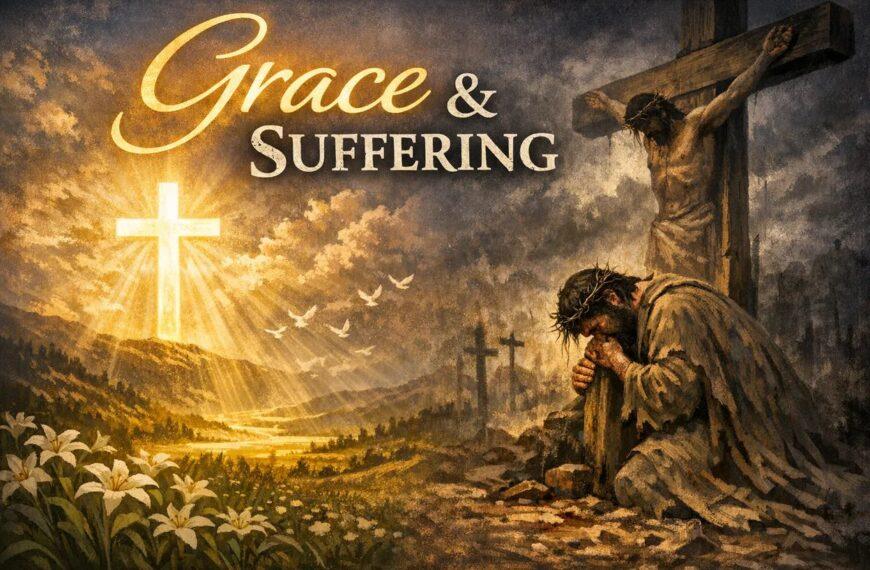
How Does Understanding Grace and Suffering Enhance Our Faith in Grace?
Understanding grace in suffering deepens our faith by illuminating the divine purpose behind our struggles. It teaches us that even in pain, we can find hope and strength. This profound insight encourages resilience, fostering a connection with a higher power that transforms our trials into opportunities for growth and spiritual renewal.
Share On Pinterest




Pastor Duke has been preaching and teaching the Bible since 1988. He has shared his knowledge online since 2011.





 By
By