

Did you know Tamar is one of only five women mentioned in Jesus’s genealogy? That’s remarkable when you consider how many faithful women lived throughout biblical history. Yet God chose to include her—a woman whose story involves chicanery, desperation, and a scandalous encounter with her father-in-law. Before you judge her actions, you’ll want to understand what drove her to such exigent measures and why Judah himself called her “more righteous” than he was.
Takeaways
- Tamar was a Canaanite widow who faced abandonment after Judah failed to honor his promise of levirate marriage.
- She boldly disguised herself to secure her rightful place in Judah’s family lineage after being denied justice.
- Judah publicly confessed Tamar was “more righteous” than he was, acknowledging his failure to fulfill his obligations.
- Tamar’s story demonstrates courage and determination to fight for her rights within a patriarchal system that failed her.
- She holds significant honor as one of five women named in Jesus Christ’s genealogy in the Gospel of Matthew.
Historical Context and Cultural Background of Tamar’s Story

When you open the pages of Genesis 38, you step into a world vastly different from our own—a world where family lineage meant everything and a widow’s survival depended entirely on the men in her life.
In ancient Canaan, levirate marriage wasn’t just custom—it was sacred duty. When a husband died childless, his brother was obligated to marry the widow and produce an heir. This practice protected women from destitution and preserved Tamar’s lineage within the family structure.
Understanding this cultural significance transforms how you read her story. She wasn’t scheming for personal gain; she was fighting for her God-given rights within a system that had failed her.
The stakes weren’t merely social—they were survival itself.
The Broken Promises and Injustices Tamar Endured

Though Tamar entered Judah’s family as Er’s bride with every expectation of building a life and bearing children, her hopes shattered when God struck down her wicked husband.
Under levirate law, she should’ve married Onan to continue Er’s lineage, but he deliberately refused his duty. After his death, Judah made promises he never intended to keep.
Consider the broken promises and social injustices Tamar faced:
- Onan’s betrayal: He used her while denying her the child she deserved
- Judah’s deception: He sent her away with false hope, blaming her for his sons’ deaths
- Cultural abandonment: She lived as a widow without status, protection, or future
You can see how Tamar became trapped—caught between a family’s fear and society’s rigid expectations.
Tamar’s Bold Plan to Secure Her Rights

When Judah failed to give his youngest son to Tamar as promised, she refused to accept a life of perpetual widowhood and injustice.
You can almost picture her calculating mind at work as she positioned herself at the crossroads of Enaim, disguised as a veiled woman, knowing exactly when Judah would pass by.
What might look like deception was actually a desperate woman’s strategy to claim the rights her father-in-law had wrongfully denied her.
Disguise at the Crossroads
Tamar had waited long enough. When she learned Judah was traveling to Timnah, she employed clever disguise tactics that would change everything.
You’ll notice she removed her widow’s garments and veiled herself completely, positioning herself at Enaim—a location whose crossroads symbolism speaks volumes. This wasn’t random; crossroads represented decision points, places where destinies shifted.
Consider what Tamar risked:
- Her reputation and standing in the community
- Potential punishment for her deception
- Her very life if Judah responded with anger
She understood that this intersection offered her only opportunity. By sitting where travelers passed, she placed herself exactly where Judah couldn’t miss her.
Book Recommendations
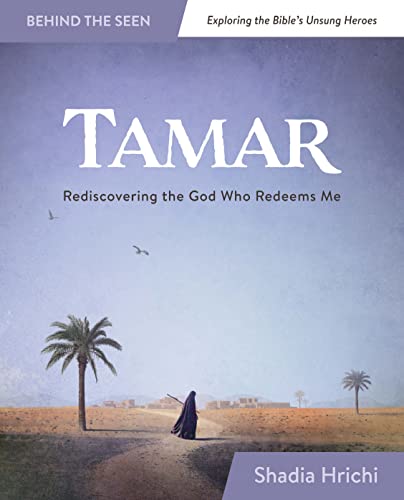


Her disguise wasn’t about deception for its own sake—it was survival strategy, a desperate woman claiming what rightfully belonged to her.
Judah’s Broken Promise
Before Tamar positioned herself at those crossroads, she’d already endured years of broken promises that left her trapped between two worlds. Judah had pledged his youngest son Shelah to her, yet as time passed, you can see Judah’s neglect becoming painfully clear. He never intended to fulfill his word.
You’d think any woman would simply accept her fate, but Tamar’s resilience ran deeper than societal expectations. She recognized that Judah had fundamentally abandoned her—neither releasing her to remarry nor honoring his commitment.
She remained a widow in her father’s house, watching Shelah grow into manhood while her future stayed frozen.
This wasn’t passive waiting. Tamar was calculating her next move, preparing to claim what rightfully belonged to her.
Claiming Rightful Justice
Disguising herself as a temple prostitute, Tamar stationed herself at the crossroads of Enaim—a location she’d chosen with deliberate precision.
When Judah passed by, he didn’t recognize his daughter-in-law. She secured his seal, cord, and staff as pledge for payment—items that would later prove everything.
Consider what drove her actions:
- Justice denied left her without options within normal social channels
- Cultural implications meant she’d remain destitute without a husband or son
- Her bold strategy exposed Judah’s hypocrisy while claiming her legal rights
You might find her methods shocking, but Tamar wasn’t seeking revenge. She was securing what Judah had promised and withheld.
When he later declared her “more righteous than I,” he acknowledged the truth she’d forced into the open.
Judah’s Confession and Recognition of Tamar’s Righteousness

When Judah’s messengers returned empty-handed from their search for the mysterious woman at Enaim, he faced an uncomfortable choice—keep quiet and let the matter drop, or risk public embarrassment by continuing the search.
Three months later, news reached Judah that Tamar was pregnant. His reaction was swift and harsh—he demanded she be burned.
But when Tamar produced his staff, cord, and seal, everything changed.
“She is more righteous than I,” Judah declared. In that moment, Judah’s guilt became undeniable. He’d withheld Shelah, broken his promise, and left her without options.
Tamar’s righteousness stood in stark contrast—she’d pursued justice through unconventional means, but she’d pursued what was legally hers.
You’ll notice Judah never touched her again. His confession wasn’t mere words; it transformed his behavior.
Tamar’s Place in the Genealogy of Jesus Christ

Judah’s confession marked a turning point, but Tamar’s story doesn’t end with vindication—it stretches forward through centuries into the lineage of the Messiah.
When you open Matthew’s Gospel, you’ll find Tamar listed among only five women in Jesus’s genealogy. This genealogy impact reveals something profound about God’s redemptive plan—He works through broken stories and unlikely heroes.
Consider Tamar’s significance in this sacred lineage:
- She’s the first woman mentioned, establishing that God values women’s faith and courage.
- Her inclusion alongside Rahab, Ruth, Bathsheba, and Mary shows God chooses the overlooked.
- Her story demonstrates that righteousness matters more than reputation.
You’re seeing evidence that God doesn’t discard complicated histories. Instead, He weaves them into His greatest story of redemption.
Spiritual Lessons and Applications From Tamar’s Life

Though Tamar’s story contains elements that make us uncomfortable—deception, seduction, family dysfunction—it offers timeless wisdom for anyone traversing broken promises and unjust circumstances.
You’ll find powerful redemption themes woven throughout her narrative. God doesn’t require perfect people or pristine situations to accomplish His purposes.
Tamar’s cultural resilience—her refusal to accept passive victimhood—demonstrates that advocating for yourself isn’t incompatible with faith.
Consider what her story teaches you: patience doesn’t mean passivity. When Judah failed his obligations, Tamar acted strategically within her cultural framework. She understood her rights and pursued them.
Perhaps most notably, you’re reminded that God sees the marginalized. He included this Canaanite woman in Christ’s lineage, signaling that grace extends beyond boundaries we construct.
Your messy circumstances can’t disqualify you from divine purposes.
Frequently Asked Questions
How Old Was Tamar When She First Married Er, Judah’s Eldest Son?
The Bible doesn’t reveal Tamar’s age when she married Er. However, based on ancient marriage customs, you’d likely find she was probably in her early teens, as was common practice during that era.
What Happened to Tamar After She Gave Birth to Perez and Zerah?
Can you imagine Tamar’s relief after such struggle? Scripture doesn’t detail her later life, but you’ll find Tamar’s legacy lives through Perez’s lineage—she’s David’s ancestor! Her maternal influence shaped Israel’s royal line forever.
Did Tamar Ever Remarry After Her Encounter With Judah?
You won’t find Scripture mentioning Tamar’s remarriage after her encounter with Judah. The Bible’s silence on Tamar’s remarriage suggests she remained within Judah’s family dynamics, her story complete once she secured her rightful place in his lineage.
Where Was Tamar Originally From Before Marrying Into Judah’s Family?
The Bible doesn’t reveal Tamar’s origins or hometown before she married Er. You’ll notice Scripture focuses primarily on her role within Judah’s lineage rather than her background, leaving her early life beautifully mysterious.
How Did Tamar’s Sons Perez and Zerah Interact as They Grew Up?
You won’t find specific details about Perez and Zerah’s sibling dynamics or childhood rivalry in Scripture. The Bible doesn’t record their interactions growing up—it simply traces their lineages, with Perez’s line eventually leading to David and Jesus.
Final Thoughts
You’ve walked through Tamar’s remarkable journey—from abandonment to vindication. Her story reminds you that God sees every injustice you’ve faced and weaves even your darkest threads into His beautiful tapestry. When life deals you broken promises, don’t lose heart. Like Tamar, you’re not defined by what others withhold from you but by the courage you show in pursuing what’s rightfully yours. Her legacy lives on through Jesus Himself.
Share On Pinterest


Test Your Knowledge!
Answer all 10 questions, then submit to see your score.
Related Posts

How to Choose the Right Bible Study on Love (What to Look For)
Last updated: May 2026 Not all Bible studies on love are created equal. Learn what to look for — theological depth, serious Scripture, and application that actually changes how you love.
 May 21, 2026
Best Bible Studies About Faith: A Comprehensive Buyer's Guide
Last updated: May 2026 Discover the 5 best Bible studies about faith for individuals and groups. Compare prices, formats, and features to find the perfect study for your spiritual growth.
May 12, 2026
The Hebrews 11 'Hall of Faith' — A Deep Dive
Last updated: May 2026 Explore Hebrews 11's hall of faith and discover how biblical heroes like Abel, Noah, and Abraham trusted God against impossible odds. Read our deep dive analysis.
May 15, 2026
Why a Bible Study on Love Is the Perfect Study for Couples, Singles, and Small Groups
Last updated: May 2026 A Bible study on love is perfect for couples, singles, and small groups. Discover why Scripture's vision of love meets every person exactly where they are.
May 20, 2026


 By
By


