
When we think about the Bible’s powerful stories, Hagar often stands out as a compelling figure. Her journey from an Egyptian servant to a pivotal character in God’s plan reveals profound lessons of faith, resilience, and divine intervention.
Hagar’s story intertwines with Abraham and Sarah’s narrative, highlighting themes of struggle and redemption. Through her experiences, we see how God’s grace extends beyond cultural and social boundaries. Join me as we explore Hagar’s remarkable life and the timeless truths it offers us today.
Who Is Hagar?
Hagar is a key figure in the Bible’s Book of Genesis. She was an Egyptian slave girl serving Sarah, Abraham’s wife.
Sarah couldn’t have children. She suggested that Abraham sleep with Hagar to produce an heir. This practice was common in ancient cultures.
Pregnancy and Conflict
Hagar became pregnant with Abraham’s child. Afterward, she looked down on Sarah. This caused tension between them.
Sarah treated Hagar harshly, so Hagar fled into the wilderness. There, she encountered an angel of the Lord.
The angel instructed her to return to Sarah and promised that her son would father a great nation. The Bible states:
“Then the Angel of the Lord said to her, ‘Return to your mistress, and submit yourself under her hand.'” (Genesis 16:9 NKJV)
Encounter With God
Hagar named God “El Roi,” meaning “the God who sees me.” She felt seen by God during her distress.
Her story emphasizes God’s grace and intervention even though social boundaries:
- Egyptian Slave: Origin as a servant.
- Mother of Ishmael: Birth of Abraham’s first son.
- Divine Encounter: Meeting with God’s angel.
These events show faith and resilience in tough circumstances.
Hagar’s Story in the Bible
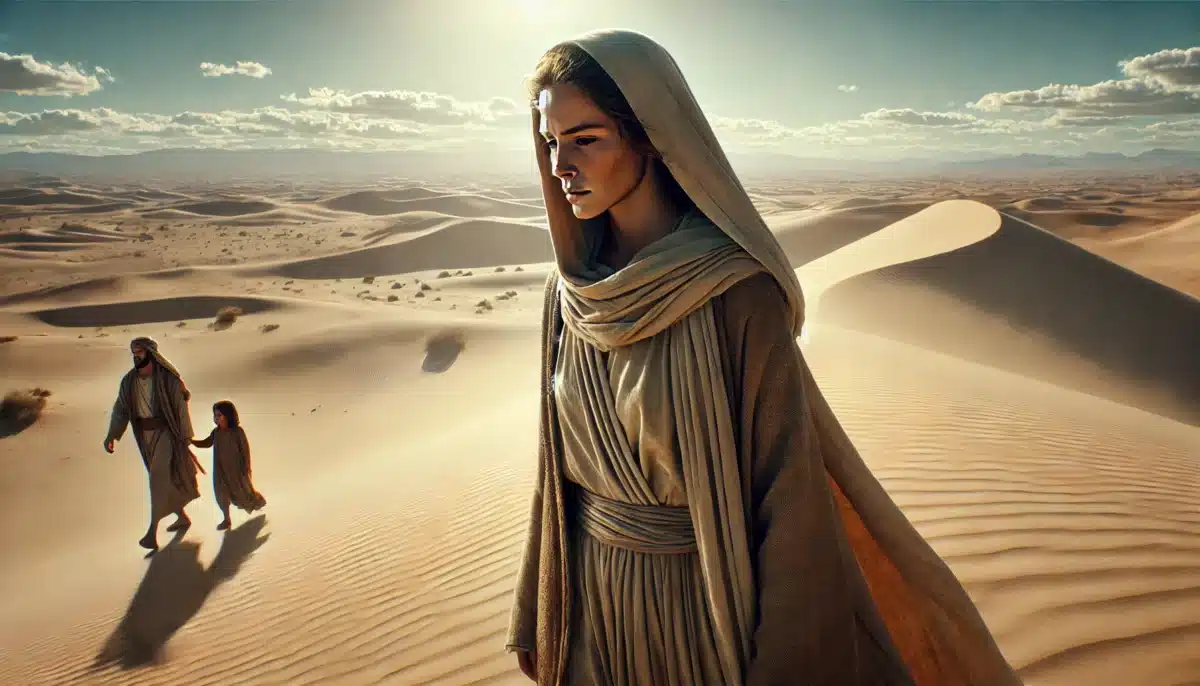
Hagar, Abraham, and Sarah
Hagar was an Egyptian slave. She served Sarah, Abraham’s wife. When Sarah couldn’t have children, she gave Hagar to Abraham. This was a common practice then.
Hagar conceived a child with Abraham. This led to tension between her and Sarah. Genesis 16:4 (NKJV) says, “And when she saw that she had conceived, her mistress became despised in her eyes.”
Sarah mistreated Hagar severely. The Hebrew text suggests physical violence or force. Feeling oppressed, Hagar fled into the wilderness.
Hagar’s Prayer
In the desert, an angel of the Lord met Hagar. This encounter is seen as a theophany—God appearing himself.
The angel instructed her to return to Abraham and Sarah. He promised that her descendants would be numerous (Genesis 16:10 NKJV).
Humbled yet hopeful, Hagar obeyed God’s command.
Hagar and Ishmael in the Desert
Years later, tensions rose again after Isaac’s birth. Sarah saw Ishmael mocking Isaac (Genesis 21:9 NKJV).
She demanded that Abraham send them away (Genesis 21:10 NKJV). Reluctantly, Abraham complied after God assured him it was part of His plan (Genesis 21:12-13 NKJV).
Hagar wandered in Beersheba with Ishmael until they ran out of water. In desperation, she cried out for help (Genesis 21:16 NKJV). God responded by providing a well and promising that Ishmael would become a great nation (Genesis 21:18-19 NKJV).
Key Themes in Hagar’s Journey

Hagar’s journey is rich with themes of faith, resilience, and divine intervention. Her story illustrates key aspects of God’s nature.
God Hears and Sees
Hagar’s unique interactions with God stand out in her narrative. When she fled Sarah’s harsh treatment, an angel found her in the wilderness. The angel said, “You shall name him Ishmael, for the LORD has heard your affliction” (Genesis 16:11 NKJV). This encounter was profound.
In response, Hagar called God “El Roi,” meaning “the God who sees me” (Genesis 16:13 NKJV). She is the only biblical character to give God a name based on personal experience. This highlights how deeply she felt seen by Him during her distress.
God Provides and Protects
God consistently provided for Hagar even in dire conditions. When she first fled into the wilderness, an angel instructed her to return to Sarah. The angel assured her that her descendants would be numerous (Genesis 16:9-10 NKJV).
Years later, after Isaac’s birth increased tensions, Hagar and Ishmael were sent away again. In Beersheba’s wilderness, they faced desperation. But God heard their cries once more. He provided water and reaffirmed that Ishmael would become a great nation (Genesis 21:17-18 NKJV).
Lessons Learned from Hagar
Hagar’s story teaches several important lessons:
- Faith – Trusting God’s plan even though hardships.
- Resilience – Overcoming adversity through reliance on divine support.
- Divine Intervention – Recognizing God’s presence even when feeling abandoned.
Her journey shows that no one is beyond God’s reach or care. It emphasizes His ability to transform struggles into blessings through faith and perseverance.
By reflecting on these themes from Hagar’s life, we can deepen our understanding of God’s character and grow stronger in our own faith journeys.
Contemporary Reflections on Hagar
Hagar’s story in the Bible offers deep insights and lessons for today. Her experiences highlight themes of faith, survival, and God’s care.
Faith and Trust
Hagar embodies faith and trust in God. Even though harsh treatment from Sarah, she trusts God’s promises. She names Him “the God who sees me” (Genesis 16:13 NKJV). This shows her acknowledgment of God’s presence during her distress.
Representation of Marginalized Groups
Hagar symbolizes the foreigner, slave, and sexually abused woman. Her story resonates with many marginalized groups today. It emphasizes exile, survival, and divine care for those on society’s edges.
Complexity of God’s Work
Hagar’s narrative reveals the complexity of God’s work. It challenges simplistic views of His call and faithfulness. Through her flawed journey, we see that God works even through broken individuals.
Hagar in Rabbinic Literature
Rabbinic literature portrays Hagar as a significant figure. Some texts view her positively while others emphasize her conflicts with Sarah.
- Positive Portrayals: Certain rabbinic texts highlight Hagar’s virtues.
- Conflict Emphasis: Other writings focus on her role in the tensions within Abraham’s household.
- God’s Intervention: The emphasis often lies on how God intervenes to protect Hagar and Ishmael.
These varied perspectives show how Jewish tradition grapples with complex biblical characters like Hagar.
Hagar in Arts and Literature
Artists and writers have long depicted Hagar’s plight. Her story appears across various mediums:
- Paintings: Artists like Rembrandt captured moments from her life.
- Literature: Poets have written about her struggles.
- Modern Media: Films sometimes reference or retell aspects of her story.
These depictions keep Hagar’s narrative alive across generations.
Modern Interpretations and Influence
Today, people interpret Hagar’s experience through various lenses:
- Feminist Theology: Scholars analyze her story as one of female resilience.
- Social Justice Movements: Activists draw parallels between Hagar’s marginalization and contemporary issues.
- Spiritual Reflections: Believers find inspiration in her unwavering faith amid trials.
Through these interpretations, Hagar continues to influence modern thought on faith, justice, and perseverance.
Conclusion
Hagar’s story is a powerful testament to faith resilience and the transformative power of divine intervention. Her journey from an Egyptian servant to a pivotal figure in God’s plan underscores that no one is beyond God’s care. Hagar’s experiences teach us about trusting God’s plan amidst hardships and recognizing His presence even in dire circumstances.
Reflecting on Hagar’s life invites us to deepen our understanding of God’s character and strengthens our faith journeys. Her narrative continues to inspire, highlighting themes of survival justice and perseverance relevant in today’s world.
How Does Rahab’s Story of Faith and Redemption Compare to Hagar’s Journey?
Rahab’s redemption story highlights transformation through faith, much like Hagar’s journey of resilience. Rahab embraced a new identity by trusting God’s promise, while Hagar found hope through divine intervention in her despair. Both women experienced redemption, proving that faith can change destinies despite difficult circumstances. Their stories inspire unwavering trust.
Share On Pinterest!


Related Posts

10 Bible Characters Who Demonstrated Extraordinary Faith
Last updated: May 2026 Discover 10 Bible characters who demonstrated extraordinary faith — from Abraham leaving without a map to Mary saying yes without a guarantee. Their stories will strengthen yours.
 May 18, 2026
Faith vs. Works: What Does the Bible Teach?
Last updated: May 2026 Faith vs. works — does the Bible contradict itself? Discover what Paul, James, and the whole of Scripture actually teach about how faith and works relate in the Christian life.
May 18, 2026
The Hebrews 11 'Hall of Faith' — A Deep Dive
Last updated: May 2026 Explore Hebrews 11's hall of faith and discover how biblical heroes like Abel, Noah, and Abraham trusted God against impossible odds. Read our deep dive analysis.
May 15, 2026
How A Faith Bible Study Changed My Walk with God
Last updated: May 2026 Discover how a faith Bible study can transform your walk with God — deepening prayer, replacing thin faith with solid trust, and bringing Scripture to life.
May 13, 2026


 By
By


