

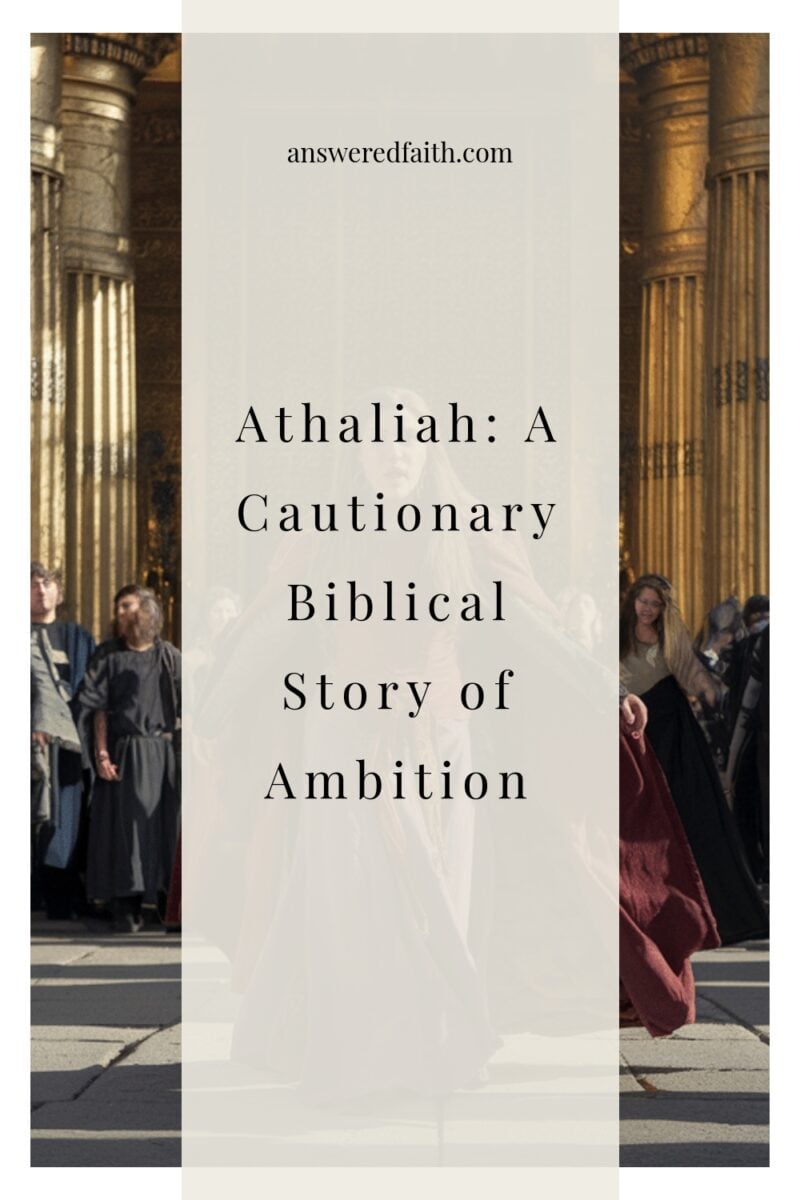
When we think of biblical figures, some inspire faith and courage, while others serve as stark warnings. Athaliah is one of those characters whose story shakes us to the core—a queen who stopped at nothing to seize power, even if it meant unspeakable acts. Her life is a sobering reminder of what happens when ambition overshadows devotion to God.
Athaliah’s rise and fall reveal the dangers of idolatry and rebellion against God’s plan. Though her reign was marked by darkness, it also sets the stage for God’s redemptive power to shine through. Her story challenges us to examine our own hearts and trust in God’s sovereignty no matter the chaos around us.
Who Was Athaliah?
Athaliah was the daughter of King Ahab and Queen Jezebel of Israel. Her marriage to Jehoram, king of Judah, united two royal families steeped in idolatry.
She became queen mother after Jehoram’s death and acted as regent when her son Ahaziah ruled briefly. Following his assassination, she seized the throne by massacring her own grandsons (2 Kings 11:1, NKJV).
Athaliah’s rule lasted six years. She promoted Baal worship in Judah, continuing her parents’ legacy of leading people away from God. Her reign brought spiritual corruption and instability.
Her downfall came through a divine plan orchestrated by Jehoiada the priest. He secretly protected Joash, one of Athaliah’s grandsons who survived her massacre (2 Kings 11:2-3). When Joash turned seven, Jehoiada revealed him as the rightful king.
The people supported Joash’s coronation with great joy. They executed Athaliah at the palace gates for her crimes against God and His chosen line (2 Kings 11:15-16). Her death marked an end to Baal worship in Judah under her influence.
Key Facts About Athaliah
| Aspect | Details |
|---|---|
| Parentage | Daughter of Ahab and Jezebel |
| Spouse | Married to Jehoram, king of Judah |
| Reign | Ruled for six years over Judah |
| Actions | Promoted Baal worship; killed descendants |
| Downfall | Overthrown by priest Jehoiada’s strategy |
Athaliah’s story reveals consequences tied to rebellion against God. Her actions contrast sharply with those who trust God’s sovereignty over human power struggles.
Athaliah’s Role In The Bible

Athaliah holds a unique yet infamous position in biblical history. Her story reflects the dangers of idolatry, unchecked ambition, and departure from God’s way.
Her Lineage And Background
Athaliah was the daughter of King Ahab and Queen Jezebel of Israel. This lineage rooted her deeply in idolatry and Baal worship (1 Kings 16:31-33).
She married Jehoram, son of King Jehoshaphat of Judah, uniting two royal families. This alliance brought Baal worship into Judah (2 Chronicles 21:6). Athaliah’s influence stemmed from her upbringing under Jezebel, who aggressively promoted false gods.
Jehoram’s reign marked moral decline in Judah due to this union. Their marriage symbolized political gain at the cost of spiritual compromise. Athaliah’s background set the stage for her ruthless pursuit of power later in life.
Her Reign As Queen
Athaliah seized control after her son Ahaziah died (2 Kings 11:1). She executed all potential heirs, including her grandsons, to secure the throne for herself.
Her six-year rule was marked by tyranny and idol worship. She established altars to Baal across Judah (2 Chronicles 24:7), leading many away from God’s covenant.
Even though opposition from faithful priests like Jehoiada, she maintained power through fear. Her reign exemplified rebellion against divine authority while showing the consequences of forsaking God.
Her Notable Actions And Impact
Athaliah ordered mass killings within her family to eliminate rivals (2 Kings 11:1-3). Yet Joash survived under Jehoiada’s protection in the temple for six years.
She dismantled sacred structures dedicated to God and redirected resources toward pagan practices (2 Chronicles 24:7). These actions corrupted Judah’s spiritual foundation during her rule.
Her downfall came when Jehoiada revealed Joash as king during a public coronation ceremony (2 Kings 11:12-14). The people rallied behind him; Athaliah was captured and executed at the Horse Gate by order of priestly leaders (2 Kings 11:16).
Athaliah’s legacy serves as a warning about rejecting God’s sovereignty for personal gain or idolatrous pursuits.
Athaliah’s Downfall

Athaliah’s reign ended in a dramatic and decisive act of divine justice. Her relentless pursuit of power culminated in a series of events that exposed her rebellion against God.
Events Leading To Her Demise
Athaliah ruled Judah with cruelty for six years, promoting Baal worship and suppressing the true worship of God. Unbeknownst to her, Joash, the rightful heir to the throne, was hidden by Jehosheba, his aunt, within the temple. She secured him under the care of Jehoiada, the high priest.
In 2 Kings 11:4 (NKJV), it states, “In the seventh year Jehoiada sent and brought the captains of hundreds.” He gathered trusted leaders to plan Athaliah’s overthrow. His strategy involved secrecy and faithfulness to God’s covenant with David’s line.
During Joash’s coronation at the temple, loud rejoicing erupted among the people as they declared him king. This public declaration stunned Athaliah when she heard their cries of “Long live the king!” (2 Kings 11:12-13 NKJV). Realizing her end was near, she cried out treason but was powerless against God’s will.
Jehoiada’s Role In Her Overthrow
Jehoiada played a pivotal role in ending Athaliah’s reign. He orchestrated an alliance between military commanders and Levites to protect Joash during his coronation. Using wisdom and boldness rooted in his faith in God’s promise to David’s lineage, he set events into motion.
He presented Joash before Judah while holding “the Testimony,” symbolizing adherence to God’s law (2 Kings 11:12 NKJV). This act affirmed Joash’s legitimacy as king under divine authority.
Jehoiada commanded Athaliah be removed from sacred grounds before her execution at “the Horse Gate” (2 Chronicles 23:15 NKJV). With her death came restoration—Baal worship ceased as altars were destroyed by a renewed commitment to God led by Jehoiada himself.
Lessons From The Life Of Athaliah
Athaliah’s life offers warnings about unchecked ambition and the responsibilities of leadership. Her story highlights the consequences of rebellion against God and the impact of moral corruption.
The Dangers Of Ruthlessness And Ambition
Athaliah’s ruthless actions, including the murder of her grandsons, reveal how unrestrained ambition can destroy others. She prioritized power over family, leading to devastating consequences for Judah.
Her alliance with Baal worship fueled spiritual decay in Judah. By rejecting God’s authority, she replaced true worship with idolatry, causing widespread moral decline.
The Bible warns against such behavior: “For where envy and self-seeking exist, confusion and every evil thing are there” (James 3:16, NKJV). Athaliah exemplified these traits through her destructive reign.
Unchecked ambition often blinds individuals to divine truth. Her fall serves as a reminder that God’s justice prevails against tyranny and rebellion.
Leadership And Moral Responsibility
Leaders hold great responsibility over those they govern. Athaliah’s leadership led people away from God instead of toward Him, showing the dangers of corrupt influence.
She dismantled sacred structures dedicated to God and erected altars for Baal. This act betrayed her role as a leader meant to uphold righteousness in Judah.
Proverbs states, “When the righteous are in authority, the people rejoice; but when a wicked man rules, the people groan” (Proverbs 29:2, NKJV). Her reign brought oppression rather than joy to Judah.
Godly leaders promote justice and humility under His guidance. In contrast to Athaliah’s rule, Jehoiada demonstrated faithfulness by restoring rightful authority under Joash while renewing covenant commitments with God.
Conclusion
Athaliah’s life stands as a powerful reminder of the consequences of turning away from God and pursuing self-serving ambition. Her story reveals how destructive leadership rooted in idolatry can lead to both personal ruin and widespread moral decay.
In contrast, the faithfulness of individuals like Jehoiada highlights the impact of godly leadership in restoring hope and guiding people back to righteousness. Athaliah’s legacy challenges us to examine our own hearts, remain steadfast in our faith, and trust in God’s ultimate authority over all circumstances.
What Lessons Can We Learn About Ambition and God’s Sovereignty from Mahlon’s Role in Ruth’s Story?
Mahlon’s significance revealed in Ruth’s story illustrates the delicate balance between ambition and divine purpose. While his choices paved the way for Ruth’s pivotal journey, they also underscore how God’s sovereignty guides events. This narrative teaches us to pursue our goals while trusting in a higher plan.
Share On Pinterest!



Pastor Duke has been preaching and teaching the Bible since 1988. He has shared his knowledge online since 2011.

 By
By