
By Duke Taber
When most evangelicals think about divine healing, the conversation tends to skip from the book of Acts straight to twentieth-century revivalists, with the centuries in between treated as a long, dry stretch where the miraculous was filed away in a drawer marked “no longer needed.” That narrative has been told so often that we rarely stop to ask whether it actually matches what the church itself said about its own experience.
It does not.
The earliest Christian writings outside the New Testament tell a remarkably consistent story: the men and women who inherited the apostles’ faith also inherited the apostles’ expectation that God still healed the sick. They prayed for the suffering, they cast out demons, they anointed the sick with oil, and they reported—often calmly, sometimes triumphantly—that God responded. If you have ever wondered whether your conviction that God still heals today is some recent invention, I want to walk you through what the ancient church actually believed and practiced, why that record matters, and what it has to say to us now.

The Inheritance the Apostles Left Behind
The apostolic generation did not treat healing as an apostolic perk. They treated it as a normal expression of the kingdom Jesus had inaugurated. James, writing to scattered believers, gave the church a standing instruction:
“Is anyone among you sick? Let him call for the elders of the church, and let them pray over him, anointing him with oil in the name of the Lord. And the prayer of faith will save the sick, and the Lord will raise him up. And if he has committed sins, he will be forgiven.” — James 5:14–15 (NKJV)
That instruction was not aimed at apostles. It was aimed at elders—the ordinary leaders of ordinary congregations. Paul listed the gifts of healings among the gifts the Spirit distributes to the body for the common good, alongside teaching and helps and administration. The expectation was woven into the fabric of congregational life.
So when we look at what came next, we are not looking for evidence of something invented. We are looking to see whether the church kept doing what it had been told to do.
Justin Martyr: A Philosopher Who Had Seen It
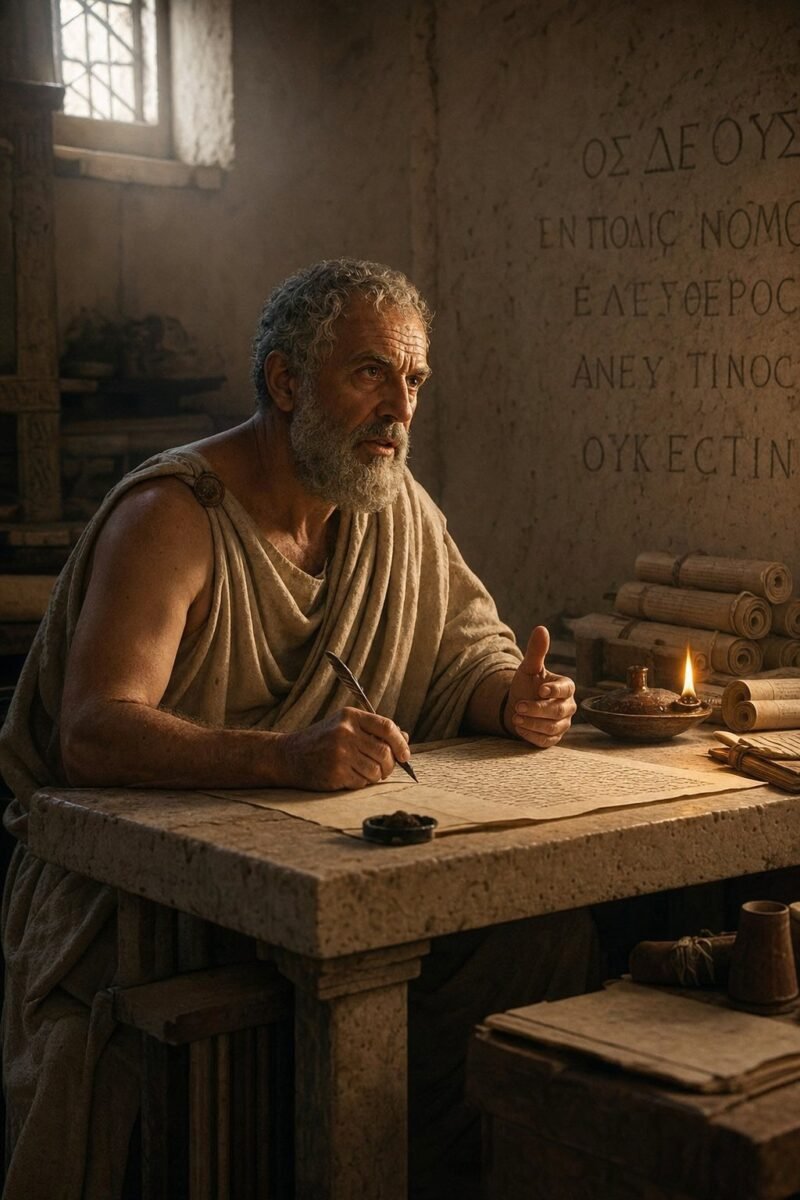
Around A.D. 150, a converted Greek philosopher named Justin Martyr wrote a defense of Christianity addressed to the Roman emperor. He was not writing devotionally; he was writing apologetically, arguing publicly that Christians were not the threat their critics claimed. In that context, he made a remark that would be very strange to make if it were not true.
According to Justin, demons had ravaged people throughout the empire, but “many of our Christian men exorcising them in the name of Jesus Christ … have healed and do heal, rendering helpless and driving the possessing devils out of the men, though they could not be cured by all the other exorcists.” You can read the passage in full in Justin’s Second Apology, preserved by the early church and still freely available today.
Notice what Justin is doing. He is not telling Christians a story. He is telling pagans a story—telling them, essentially, “you can verify this.” That kind of claim does not survive long when it is fabricated. It survives because everyone in earshot already knew it was happening.
Irenaeus: Healing as the Mark of the True Church
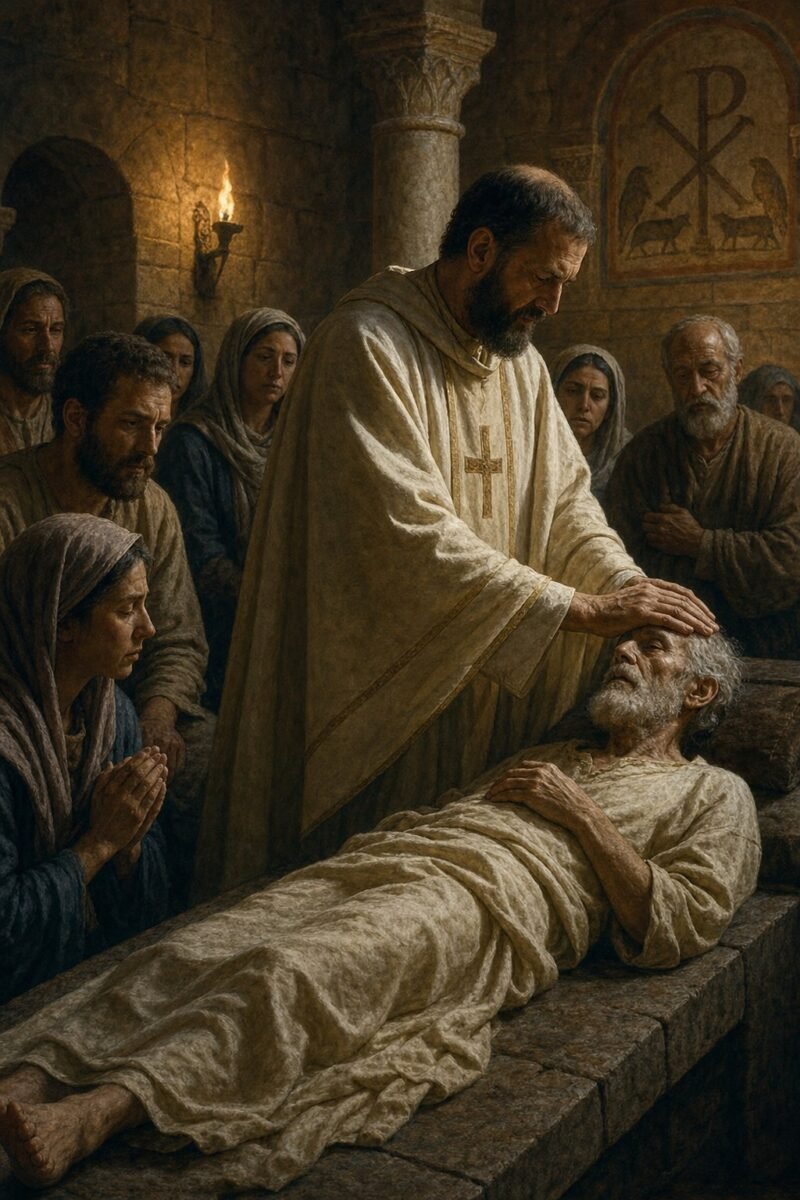
A generation after Justin, the bishop Irenaeus wrote Against Heresies to defend orthodox Christianity from the swirl of Gnostic teachers who claimed secret knowledge and superior power. One of his arguments cuts straight to our question. The true church, Irenaeus said, is the church where the works of Jesus continue—including healing.
“Wherefore, also, those who are in truth His disciples, receiving grace from Him, do in His name perform [miracles],” Irenaeus wrote, “so as to promote the welfare of other men.” He goes on to describe believers laying hands on the sick and seeing them made whole, casting out demons, and—remarkably—even raising the dead, an event he says had “frequently been done” in the brotherhood. The relevant passages from Book Two of Irenaeus’s work are preserved at the Christian Classics Ethereal Library.
What is striking is that Irenaeus uses the presence of healing as a doctrinal argument. The Gnostics, he points out, do not heal. The true disciples of Jesus do. If healing had quietly disappeared, his argument would have collapsed on contact. Instead, he assumes his readers will recognize the reality he describes.
For more on the biblical foundation Irenaeus took for granted, my overview of laying hands on the sick traces the same thread back through Scripture.
Tertullian: A Lawyer’s Personal Testimony
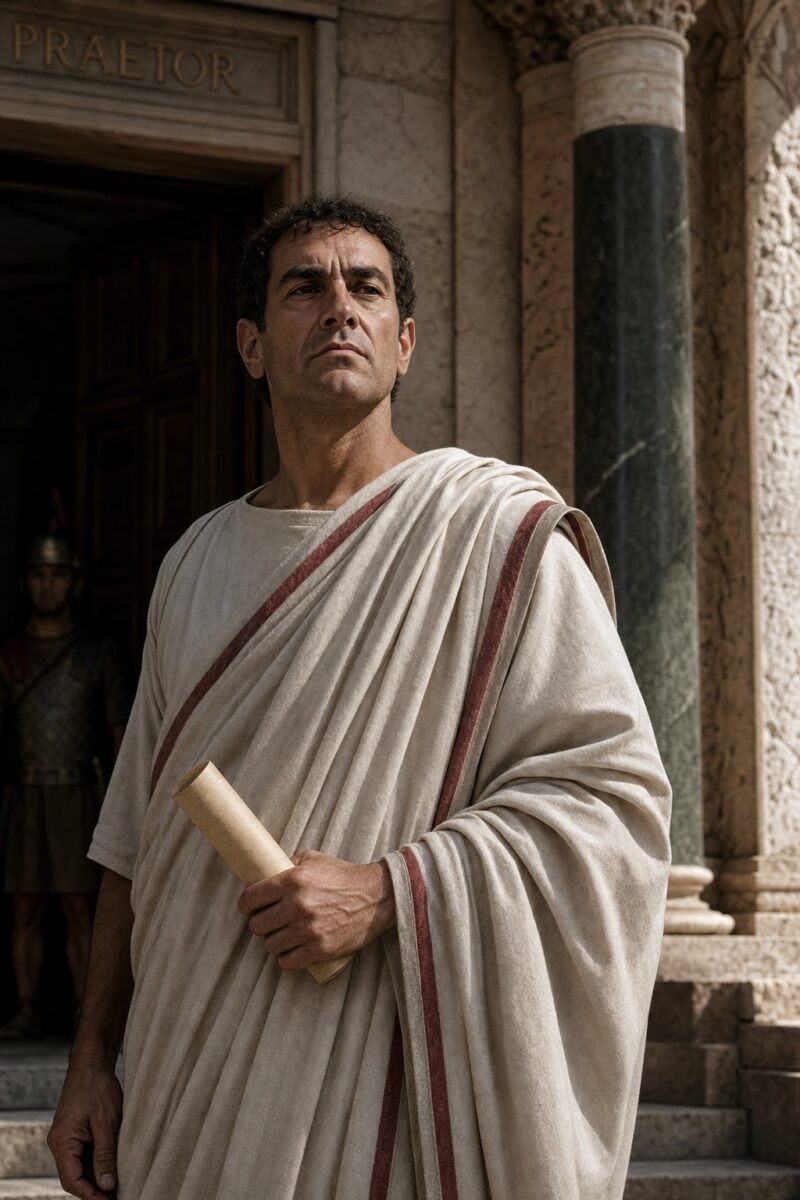
Around the year 212, the North African theologian Tertullian wrote a letter to Scapula, the proconsul of Carthage, who had been persecuting Christians. Tertullian’s letter is part legal brief, part warning, and part testimony. In it he names names. He tells Scapula that the emperor Severus himself had been healed of a particular ailment by a Christian named Proculus Torpacion through the use of oil, and that Severus kept Proculus in his palace until the day of the man’s death.
He goes further. Christians under his care, he says, had healed the relatives of senators and government officials, and those officials knew it. The text of Tertullian’s letter to Scapula survives and is still in print.
A lawyer-theologian writing to a hostile magistrate does not invent witnesses the magistrate could check. He cites them precisely because they were checkable.
Origen, Cyprian, and the Wider Pattern
By the middle of the third century, the witness has become almost casual. Origen, replying to the pagan philosopher Celsus, points out that Christians “expel evil spirits, and perform many cures, and foresee certain events … by the use of no curious arts of magic, but merely by prayer and some simple adjurations” (Against Celsus, Book VII). Cyprian of Carthage, writing to his own congregation during a season of plague and persecution, treats the church’s healing ministry as ongoing reality rather than apostolic memory.
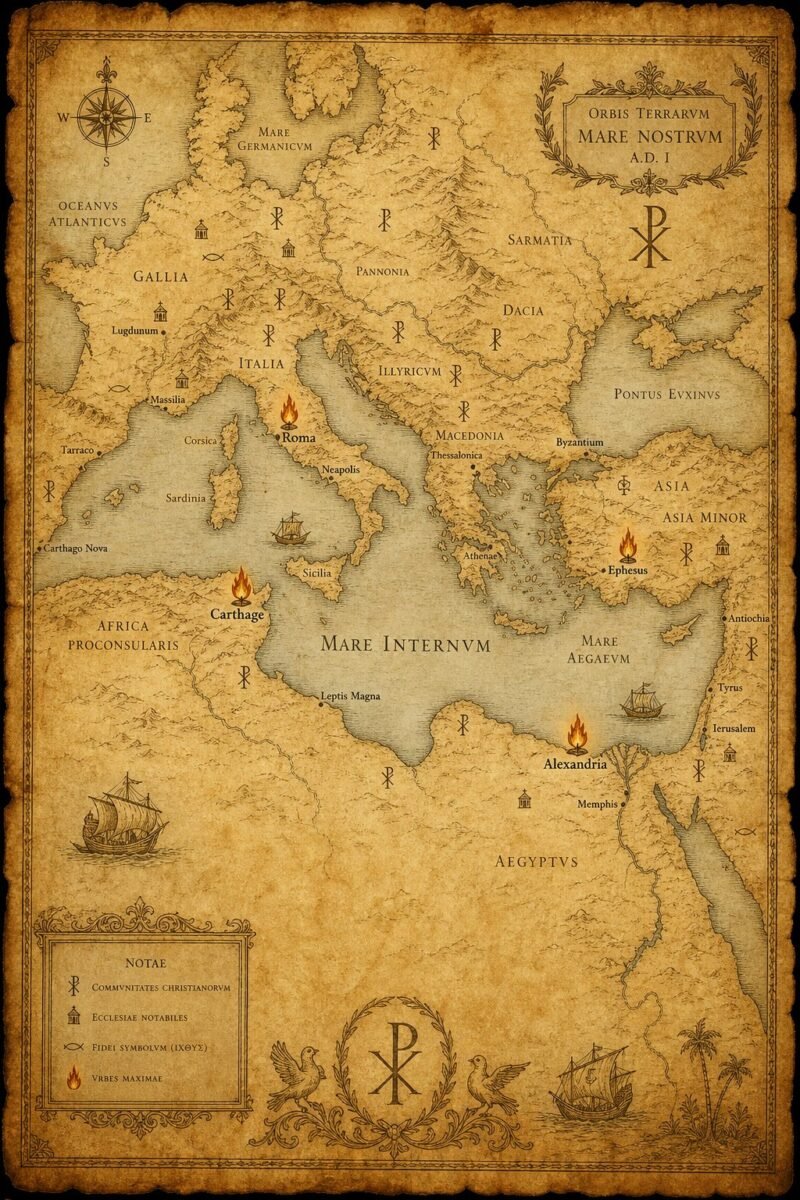
Pull these witnesses together and a clear picture emerges. From the second century into the third, across a wide geographic range—Rome, Asia Minor, Carthage, Alexandria—Christians believed God still healed, prayed for the sick as a normal practice of pastoral care, and pointed unbelievers to those healings as evidence of the gospel’s truth. This is the pattern that AnsweredFaith’s longer treatment of the history of divine healing in the early Christian church traces in more detail.
Even Augustine, who in his earlier writings was cautious about contemporary miracles, walked back his skepticism late in life. In City of God Book 22, he carefully cataloged miracles he personally verified in his own diocese of Hippo, including healings of blindness, gout, and life-threatening illness. The full text is preserved at New Advent. When the church’s most rigorous mind in the late patristic era admitted he had been wrong to doubt, that is worth noticing.
The Honest Question: Why Did the Pattern Change?
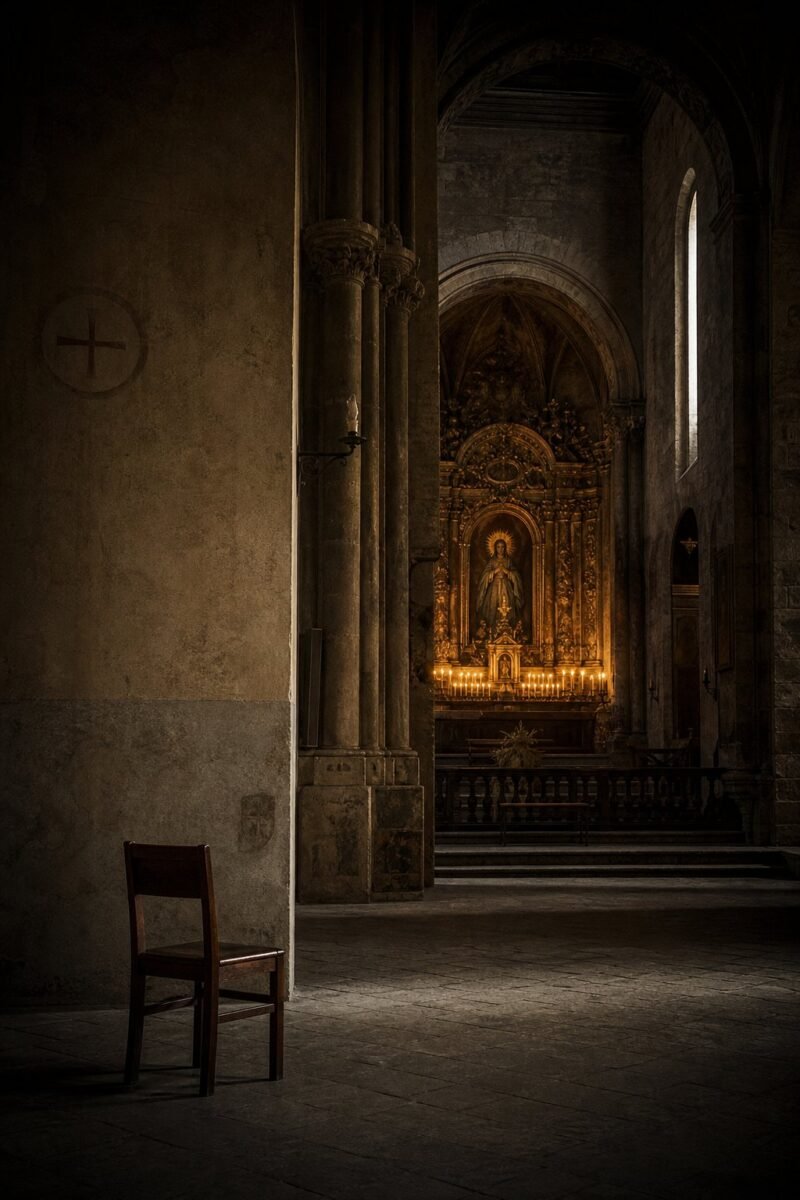
If the early church genuinely expected God to heal, why is it that by the late Middle Ages healing had moved from a normal congregational practice to a rare phenomenon associated with shrines and saints? This is the honest question, and it deserves an honest answer.
Several things happened at once. As the historian Gary Ferngren has documented in Medicine and Health Care in Early Christianity, the church’s deep embrace of medical care—Christians built the first hospitals—gradually shifted some of the expectation that had once been carried by prayer alone onto the work of physicians, who were now usually fellow believers. That shift was a good thing, not a betrayal. The church understood that God could heal through medicine just as truly as through laying on of hands.
But other shifts were less healthy. A theological framework hardened that increasingly confined the miraculous to the apostolic age, then to canonized saints, then to officially sanctioned shrines. The practice of every-believer prayer for the sick did not disappear, but it became muted, ritualized, and bureaucratized. As Christian History Institute has noted in its work on healing across the centuries, the simple congregational pattern of James 5 never fully went silent—but it had to keep being rediscovered.
When the Reformation arrived, the Reformers rightly attacked the abuses surrounding relics and shrines—but in some quarters, the baby went out with the bathwater. The result was a Protestant tradition that often inherited a cessationist instinct without ever interrogating it against the actual record of the early church.
I have spent decades pastoring, and I will say this plainly: the more I have studied what the ancient believers actually wrote, the more convinced I have become that what we sometimes call “supernatural” was, for them, simply Christian. They were not living in a different dispensation. They were living in the same Spirit-empowered church we are called to be. The question of whether divine healing is still relevant today is not a modern theological puzzle. It is the same question the second-century church answered with their lives.
What the Early Church Actually Did
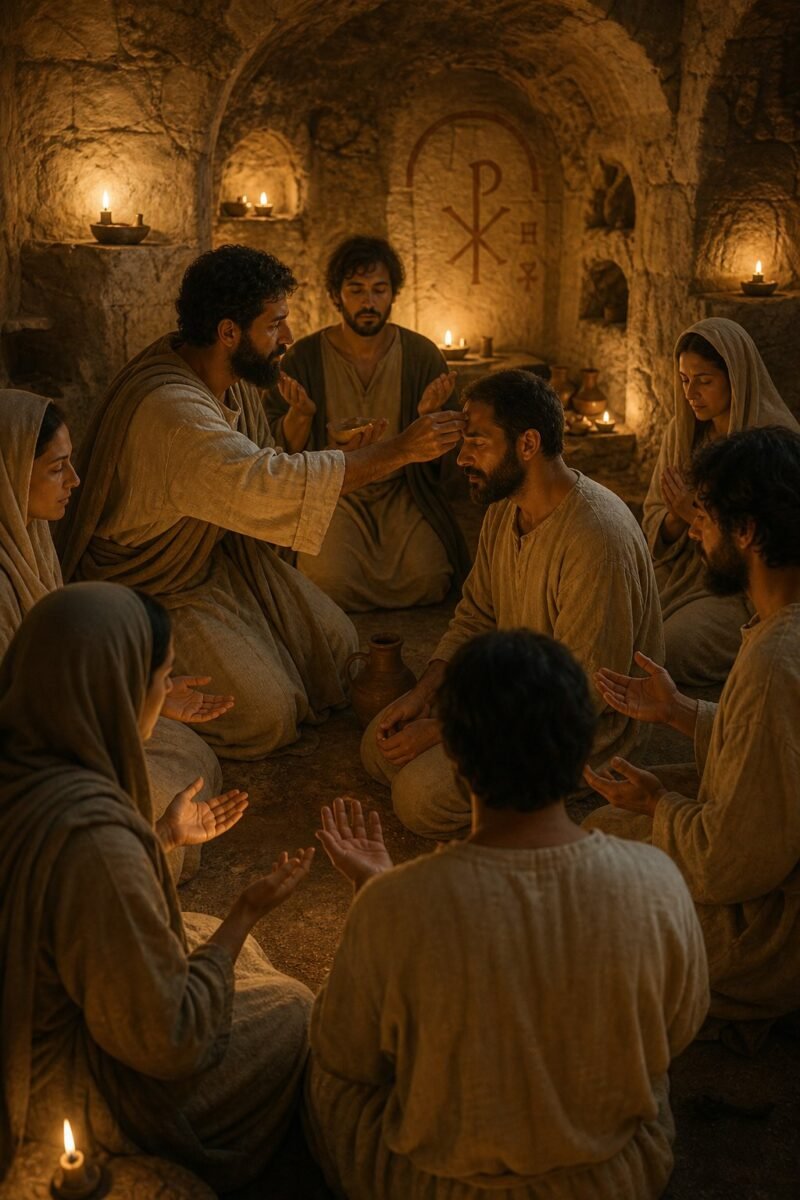
It is worth noticing that the early Christians did not develop elaborate techniques. Their practice was strikingly simple, and it tracks closely with the New Testament instruction.
They prayed in the name of Jesus. The name was central, not as a formula but as the location of authority. Whether reciting Scripture, anointing with oil, or laying hands on a sufferer, the appeal was always to the risen Christ.
They used oil. Following James 5, the practice of anointing with oil was widespread, plain, and pastoral. Tertullian, Hippolytus, and others reference it as routine.
They laid hands on the sick. This was not reserved for ordained office-holders only. Ordinary believers prayed for ordinary believers, and elders led the way when called.
They expected resistance from spiritual opposition. The early church understood that some sicknesses were entangled with demonic affliction, and they did not flinch from confronting it. The grounding of this expectation in Christ’s healing as part of the atonement is older than any of these fathers; it goes back to Isaiah 53 and Matthew 8.
They cared for the sick whether the sick were healed or not. This is crucial. The church’s hospitals, plague-ministries, and care for abandoned bodies were not a backup plan when prayer “didn’t work.” They were the same Christ-shaped mercy expressed in another mode. As Paul wrote:
“Now there are diversities of gifts, but the same Spirit. There are differences of ministries, but the same Lord. And there are diversities of activities, but it is the same God who works all in all.” — 1 Corinthians 12:4–6 (NKJV)
The early church did not treat healing as a stand-alone spectacle. They treated it as one expression—an important one—of a wider ministry of mercy that flowed from a present and active Lord. If you want to understand more deeply how the spiritual gift of healing functioned in their congregations, the same patterns appear again and again.
What the Inherited Faith Asks of Us
If you have ever felt embarrassed about your belief that God still heals, the witness of the early church is a steadying hand. You are not in a fringe. You are in the mainstream of two thousand years of Christian conviction. The cessationist instinct, when it shows up in evangelicalism, is the newcomer at the table.
That does not mean we are guaranteed to see what we want to see when we want to see it. The early church did not believe that, either. They prayed and waited and prayed again. Some were healed. Some were not. Some were healed in stages. Some carried thorns in the flesh that the Lord refused to remove. The point is not that they had a formula we have lost. The point is that they kept showing up, kept praying, kept anointing, kept believing that the same Jesus who said “the works that I do he will do also; and greater works than these he will do, because I go to My Father” (John 14:12, NKJV) was telling the truth.
I have watched this work in real life. I have laid hands on people I expected to die and watched them stand up. I have laid hands on people I expected to recover and walked away from their funerals. The pattern that ran through the early church runs through ours: God is the healer, and He has not signed His name to anyone’s expectations. He has signed His name to the cross, the empty tomb, and the promise that Jesus continues to heal today just as truly as He did the day He stepped out of Galilee toward Capernaum.
What the early church believed about divine healing is not a museum piece. It is an inheritance. Whether you are sick yourself, walking with someone you love through illness, or simply tired of being told that the miraculous closed up shop after the apostles, you can stand on the testimony of those who came first. They prayed. They were heard. They wrote it down. We can read what they wrote, and then we can do what they did.
If you are in that place today—needing to know whether God still heals, still hears, still acts—do not let secondhand cessationism rob you of firsthand obedience. Find your elders. Open the oil. Lay hands on the sick. Speak the name of Jesus. The God who answered Justin’s friends, Tertullian’s witnesses, and Irenaeus’s brothers has not changed His character. The same Lord is still good, still present, and still in the business of making His people whole.
If this article met you in a real place today, here is one simple step:
- Reach out to your pastor, your elders, or a trusted believing friend and ask them to pray for you in the name of Jesus, in keeping with James 5.
- Read James 5 in full and let the simplicity of that instruction steady you.
- Spend a few minutes with AnsweredFaith’s complete biblical guide to divine healing and let the testimony of Scripture settle deeper into you.
Then walk forward—not into a technique, but into the same simple confidence the early church carried for nearly three centuries before anyone thought to argue them out of it.
Resources
- Medicine and Health Care in Early Christianity by Gary B. Ferngren (Johns Hopkins University Press)
- Justin Martyr, Second Apology — full text via New Advent
- Irenaeus, Against Heresies Book II, Chapter 32 — Christian Classics Ethereal Library
- Tertullian, To Scapula — full text via New Advent
- Origen, Against Celsus Book VII — full text via New Advent
- Augustine, City of God Book XXII, Chapter 8 — full text via New Advent
- Christian History Institute — articles and back issues on the early church
May the Lord, who is the same yesterday, today, and forever, meet you in the place where you most need His healing hand. — Duke

Pastor Duke has been preaching and teaching the Bible since 1988. He has shared his knowledge online since 2011.

 By
By