
A woman walked into our Wednesday night service with a brace on her wrist and tears in her eyes. She had been dealing with chronic pain for months. Three people from our prayer team gathered around her, and instead of launching into a long, dramatic prayer, they simply asked, “What would you like Jesus to do for you tonight?” That question changed everything. Within twenty minutes, she was moving her wrist freely and weeping for a completely different reason. What guided that prayer team was not some mystical formula but a practical, repeatable framework rooted in Scripture. The Five-Step Prayer Model: A Biblical Approach to Healing Ministry gives everyday believers a clear pathway to pray for the sick with confidence, compassion, and biblical authority.
This model, developed and refined over roughly four decades within the Vineyard movement, has equipped thousands of ordinary Christians to step into healing ministry [2]. It is not reserved for pastors or evangelists with big platforms. It is for you, your small group, and your local church. And it works because it keeps the focus where it belongs: on God’s love and the leading of the Holy Spirit.

Key Takeaways 📋
- The Five-Step Prayer Model provides a simple, biblical structure anyone can follow when praying for healing: Interview, Discernment, Diagnosis, Prayer, and Next Steps.
- Listening to the Holy Spirit is central to every step, not just the prayer itself.
- God’s compassion drives healing ministry, not performance or spiritual showmanship.
- You do not need a special gift to pray for the sick. You need willingness, Scripture, and a heart that listens.
- Follow-up matters as much as the prayer because discipleship and spiritual growth continue long after the “amen.”
Why the Church Needs a Biblical Approach to Healing Ministry in 2026

Let me be honest. Many believers feel paralyzed when someone asks them to pray for healing. They worry about saying the wrong thing. They fear nothing will happen. Or worse, they have seen healing prayer done in ways that felt manipulative or disconnected from Scripture.
That hesitation is understandable. But it is also a problem.
Jesus commanded His followers to “heal the sick” (Matthew 10:8, NKJV). He did not add a disclaimer that said, “Only if you have a seminary degree.” The early church took this mandate seriously. James wrote, “Is anyone among you sick? Let him call for the elders of the church, and let them pray over him, anointing him with oil in the name of the Lord” (James 5:14, NKJV).
The Five-Step Prayer Model: A Biblical Approach to Healing Ministry answers the practical question that so many believers ask: How do I actually do this?
It removes the guesswork. It provides guardrails. And it keeps the ministry anchored in love rather than spectacle. As one training resource puts it, healing comes as a result of God’s love being released, not as the primary focus of the ministry itself [1].
If you are a small group leader, a lay minister, or simply someone who wants to be ready when a friend asks for prayer, this model is for you. For a deeper look at the biblical foundations of divine healing, we have a full study available.
Breaking Down the Five-Step Prayer Model: A Biblical Approach to Healing Ministry
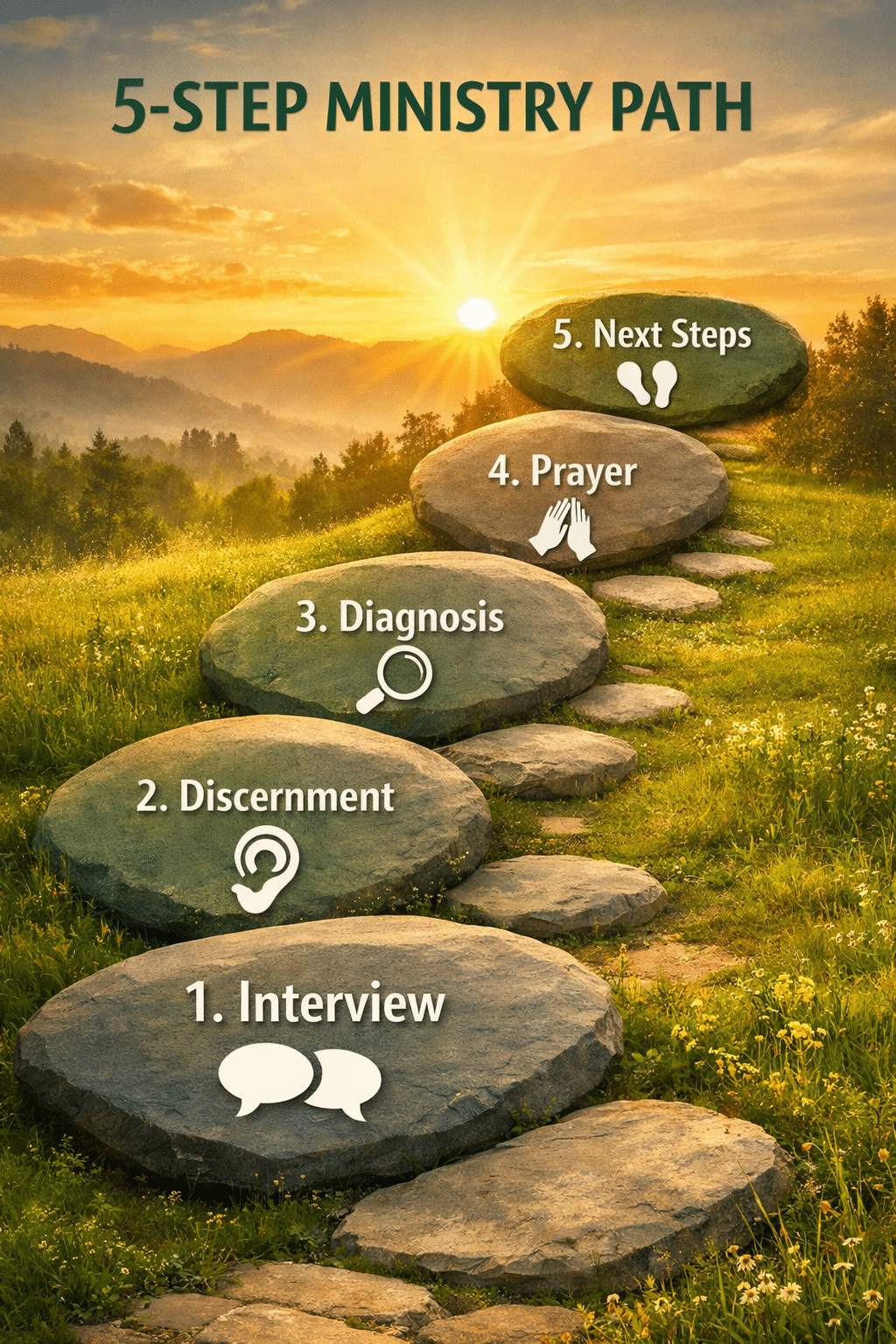
Let me walk you through each step. I want you to see how accessible this really is.
Step 1: The Interview (Discussion)
Before you pray a single word, you talk. You introduce yourself. You ask the person what they need prayer for. This is not a medical intake form. It is a conversation rooted in genuine care.
Why this matters biblically: Jesus Himself often asked people what they wanted. He asked blind Bartimaeus, “What do you want Me to do for you?” (Mark 10:51, NKJV). Jesus already knew the answer. But He invited the man to express his need, his faith, and his expectation.
Practical tips for the interview:
- Use a warm, unhurried tone.
- Ask open-ended questions: “How can I pray for you?” or “What is going on?”
- Listen carefully. Do not rush to fix or preach.
- Note specific details. If they say “my lower back,” do not pray vaguely for “health.”
This step builds trust. It communicates that you see the person, not just the problem. [2]
Step 2: Discernment (Listening Prayer)
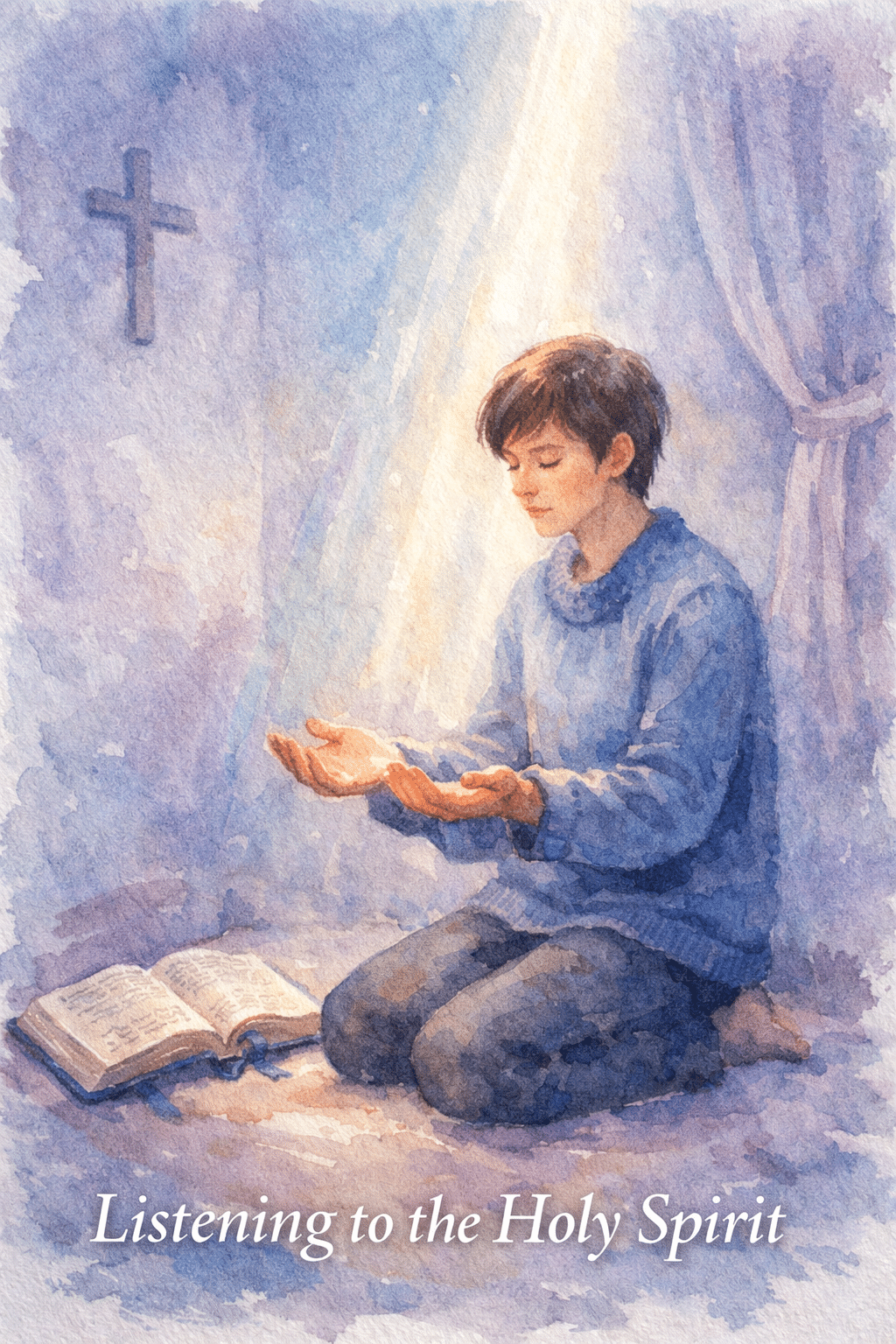
This is where the model becomes distinctly Spirit-led. After you hear the person’s request, you pause and listen to God.
The Vineyard tradition calls this “L-shaped listening”: you listen horizontally to the person and vertically to the Holy Spirit at the same time [2]. You are asking God, “What do You want to do here? What are You showing me?”
Scripture foundation: Jesus modeled this perfectly. He said, “The Son can do nothing of Himself, but what He sees the Father doing” (John 5:19, NKJV). Jesus watched and listened before He acted. We should do the same.
During this step, you might sense:
- A specific Scripture coming to mind
- A word of knowledge about the root cause
- A prompting to pray in a particular direction
- Simply peace and compassion
Do not manufacture something dramatic. If you do not sense anything specific, that is perfectly fine. Pray what you know from Scripture. God honors faithfulness, not theatrics.
For more on developing your prayer life and learning to hear God’s voice, check out our resource on understanding prayer and why we should pray.
Step 3: Diagnosis (Determining the Type of Prayer)
This step is about discerning what kind of prayer to offer. Not every situation calls for the same approach.
The model identifies several categories [2] [1]:
| Type of Prayer | When to Use It | Biblical Example |
|---|---|---|
| Intercessory Prayer | Asking God to intervene on someone’s behalf | Abraham interceding for Sodom (Genesis 18) |
| Command/Authority Prayer | Speaking directly to the condition in Jesus’ name | Jesus rebuking the fever in Peter’s mother-in-law (Luke 4:39) |
| Prophetic Prayer | Declaring what God has revealed He wants to do | Elijah declaring rain would come (1 Kings 18:1) |
| Inner Healing Prayer | Addressing emotional wounds or trauma | Jesus healing the brokenhearted (Luke 4:18) |
Sometimes the root of a physical ailment is spiritual. Sometimes it is simply physical. The diagnosis step helps you avoid a one-size-fits-all approach.
💡 Key Principle: The goal is not to impress anyone with your spiritual vocabulary. The goal is to cooperate with what the Holy Spirit is already doing.
If you want to explore the biblical basis for taking authority over sickness in spiritual warfare, we cover that topic in depth.
Step 4: Do It (The Actual Prayer)
Now you pray. But notice that you have already done significant preparation through conversation, listening, and discernment. The prayer itself flows naturally from those first three steps.
Practical guidelines for this step:
- Ask permission before laying hands on someone. A simple “May I place my hand on your shoulder?” shows respect and honor [2].
- Keep your eyes open. This might surprise you, but it allows you to observe what the Holy Spirit is doing. You may notice physical signs like relaxation, tears, or warmth.
- Pray with authority but also with tenderness. You are not yelling at a demon in every situation. Sometimes the most powerful prayer is a quiet, faith-filled declaration.
- Use Scripture. Pray the Word of God over the person. “By His stripes we are healed” (Isaiah 53:5, NKJV) is not just a verse to quote. It is a covenant promise to stand on.
The model emphasizes that four things should be present every time you pray: God’s compassion, listening to God, spiritual authority, and normalcy [2]. That last one is important. Healing prayer should feel natural, not bizarre. It should be something any believer can do in a coffee shop, a hospital room, or a living room.
For a biblical perspective on the practice of laying hands on others for healing, we have a dedicated article.

Step 5: Next Steps (Post-Prayer Direction)
This is the step most people skip, and it might be the most consequential one.
After you pray, you check in. Ask the person, “How are you feeling? Did anything change? What did you sense during the prayer?”
Then help them plan their next steps [2] [1]:
- Connect them to a local church or small group if they are not already plugged in.
- Encourage ongoing spiritual disciplines like Bible reading, prayer, and worship.
- Address lifestyle factors when appropriate. If a condition is connected to habitual sin or occult involvement, gentle and loving counsel is needed [1].
- Do not shame them if healing has not fully manifested. Encourage them to keep seeking God.
Why this matters: Healing ministry is not a one-time event. It is part of discipleship. Jesus did not just heal people and walk away. He said things like, “Go and sin no more” (John 8:11, NKJV) and “Your faith has made you well” (Mark 5:34, NKJV). He pointed people toward ongoing relationship with God.
If you are looking for ways to grow in prayer after a healing encounter, our guide on the power of united faith in healing prayer is a wonderful next step.
Anchoring the Model in Scripture
Some might ask, “Is this model actually biblical, or is it just a modern invention?” That is a fair and salutary question. Let me show you the scriptural threads woven through every step.
Jesus’ healing ministry followed a pattern. He engaged with people personally (Interview). He only did what He saw the Father doing (Discernment). He identified the root issue, whether physical, spiritual, or demonic (Diagnosis). He prayed, spoke, or touched with authority (Do It). And He gave instructions for what came next (Next Steps).
Consider the healing of the ten lepers in Luke 17:12-19. Jesus engaged with them. He discerned the situation. He gave a specific instruction: “Go, show yourselves to the priests.” And when only one returned to give thanks, Jesus addressed his next steps: “Arise, go your way. Your faith has made you well” (Luke 17:19, NKJV).
The apostles continued this pattern. In Acts 3, Peter and John encountered a lame man at the temple gate. Peter looked at him (Interview/Discernment), declared healing in Jesus’ name (Diagnosis/Do It), and then preached the gospel to the gathered crowd (Next Steps).
The Five-Step Prayer Model does not add to Scripture. It organizes what Scripture already teaches into a framework that anyone can learn and practice. For a deeper study on healing as part of the atonement, we explore the theological foundations in detail.
Common Questions About the Five-Step Prayer Model
Q: What if nothing happens when I pray?
Keep praying. Keep loving. Healing is God’s department. Your job is obedience and compassion. Not every prayer results in immediate, visible healing, but every prayer offered in faith matters to God.
Q: Do I need to use anointing oil?
It is not required, but James 5:14 does mention it. If you want to understand the practice better, read our article on anointing oil for healing from a biblical and practical perspective.
Q: Can I use this model in a small group setting?
Absolutely. In fact, that is one of the best environments for it. The model has been used effectively in church meetings, small groups, and outreach settings for decades [3].
Q: What if the person is not a believer?
Pray for them anyway. God’s love is not limited to church members. Some of the most powerful testimonies come from non-believers experiencing God’s tangible presence through healing prayer.
Practical Tips for Getting Started
If you are ready to begin using this model, here are some concrete steps:
- Study the Scriptures on healing. Build your faith on the Word, not on experiences alone. Our collection of Bible verses on faith and prayer is a great starting point.
- Practice with your prayer partner or spouse. You do not have to wait for a dramatic moment. Start in your living room.
- Write down the five steps on a card and keep it in your Bible until they become second nature.
- Debrief after every prayer encounter. What did you sense? What went well? What felt awkward? Growth comes through reflection.
- Stay humble and teachable. The best healing ministers I know are the ones who never stop learning.
Conclusion
The Five-Step Prayer Model: A Biblical Approach to Healing Ministry is not a magic formula. It is a practical, Spirit-led framework that helps ordinary believers do what Jesus commanded: pray for the sick with faith, love, and biblical authority.
You do not need a stage. You do not need a title. You need a willing heart, an open Bible, and ears tuned to the Holy Spirit.
Here is what I want you to do this week:
- Pick one person in your life who needs prayer for healing.
- Walk through the five steps with them: Interview, Discernment, Diagnosis, Prayer, Next Steps.
- Trust God with the outcome. Your job is to show up. His job is to heal.
The early church turned the world upside down not because they had better programs, but because they walked in the power and compassion of Jesus Christ. That same power is available to you today. Step into it.
“And these signs will follow those who believe: In My name they will cast out demons… they will lay hands on the sick, and they will recover.” (Mark 16:17-18, NKJV)
References
[1] 5 Step Prayer Model – https://a4aministry.wordpress.com/5-step-prayer-model/
[2] Five Step Prayer Model – https://vineyardusa.org/five-step-prayer-model/
[3] The Five Step Prayer Model – https://vineyarddigital.org/item/the-five-step-prayer-model/

Pastor Duke has been preaching and teaching the Bible since 1988. He has shared his knowledge online since 2011.






 By
By