

The elderly Abraham faced a vital decision that would shape his family’s future for generations. He needed a wife for Isaac, but the surrounding Canaanite women wouldn’t do. His solution involved sending his most trusted servant on a seemingly impossible mission hundreds of miles away. What happened next at a dusty well in Mesopotamia would demonstrate how ordinary acts of kindness can reveal God’s extraordinary plans. The servant’s specific prayer was about to be answered in unexpected ways.
Key Takeaways
- Abraham sends his servant to find a wife for Isaac from his homeland, not from the Canaanites.
- The servant prays at a well for God’s guidance, asking for a specific sign to identify Isaac’s future wife.
- Rebekah appears and fulfills the sign by offering water to the servant and his ten camels.
- After hearing the servant’s testimony, Rebekah courageously agrees to leave her family and marry Isaac.
- Isaac meets Rebekah in the fields, takes her as his wife, and finds comfort after his mother Sarah’s death.
Abraham’s Oath and Commission to His Servant

Abraham called his most trusted servant to his side, placing upon him the weight of a sacred mission that would shape the destiny of his family for generations to come.
The aging patriarch needed a wife for Isaac, but not just any wife—she must come from his own people, not from the Canaanites among whom they dwelt.
The servant’s loyalty shone through his immediate concern: “What if the woman refuses to come?”
Abraham’s faith remained unwavering. He assured his servant that God would send His angel ahead to guarantee success.
Still, Abraham made one thing crystal clear—under no circumstances should Isaac return to the land they’d left behind.
The servant placed his hand under Abraham’s thigh, an ancient gesture signifying the solemnity of an oath.
This wasn’t merely matchmaking; it was preserving God’s covenant promise.
Abraham’s faith and his servant’s loyalty intersected at this vital moment, launching a journey that would bring Rebekah into their story.
The Servant’s Journey to Mesopotamia

Ten camels laden with treasures set out across the desert, carrying not just Abraham’s wealth but the hopes of a covenant promise. The elderly servant understood his journey’s significance went beyond finding any bride—he sought God’s chosen woman for Isaac. Each step through the wilderness represented faith in action, as he traveled hundreds of miles to Abraham’s homeland near Nahor.
The servant’s role demanded both practical wisdom and spiritual discernment. He carefully selected valuable gifts that would honor any prospective bride’s family, demonstrating Abraham’s prosperity and serious intentions.
Yet material preparations alone wouldn’t suffice. As he approached the city well at evening, when women came to draw water, he prayed specifically for divine guidance. He asked God for a clear sign: the right woman would not only offer him water but voluntarily water his ten camels—a generous act requiring considerable effort. This prayer revealed his dependence on God’s providence rather than human judgment.
The Prayer for Divine Guidance at the Well

Upon reaching the well outside the city of Nahor, Abraham’s servant faced a critical moment that would determine the success of his mission.
He prayed earnestly to the Lord, asking for a specific sign: the woman who would offer water not only to him but also to his ten camels would be the one chosen for Isaac.
This bold request for divine guidance reveals how practical faith looks in action—bringing specific needs before God and trusting Him to orchestrate the details of life’s most important decisions.
Abraham’s Servant Prays
Kneeling beside the well outside Nahor, the weary traveler lifted his eyes toward heaven and spoke directly to the God of his master Abraham. The servant’s prayer wasn’t merely a wish thrown into the wind—it demonstrated remarkable servant faithfulness through specific, practical requests.
He asked for a clear sign: the right woman would not only offer him water but voluntarily water his ten camels too, a task requiring considerable effort and kindness.
The prayer significance extends beyond finding a bride. Here stood a man who understood that divine wisdom surpasses human judgment. Rather than relying on appearance or social standing, he sought God’s direction through character revelation.
His prayer teaches us that faithful service involves surrendering our plans to God’s perfect knowledge, trusting Him to reveal His will through ordinary circumstances.
Specific Sign Requested
How often do believers struggle to discern God’s will in life’s crucial decisions? Abraham’s servant demonstrated remarkable faith by requesting a specific sign at the well. He asked God that the chosen woman would not only give him water but also offer to water his camels—an extraordinary act of service requiring significant effort.
This request for divine intervention revealed:
- Practical wisdom – The sign tested character traits essential for Isaac’s wife
- Servant heart – Drawing water for ten camels meant hauling approximately 200 gallons
- Hospitality – The gesture showed kindness to strangers
- Physical strength – The task demanded stamina and dedication
- God’s sovereignty – The servant trusted divine orchestration of circumstances
His prayer wasn’t testing God but seeking confirmation through observable actions that revealed inner character.
Rebekah’s Arrival and Act of Hospitality

Water splashed from the well as Rebekah lowered her jar, completely unaware that this ordinary evening task would reshape her entire future.
The young woman approached the stranger who asked for a drink, and her response revealed something remarkable about her character. Not only did she offer water to the weary traveler, but she volunteered to draw water for his ten camels—a task requiring drawing approximately 200 gallons.
This wasn’t merely kindness; it demonstrated the hospitality culture that defined successful family dynamics in the ancient Near East.
Rebekah’s actions showed she understood that genuine service extended beyond minimum requirements. She didn’t calculate the effort or wait to be asked twice. Her immediate, generous response revealed the very qualities Abraham’s servant had prayed to find: a heart ready to serve and the strength to follow through.
In this single act, Rebekah proved herself worthy of joining Abraham’s household.
The Servant’s Worship and Gifts to Rebekah

Abraham’s servant stood transfixed as the last camel finished drinking, his heart pounding with the weight of answered prayer. The young woman before him had fulfilled every detail of his specific request to God. Without hesitation, he reached into his supplies and presented Rebekah’s gifts: a golden nose ring weighing half a shekel and two heavy gold bracelets.
These weren’t mere tokens—they represented substantial wealth and honor.
The servant’s devotion manifested in immediate worship. He bowed low, blessing the Lord who had guided him directly to Abraham’s family. His gratitude overflowed as he recognized God’s faithfulness in this divine appointment.
Key elements of this moment:
- Golden nose ring – Symbol of betrothal and honor
- Two gold bracelets – Weighing ten shekels total
- Immediate worship – Bowing before the Lord
- Verbal blessing – Praising God’s steadfast love
- Divine confirmation – Recognition of answered prayer
This scene demonstrates how God rewards faith with unmistakable guidance.
Meeting Laban and Bethuel at Their Home

Rebekah raced home with the precious jewelry adorning her, bursting through the doorway to share news of the mysterious visitor at the well. Her brother Laban noticed the expensive gold immediately—his eyes widening at the nose ring and bracelets.
Laban’s character revealed itself as he rushed to meet this wealthy stranger, already calculating the benefits such a visitor might bring. The family dynamics shifted into high gear as Laban insisted Abraham’s servant come to their home.
Inside, the servant refused food until he shared his mission. He recounted Abraham’s wealth, the divine oath to find Isaac a wife from their family, and his prayer at the well.
As he described Rebekah’s exact fulfillment of his prayer, Laban and Bethuel exchanged knowing glances. They recognized God’s hand orchestrating these events.
“This matter comes from the Lord,” they declared, acknowledging they couldn’t oppose divine providence. Their household buzzed with anticipation of what this union would mean.
The Marriage Proposal and Family’s Response

After Laban witnessed the expensive gifts and heard about Abraham’s wealth, he warmly welcomed the servant into their home with enthusiastic hospitality.
The servant wasted no time explaining his divine mission—how God had miraculously guided him straight to their family to find Isaac’s bride—and both Laban and Bethuel recognized this was clearly the Lord’s doing.
When asked directly if she would go, Rebekah demonstrated remarkable faith by consenting immediately to leave her family and marry a man she had never met.
Laban’s Welcoming Reception
Racing ahead to announce the stranger’s arrival, Laban burst into action the moment he spotted the gold jewelry adorning his sister. His enthusiasm revealed both cultural hospitality customs and glimpses of Laban’s character that would surface more prominently in later biblical narratives. The wealthy visitor’s presence triggered an immediate response from Rebekah’s brother.
Laban’s reception included:
- Running out to meet Abraham’s servant at the well
- Addressing him as “blessed of the Lord”
- Insisting the camels be unloaded and cared for
- Preparing water for the travelers to wash their feet
- Setting food before the guests immediately
This lavish welcome demonstrated Middle Eastern hospitality protocols, where strangers received protection and provision.
Yet Laban’s zeal, particularly after seeing the expensive gifts, hinted at the opportunistic nature that would define his future dealings with Jacob.
Servant’s Divine Mission
Refusing to eat until he had spoken, Abraham’s servant transformed the dinner gathering into a sacred moment of testimony, revealing how God had orchestrated every detail of his journey to find Isaac’s bride.
The faithful servant recounted Abraham’s wealth, Isaac’s inheritance, and the solemn oath binding him to find a wife from Abraham’s own people. He detailed his prayer at the well, asking for specific signs, and how Rebekah fulfilled each one perfectly—offering water to him and his camels before he’d finished praying.
This wasn’t mere coincidence but divine intervention. The servant presented jewelry and gifts, then asked directly: would Rebekah return with him to marry Isaac?
Laban and Bethuel recognized God’s hand immediately. “This is from the Lord,” they declared, unable to argue against such clear providence.
Rebekah’s Willing Consent
Morning light brought the moment of decision as Rebekah’s family gathered to hear her answer to the life-changing question: would she leave everything behind to marry a man she’d never met?
Her simple “I will go” revealed remarkable courage. In ancient times, women rarely voiced their preferences in marriage arrangements, making this moment’s cultural significance profound.
Rebekah’s character shone through her decisive response:
- She embraced uncertainty with faith
- Chose adventure over familiar comfort
- Trusted divine providence in the servant’s testimony
- Demonstrated independence unusual for her era
- Honored both family tradition and personal agency
Her consent wasn’t merely agreement but enthusiastic participation in God’s unfolding plan.
This young woman’s willingness to journey into the unknown would shape nations, proving that great destinies often require brave first steps.
Rebekah’s Departure and Meeting With Isaac
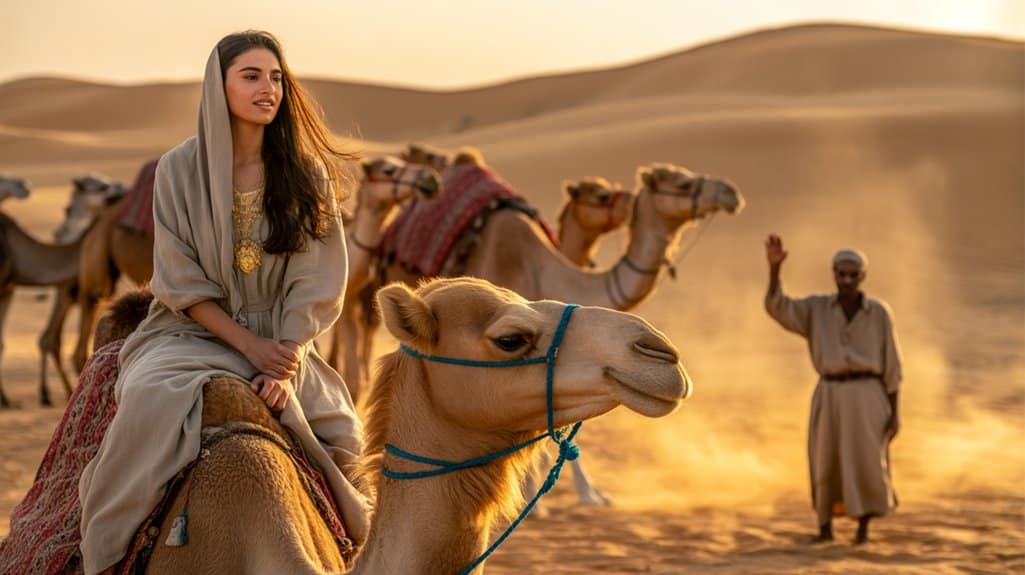
Rebekah faced the most important decision of her life when her family gathered to bid her farewell. They blessed her with prophetic words about her descendants becoming mighty nations.
With her nurse and maidservants, she mounted the camels and began the journey that would forever change her destiny. Rebekah’s character shone through her courage—leaving everything familiar for an unknown future required remarkable faith.
As the caravan approached Canaan, Isaac was walking in the fields at evening, meditating and praying. When Rebekah spotted him from afar, she inquired about his identity. Upon learning this was her future husband, she veiled herself according to custom.
Isaac’s reaction revealed his readiness for this divine appointment. He welcomed Rebekah warmly, bringing her into his mother Sarah’s tent. Their marriage brought him comfort after his mother’s death.
This beautiful conclusion demonstrated how God orchestrates circumstances when His people trust His timing and guidance.
Frequently Asked Questions
Why Didn’t Abraham Want Isaac to Marry a Canaanite Woman?
Abraham understood the cultural significance of marital alliances would shape his family’s spiritual future. He feared Canaanite wives might lead Isaac toward idol worship, threatening God’s covenant promises. This practical decision protected their distinct calling and faith.
What Was the Significance of Placing a Hand Under Someone’s Thigh?
Placing a hand under someone’s thigh wasn’t ancient workplace harassment—this cultural significance involved touching near reproductive organs, symbolizing oath-taking by future generations. These ancient customs created binding agreements, like Abraham’s servant swearing about Isaac’s marriage.
How Old Were Isaac and Rebekah When They Married?
Isaac was forty years old when he married Rebekah, though her exact age isn’t specified in Scripture. Jewish tradition suggests she was quite young, possibly in her teens, which was customary for marriages in ancient times.
Why Did Abraham Send His Servant Instead of Going Himself?
Abraham, elderly and weary from years, demonstrated familial responsibility by entrusting his most loyal servant with finding Isaac’s bride. His servant’s loyalty made him the perfect representative, while Abraham remained home fulfilling his patriarchal duties.
What Happened to Rebekah’s Nurse After Arriving in Canaan?
Ironically, scripture remains silent about Rebekah’s nurse immediately after the Canaan arrival, though she accompanied the servant’s journey from Rebekah’s family. Later, Genesis 35:8 reveals Deborah died near Bethel, buried beneath an oak tree.
Final Thoughts
The theory that divine providence guides faithful seeking proves true through this ancient narrative. When Abraham’s servant trusted God’s direction rather than his own wisdom, extraordinary events unfolded—a specific prayer answered, perfect timing at a well, and a willing bride discovered. This account demonstrates that life’s most essential decisions need not rest on human understanding alone. Like Rebekah’s brave “yes” to an unknown future, trusting divine guidance often leads to unexpected comfort and fulfillment.
Share On Pinterest



Pastor Duke has been preaching and teaching the Bible since 1988. He has shared his knowledge online since 2011.

 By
By